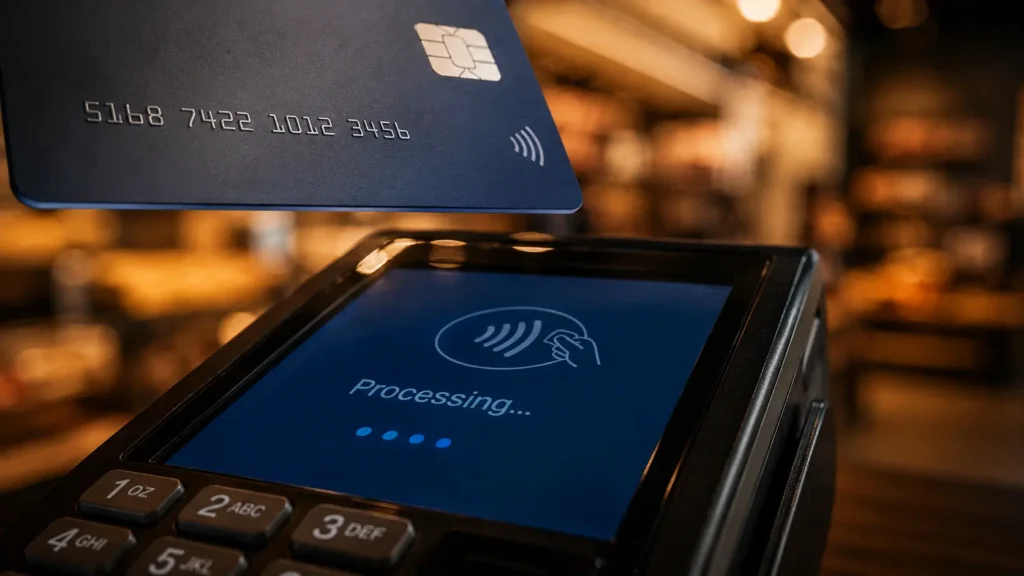
Start with a number: 38 milliseconds.
That is the window between you tapping your card at a checkout and the approval appearing on the terminal. In that time before the merchant’s receipt has started printing your bank’s AI has already run your transaction through hundreds of simultaneous checks, assigned it a risk score, cross-referenced it against three years of your spending history, and made a decision.
If the score crosses a threshold, your card declines. If it does not, you walk out with your coffee. You experienced neither event as technology. You experienced it as friction or its absence.
That 38-millisecond decision is the visible edge of a system that never stops running and it is getting harder for fraudsters to beat.
Why the Old System Failed
Until roughly 2015, most bank fraud detection ran on rule-based systems. Fixed logic, written by humans: flag transactions over $X; block cards used in two countries within six hours; lock accounts after three failed PIN attempts.
These rules were transparent, predictable and easy to game. Sophisticated fraudsters reverse-engineered them by keeping transactions just below thresholds, establishing spending patterns in advance, and exploiting the gaps between rules that no human writer had anticipated.
In 2025, AI fraud detection systems are intercepting 92% of fraudulent activities before transaction approval. US banks report that AI has reduced false fraud alerts by up to 80%. These are not marginal improvements they represent a structural replacement of one generation of technology with another.
Traditional rule-based systems and manual reviews fail; AI-driven predictive analytics are essential to intercept fraud early and reduce false positives. The shift happened because the alternative became untenable. Financial losses from digital fraud are expected to exceed $47.8 billion in 2025.
The 38-Millisecond Pipeline
When you tap your card, a decision runs across hundreds of variables simultaneously not sequentially. Transaction amount, merchant category, geographic location, time of day, device fingerprint, and the customer’s full historical behaviour pattern are all weighted at once.
The model is not asking: is this transaction large? It is asking something more precise: given everything I know about this specific customer’s behaviour across the last three years, how anomalous is this specific transaction, at this specific time, from this specific device, at this specific merchant, following the 47 transactions that preceded it this month?
A $4,000 purchase at a jeweller in Miami is unremarkable for a customer who buys jewellery quarterly and travels to Florida each winter. The same transaction, from an account that has never left its home city and whose largest previous purchase was $280, returns a very different risk score. The amount is identical. The anomaly is not.
The Layer Nobody Talks About: Behavioural Biometrics
The most sophisticated and least publicly discussed component of modern fraud detection is not about transactions. It is about how you physically interact with your device.
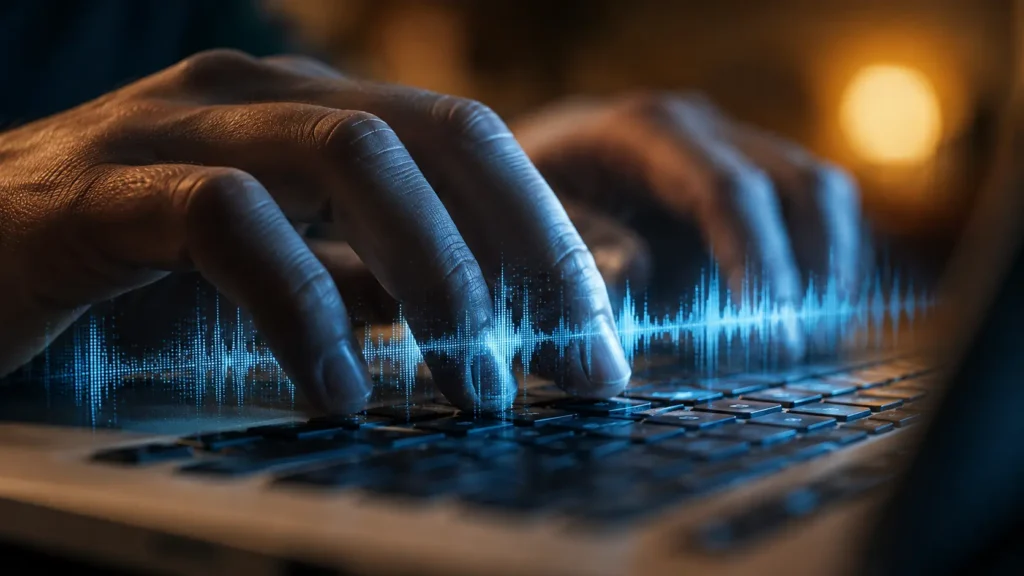
Behavioural biometrics systems build individual profiles based on how users interact with their devices, tracking things like typing cadence, mouse movements, and navigation behaviour. Even if your credentials are stolen, deviations in behaviour can signal that something’s wrong.
Traditional biometrics fingerprint, face authenticate once, at login. Behavioural biometrics authenticate continuously throughout the entire session. The system notes that you type your password with a characteristic rhythm a specific pause between certain characters, a consistent backspace rate, a particular keystroke velocity pattern. It notes the angle at which you hold your phone. It notes your scroll velocity through the account screen.
Now a fraudster steals your credentials and logs in with your correct username and password. AI tools analysing behavioural biometrics helped detect identity theft cases 28% faster than traditional systems. The typing rhythm is wrong. The scroll pattern is unfamiliar. The phone is held at a different angle. The risk score climbs. A challenge fires before a single transaction is attempted.
A leading global bank that implemented behavioural biometrics specifically to tackle account takeover fraud analysing typing patterns and mouse movements reported a 35% reduction in fraud losses over a six-month period.

Device Fingerprintin The ID That Survives Incognito Mode
Running in parallel is device fingerprinting a system that identifies your specific device from dozens of hardware and software attributes: screen resolution, installed fonts, GPU rendering behaviour, browser plugins, time zone, audio hardware characteristics, and battery level.
No single attribute is unique. The combination, at sufficient resolution, is functionally unique to your device and stable across sessions, VPNs, and incognito tabs. A fraudster with stolen credentials, operating through a VPN from a new device in a different country, presents a fingerprint that has never been associated with this account. The model flags it before the login completes.
Behavioural signals fused with device fingerprinting form what researchers call a behavioural data device fingerprint a dynamic profile integrating typing cadence, mouse movements, scroll velocity, touch pressure, geolocation, and session history into a single continuous identity signal.
The Adversary Is Using the Same Technology
The reason fraud losses are still growing despite these systems is not that the technology is failing. It is that attackers now have access to equivalent tools.
In January 2024, a finance worker at Arup the British engineering firm behind the Sydney Opera House joined a video conference. The CFO was on the call. So were colleagues he recognised. They wanted him to push through fifteen wire transfers across five Hong Kong bank accounts. Nobody on the call was real. Every face he saw and every voice he heard were AI deepfakes built from publicly available video and audio of Arup executives the kind of footage anyone can scrape off LinkedIn, YouTube, or a recorded earnings call. The transfers totalled $25.6 million. The fraud was discovered only when the employee called London headquarters and learned no one had authorised the meeting.
Pindrop’s 2025 Voice Intelligence and Security Report logged a 1,300% jump in deepfake fraud attempts during 2024, going from an average of one per month to seven per day.
Large language models have introduced new challenges they allow attackers to craft highly personalised phishing messages by analysing digital footprints. The attack surface is widening at the same speed as the defences.
What the Bank Knows That You Do Not
The next time your bank sends a fraud alert or blocks a legitimate transaction while you stand at a foreign checkout you are seeing the output of a system that has been modelling your behaviour for years.
It knows which merchants you visit on a Friday. It knows your typical transaction velocity on a Monday morning versus a Sunday evening. It knows the angle at which you hold your phone when you open the app in bed. It knows your typing rhythm better than you know it yourself.
AI detects payment fraud, account takeover, synthetic identities, and phishing attacks using adaptive learning and behavioural analysis. The false positive the legitimate transaction blocked while you stand at a checkout counter abroad is the system working exactly as designed and getting the calculation wrong in your favour. The alternative is a system that never blocks anything.
Your password is the least interesting thing the bank uses to verify you. The way you typed it is far more informative. And in 38 milliseconds, the system has already decided whether the person who typed it is you.
📌 Read Also:
- How Cloudflare Stops Millions of Hackers Every Day
- The Shadow Profile Facebook Has on You — Even If You’ve Never Had an Account
© AiwalaNews | Global Tech & Privacy Edition | April 2026
