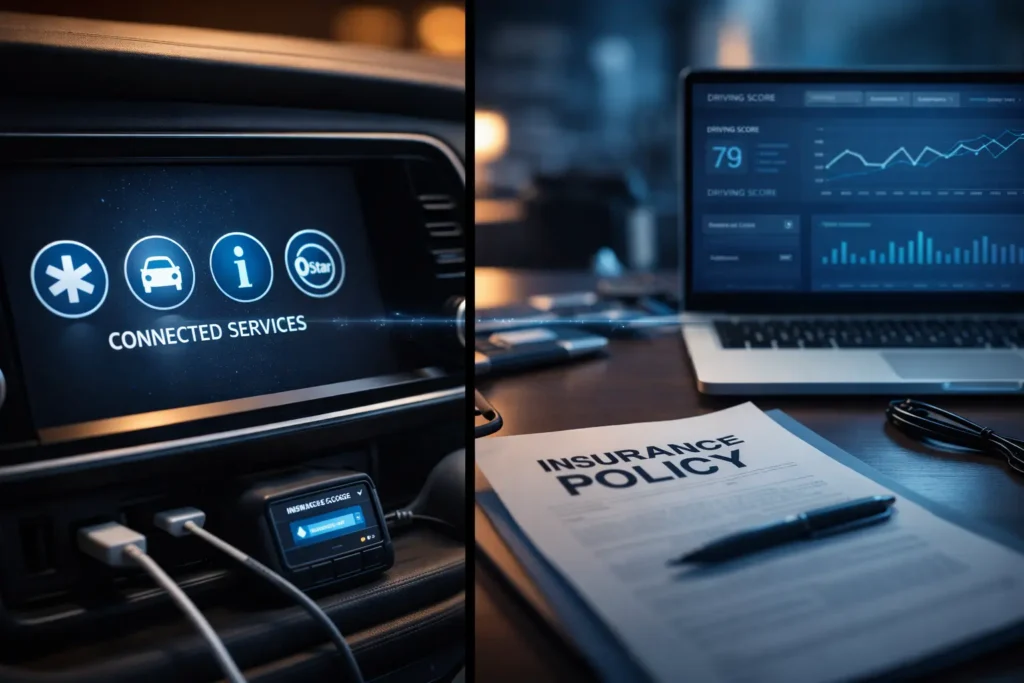
You plug your phone into your car’s USB port to charge it, or to play music through the speakers. A small icon appears on the dashboard screen “Connecting…” and within seconds, your phone is talking to the car.
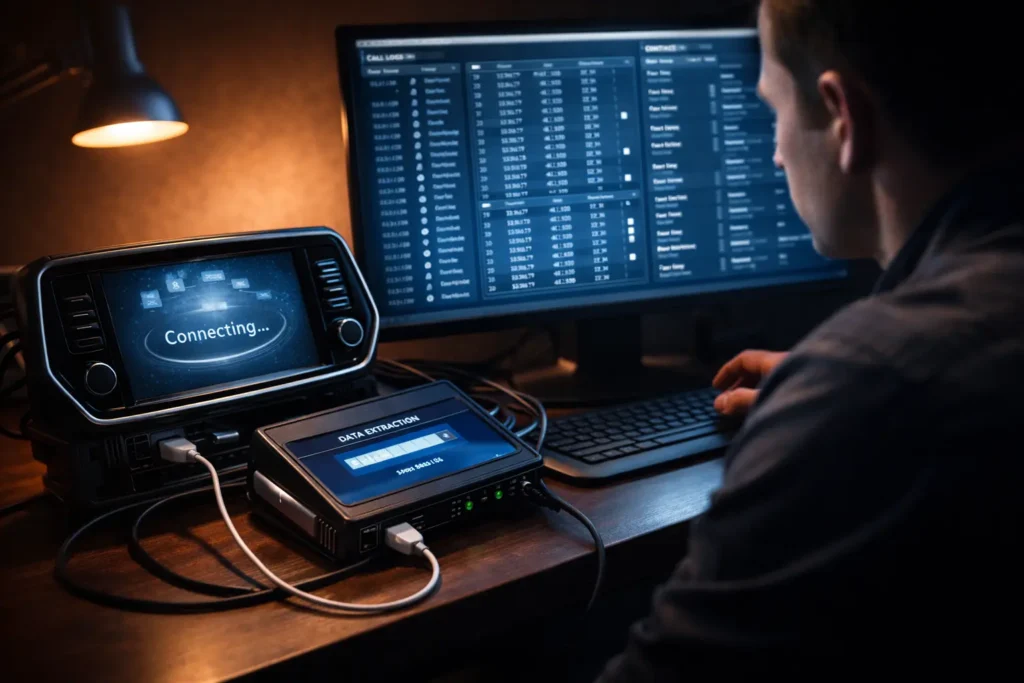
What most drivers do not realise is what gets copied during that handshake. Not just your music library. When you connect your phone to a vehicle, it syncs much of the data contained on your phone onto the internal storage of the car itself meaning an examiner, or anyone else with the right tool, can collect mobile phone data without ever possessing the phone.
The car is not just playing your playlist. It is keeping a copy of your digital life and in most cases, it keeps that copy long after you have sold the car, traded it in, or returned the rental.
What Actually Gets Copied Onto the Car
The scope of what transfers during a routine USB or Bluetooth connection is significantly broader than most owners assume.
After connecting a driver’s smartphone to the infotainment system via Bluetooth, Wi-Fi, or USB, the driver can make phone calls, use SMS, play media, and use navigation and as a result, various vehicle-related data ends up stored in the smartphone, and various phone data ends up stored in the vehicle.
Specialist forensic investigators using tools like Berla’s iVe routinely recover: call logs and contact information synced from connected phones; infotainment usage history including audio and video playback, app usage, and voice commands; GPS and navigation history including last known locations, frequently travelled routes, and saved destinations; and Bluetooth connection records identifying every device that has ever paired with the vehicle.
User data including messages, emails, social media content, call logs, and application data are all recoverable from vehicles, and the list continues to expand as technology advances.
A 2018 academic study that tested this directly found the depth of retention startling. Researchers recovered hundreds of contacts and call logs from tested infotainment systems with call logs dating back as far as three years still present and recoverable. Devices were identified not just by name but by their full International Mobile Equipment Identity numbers.
What Each Manufacturer Specifically Logs
Through its FordPass app, Ford collects driving data, location information, and even your phone’s contact list. Ford’s connected services let you remote-start, lock, and locate the vehicle and also log your trips, speed, and aggressive cornering events for “Driver Score” programs.
Via the OnStar system, General Motors tracks vehicle speed, braking habits, and location. This is not a hypothetical concern. A 2022 investigation found that GM’s OnStar Smart Driver program shared detailed driving data with LexisNexis and Verisk two major data analytics firms that supply records directly to insurance companies. Drivers who never opted into a usage-based insurance program discovered their driving behaviour had been sold to the exact industry that uses it to raise premiums.
Toyota’s Entune system logs navigation routes, music preferences, and smartphone interactions. Toyota’s own privacy notice confirms the scope directly: “Your Toyota vehicle collects and transmits a range of data to Toyota, including the vehicle’s location, driving data such as acceleration, braking and engine sensor readings, and vehicle health information such as odometer readings, oil life, and information from the onboard diagnostic system.” Toyota’s “Insure Connect” program pitches the data-sharing as a usage-based insurance discount but the actual data flow is the same as everyone else’s: driving behaviour goes to a data broker, which sells it to insurers.
The pattern across all three brands is consistent: the connected service is marketed as convenience remote start, navigation, emergency assistance and the data pipeline running underneath it feeds a separate, less visible commercial relationship with insurers and data brokers.
The Mozilla Report That Named Names
In 2025, the most comprehensive independent audit of automotive privacy practices delivered a blunt verdict on the entire industry.
A 2025 report from the Mozilla Foundation confirmed that no major automobile manufacturer complies with contemporary privacy standards. Manufacturers including Kia, Nissan, and Tesla persist in gathering extremely sensitive information including data related to sexual activity and genetic information frequently without explicit consent or user oversight.
Mozilla’s findings indicated that none of the 25 prominent car manufacturers assessed fulfilled fundamental criteria for data transparency, user control, or security. Some even claim the right to sell sensitive data without anonymisation.
This is happening at a moment of rapid market expansion. More than 80% of new vehicles worldwide are expected to possess connected features by 2025, with the highest adoption rates in North America, the European Union, and parts of Asia.
The Used Car Problem Nobody Warns You About
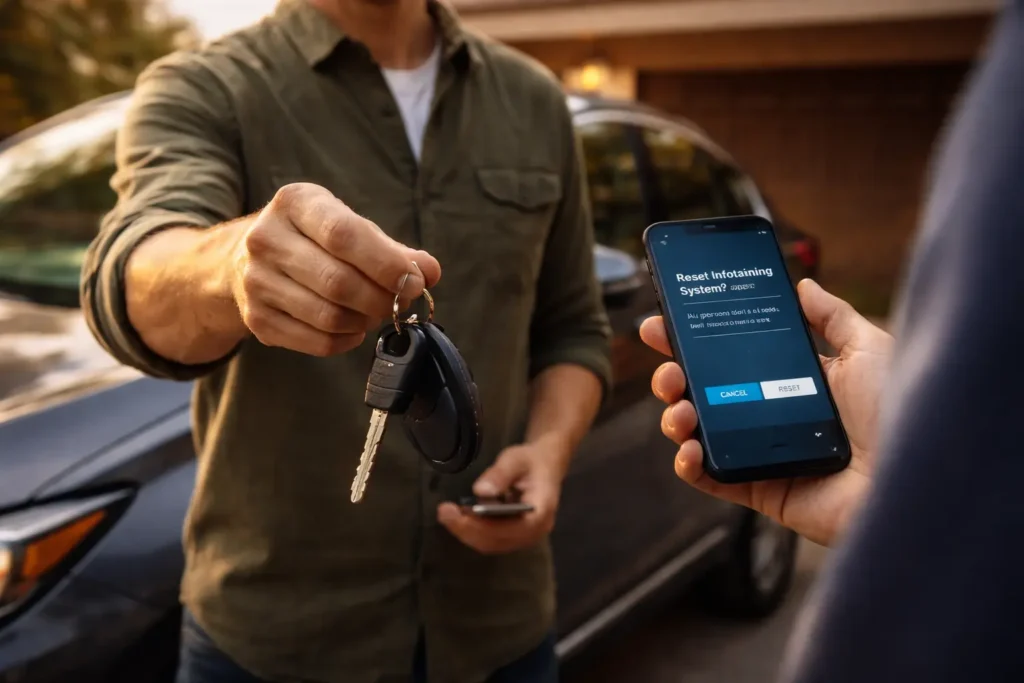
Here is the scenario that should concern far more people than it does: you sell your car. The data you synced during years of ownership does not automatically leave with you.
Consumer data collected from synced phones text messages and call logs often remains stored on the vehicle. Manufacturers frequently don’t disclose whether they also gather data from drivers’ connected smart devices when third-party apps run on or sync with the infotainment system. Many automakers also acknowledge they share this data with law enforcement, insurers, and data brokers.
Most cars do gather and store phone data security researchers confirm that if a vehicle offers phone connectivity, you can assume some level of data is being stored in the vehicle.
A privacy company specialising in vehicle data deletion has, to date, used its app to wipe data linked to more than one million cars a figure that only represents people who knew the problem existed and actively sought a fix. Everyone who sold a car without wiping it first left their contacts, call logs, and messages for the next owner.
The Fines That Changed Nothing
Regulators have begun acting but the financial consequences have not been large enough to alter industry behaviour.
GM’s $12.75 million California penalty for its data practices was the largest CCPA fine in history. It represented 0.007% of GM’s 2025 annual revenue a rounding error, not a deterrent. Ford’s $375,703 California fine for making consumers hand over excessive personal data just to opt out was similarly negligible relative to Ford’s scale.
The fines confirmed the violations occurred. They did not meaningfully change the economics of collecting and monetising driver data.
How to Actually Opt Out Brand by Brand
For Ford: open Settings on your vehicle’s SYNC screen, select Connectivity, tap Connected Vehicle Features, then toggle off Share Vehicle Data, confirming on the prompt that follows.
For Toyota: drivers can decline “Master Data Consent” directly through the Toyota app. A direct privacy request can also be filed at toyota.com/support/privacy-notice under the section addressing state privacy rights.
For BMW: privacy settings can be adjusted through the infotainment system itself, on a spectrum ranging from allowing all services including analysis data, to none at all.
Under state privacy laws, some carmakers allow owners across the entire United States to submit requests to limit the use of their personal data, opt out of sharing it, or delete it entirely though other companies limit these requests only to residents of states with applicable privacy laws. Requests can typically be filed through an online form or the manufacturer’s mobile app.
Before selling, trading in, or returning a leased vehicle: factory-reset the infotainment system specifically not just removing your phone from the Bluetooth list to clear synced contacts, call logs, and messages that otherwise remain accessible to the next person who plugs in.
What This Means Every Time You Get In
The USB port in your car is not just a charging cable input. It is a data-transfer interface that, depending on your specific vehicle and settings, may be copying your contacts, your call history, your text messages, and your driving behaviour onto storage that survives long after you have left the car — accessible to manufacturers, insurers, data brokers, and forensic examiners.
The convenience is real. So is the copy being made every time you connect.
📌 Read Also:
- The Shadow Profile Facebook Has on You — Even If You’ve Never Had an Account
- The $300 Billion Industry Built Around Your Personal Data
© AiwalaNews | Global Tech & Privacy Edition | April 2026
