
It’s happened to almost everyone. Your phone is at 14%, you’re stranded somewhere unfamiliar, you open Uber and the fare looks suspiciously high. You charge your phone to 80%, open the app again ten minutes later, and the price drops. Coincidence? Or is Uber quietly punishing you for being desperate?
This rumor has circulated for nearly a decade, and it refuses to die for one simple reason: the core of it is actually true. Uber really does have access to your phone’s battery level. What’s disputed is what they do with that information.
Yes, Uber Really Does Track Your Battery
This isn’t a conspiracy theory pulled from a sketchy forum post. Uber itself has confirmed it has access to customers’ phone battery information.
The claim first became widely known in 2016, when Uber’s then-head of economic research, Keith Chen, appeared on NPR’s Hidden Brain podcast. Chen revealed that one of the strongest predictors of whether a rider will accept a surge price is how much battery is left on their phone.
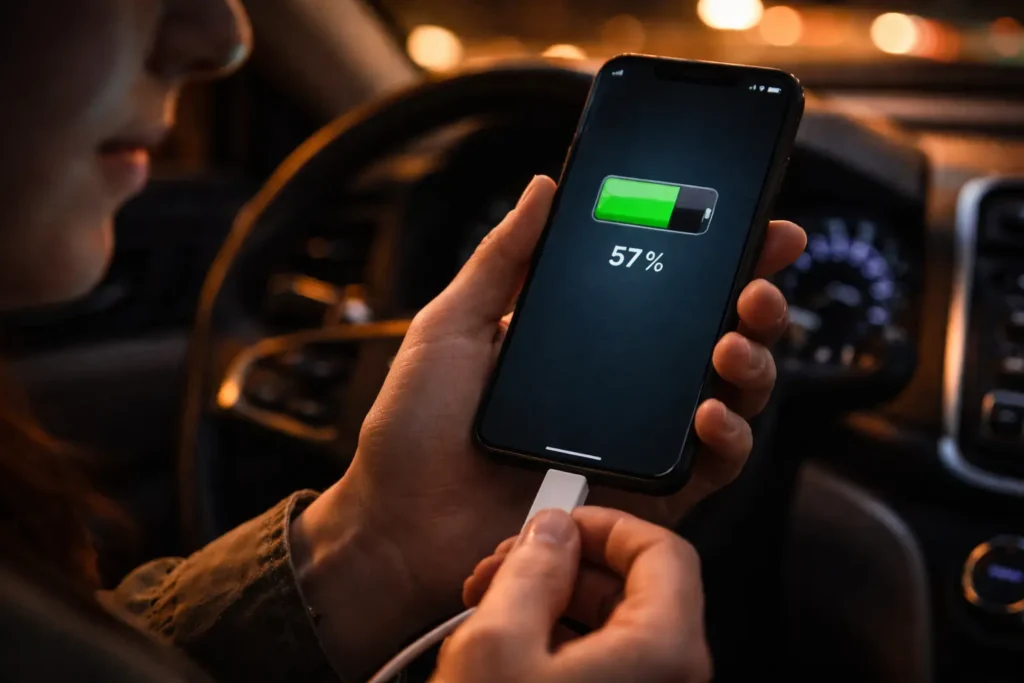
According to Chen, once a phone’s battery icon turns red typically below 5% riders start thinking “I better get home,” because they’re worried about how they’ll get home otherwise if their phone dies completely.
In other words: it’s not paranoia. Uber genuinely observed this pattern in its own data, across millions of rides.
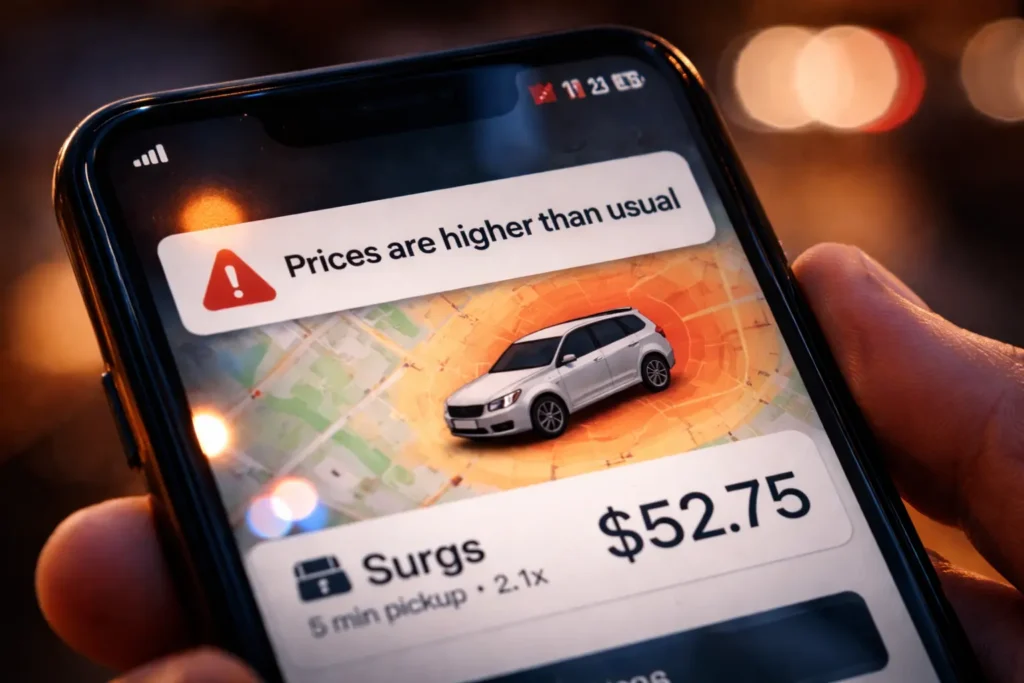
But Does Uber Actually Raise Your Price Because of It?
Here’s where the story gets more nuanced and where most viral posts get it wrong.
Chen explicitly stated, “We absolutely don’t use that to kind of like push you a higher surge price.” He called it “an interesting kind of psychological fact of human behavior” rather than a pricing input.
Independent fact-checkers have investigated this claim extensively. One newspaper ran a real test, sending two phones one with a low battery and one with a high battery to request rides simultaneously. The low-battery phone was quoted a higher price in that single test. However, when other researchers and journalists tried to repeat the experiment, they could not reproduce the same result.
Because the test couldn’t be reliably reproduced, Snopes officially categorizes the claim as “unproven” not confirmed, and not debunked either.
So what’s actually happening when your fare spikes on a low battery? In nearly every documented case, it’s standard surge pricing driven by real-time supply and demand, time of day, weather, local events, or driver availability in your area that simply happens to coincide with your phone running low at an inconvenient moment.
The Real Story Is About Psychology, Not Pricing
This is the part most viral posts completely miss, and it’s actually the more interesting truth.
Uber’s research found that consumers are more willing to accept surge pricing when the price isn’t a round number riders feel more thought went into a price like $14.73 than $15.00, even though both are surge-inflated.
Uber describes its surge pricing as a “relief valve” designed to pull more drivers onto the road during high demand. But many riders experience it as opportunistic, especially when it shows up at the worst possible moment.
The uncomfortable truth is this: Uber doesn’t need to manually raise your price because of your battery. The psychology already does the work for them. When you’re at 12% battery in an unfamiliar neighborhood, you’re far less likely to wait out a surge you’ll simply pay it. Uber doesn’t have to manipulate the algorithm; your own anxiety does the manipulating.
Why This Story Keeps Going Viral Anyway
A widely shared screenshot in 2024 claimed Uber had outright admitted to charging more for low batteries captioned “Your phone’s battery is low, so we increased prices.” That screenshot was confirmed fake, having originated from a satirical account before spreading across Reddit and other platforms.
But the fake screenshot spread so easily precisely because the underlying suspicion already felt believable. The viral screenshot was fake but the mistrust behind it wasn’t.
A widely discussed claim resurfaced again after a self-described tech-savvy user reported that an unusually expensive ride became cheaper after she simply charged her phone reigniting the entire debate once more. No verified evidence backed her specific case either, but the story spread for the same reason it always does: it’s believable, even when unproven.
What You Should Actually Do About It
Whether or not Uber’s algorithm directly factors in battery percentage, the practical advice is the same either way:
1. Charge your phone before you need a ride not after.
Even a portable charger or car charger removes the psychological pressure that makes you accept inflated prices without question.
2. Wait out the surge when you safely can.
Surge pricing typically eases within 10–15 minutes as more drivers come online. If you’re somewhere safe, waiting often saves money.
3. Check competing apps before booking.
Comparing Uber against Lyft or a local taxi app for the same route takes 30 seconds and frequently reveals a meaningfully cheaper option.
4. Use Uber through a browser instead of the app for sensitive moments.
Some users have noted that accessing Uber through certain browsers may avoid exposing battery-level data to the platform, since some browsers don’t expose the device battery API the way native apps do.
5. Don’t let your battery anxiety make financial decisions for you.
This is the real lesson here. Even if Uber never touches your price directly, your own panic at a low battery is enough to make you overpay. Recognizing that pattern is the cheapest fix of all.
The Bottom Line
Uber tracking your battery level isn’t a myth it’s confirmed. But Uber has consistently denied using that data to directly raise your fare, and no independent investigation has been able to conclusively prove otherwise.
The real story isn’t a secret pricing algorithm. It’s a much older trick: when people feel desperate, they stop negotiating with themselves and that’s a price increase no app even needs to apply.
Read Also:
- 🔗 How Airlines Use AI to Price Your Ticket Differently Than the Person Sitting Next to You
- 🔗 How Your Bank Decides to Block a Transaction in 0.08 Seconds — The Fraud AI Behind It
© AiwalaNews | Global Tech & Privacy Edition | June 2026
