
When fans attend a FIFA World Cup match, their attention is naturally focused on the pitch. The roaring crowd, the players, the giant screens, and the electric atmosphere create an unforgettable experience.
Yet hidden deep inside every modern FIFA stadium is a highly secured operations center that very few people ever enter. It is often called the stadium control room, and it functions as the stadium’s brain during major events.
While thousands of fans celebrate goals and dramatic moments, teams of security experts, engineers, surveillance operators, emergency coordinators, and technology specialists are working behind the scenes in this hidden room.
The public rarely sees it, but without this facility, hosting a FIFA World Cup match would be nearly impossible.
What Is the Secret Room?
The room is not a luxury VIP area or a private lounge for officials.
Instead, it is a sophisticated command center designed to monitor and coordinate every critical operation inside and around the stadium.
Modern FIFA venues contain hundreds of cameras, communication systems, security sensors, ticketing networks, emergency services channels, and crowd-monitoring technologies.
All of this information flows into a centralized location where operators can respond to situations in real time.
Think of it as an air traffic control tower but for an entire stadium.
The Technology Behind the Scenes
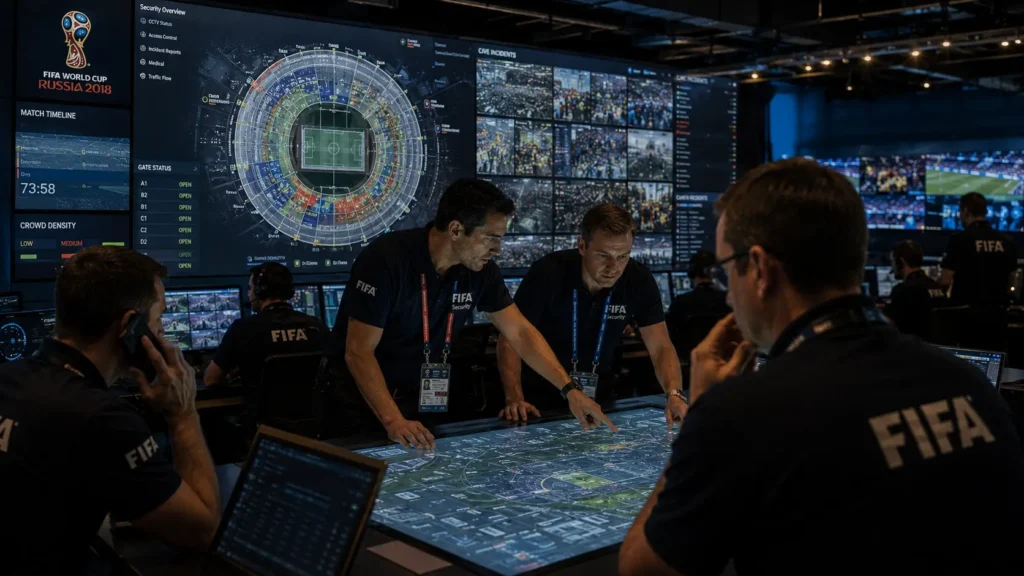
The most striking feature of these rooms is the enormous wall of screens displaying live information from every corner of the venue.
Operators monitor:
- Crowd movement
- Entry gates
- Security checkpoints
- Parking areas
- VIP zones
- Emergency exits
- Concession areas
- Team facilities
Advanced software helps staff identify unusual crowd behavior before it becomes a problem.
Many modern venues also use AI-powered video analytics to detect congestion, restricted-area access, or potential safety risks.
The goal is simple: maintain a safe and enjoyable experience for every fan inside the stadium.
How FIFA Uses Real-Time Data
Today’s World Cup stadiums generate enormous amounts of information.
Every ticket scan, camera feed, radio communication, and security alert can produce valuable operational data.
Inside the control room, teams continuously analyze this information to make fast decisions.
For example:
- Detecting overcrowded entry points
- Redirecting fans to faster entrances
- Coordinating emergency response teams
- Managing transportation flow
- Monitoring weather conditions
This hidden network of systems helps prevent small issues from becoming major disruptions.
The average fan may never notice these adjustments, which is exactly the point.
Security Is a Top Priority
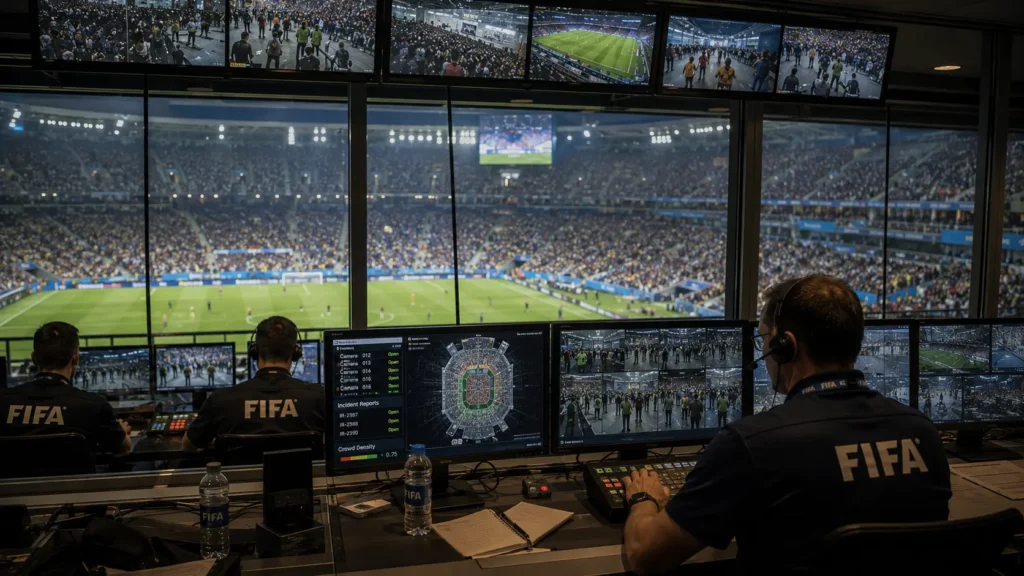
One of the most important responsibilities of the control room is security.
Major FIFA tournaments attract tens of thousands of spectators and worldwide attention. As a result, security planning is extremely sophisticated.
Inside the operations center, representatives from multiple organizations often work together, including:
- Stadium security teams
- Local law enforcement
- Emergency medical services
- Fire departments
- Transportation authorities
Using real-time communication systems, these teams can coordinate responses within seconds if an incident occurs.
The room essentially serves as the central nervous system of the entire venue.
The Role of Surveillance Technology
Many fans are surprised to learn how extensive stadium surveillance systems have become.
Modern venues may contain hundreds or even thousands of cameras covering virtually every public area.
The purpose is not simply monitoring spectators.
These systems help identify:
- Medical emergencies
- Security threats
- Crowd bottlenecks
- Unauthorized access attempts
- Suspicious behavior
Operators can instantly zoom into specific locations and coordinate responses with personnel on the ground.
This capability allows stadium officials to maintain awareness across facilities that can cover millions of square feet.
What Happens During an Emergency?
One reason FIFA venues invest heavily in these control centers is preparedness.
If an emergency occurs, the operations room becomes the command hub for response efforts.
Large digital maps display evacuation routes and crowd density information.
Officials can communicate with security staff, medical teams, transportation providers, and emergency responders simultaneously.
Because every second matters during a major event, centralized coordination can significantly improve response times.
Fortunately, most fans never witness this side of stadium operations.
More Advanced Than Many People Realize
The average spectator sees football.
The operators inside the control room see data.
They track crowd flow patterns, transportation logistics, security alerts, weather forecasts, infrastructure status, and communication systems—all at the same time.
Some experts compare modern stadium control rooms to miniature smart cities.
The technology involved rivals systems used in airports, transportation networks, and large-scale public events.
The Hidden Engine Behind the FIFA Experience
The next time you watch a FIFA World Cup match, remember that an invisible team is working behind the scenes.
While the players battle on the field, technology specialists and security professionals are managing a complex ecosystem that keeps the event running safely and efficiently.
Most fans will never see this secret room.
They will never walk through its secured doors or witness the wall of screens displaying live data from every corner of the stadium.
Yet without it, the modern FIFA experience simply would not be possible.
The stadium may have a heart on the pitch, but its brain is hidden deep inside a room that most fans never even know exists.
Read Also:
👉 https://aiwalanews.com/how-undersea-internet-cables-carry-99-of-global-data/
© AiwalaNews | Global Tech & Privacy Edition | April 2026
