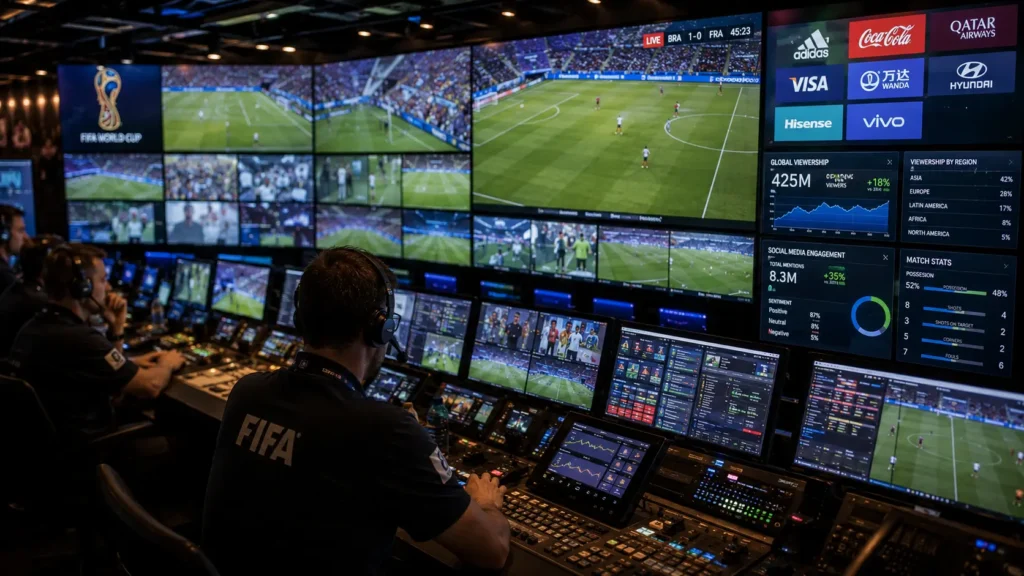
While fans focus on goals, group stages, and underdog stories, a much bigger number is quietly breaking records behind the scenes. FIFA World Cup 2026 isn’t just the largest tournament in football history it’s set to become the single most profitable sporting event ever staged on Earth.
The figures involved are almost difficult to comprehend. And the reasons behind them reveal exactly how modern sports economics actually works.
The Headline Number: How Much Is FIFA Actually Making?
Let’s start with the figure that’s dominating financial coverage of this tournament.
FIFA’s official 2023–26 budget originally targeted $11.0 billion in revenue. It has since revised that projection upward to a record ~$13.0 billion about 72% more than the $7.57 billion it earned across the 2019–22 Qatar cycle.
FIFA expects total income for the cycle to reach about $13 billion, with roughly $8.9 billion generated by the tournament in the United States, Mexico, and Canada alone.
Total revenues are projected to reach US$10.9 billion in 2026 a 56% increase compared to the 2022 World Cup in Qatar, which generated US$7 billion. Even using FIFA’s more conservative figures, this tournament is shattering every previous record by a wide margin.
Where the Money Is Actually Coming From
The revenue isn’t coming from one source — it’s a carefully engineered combination of four major streams.
Broadcasting rights remain FIFA’s largest source of income, contributing close to $4 billion. Sponsorship revenue is projected at around $1.8 billion, helped by new commercial partnerships, including a deal with Saudi energy giant Aramco.
Analysts expect the 2026 edition to break records in every category: Ampere Analysis projects roughly $3.8 billion in broadcast revenue (up about 22% on Qatar 2022) and around $2.4 billion in sponsorship (up about 37%). The standout market is the United States, where domestic media rights are estimated to have risen by around 94%.
Sponsorship revenue is expected to cross $2.8 billion, with over 6 million tickets expected to be sold and premium hospitality packages offering VIP experiences also becoming a major contributor to overall revenue.
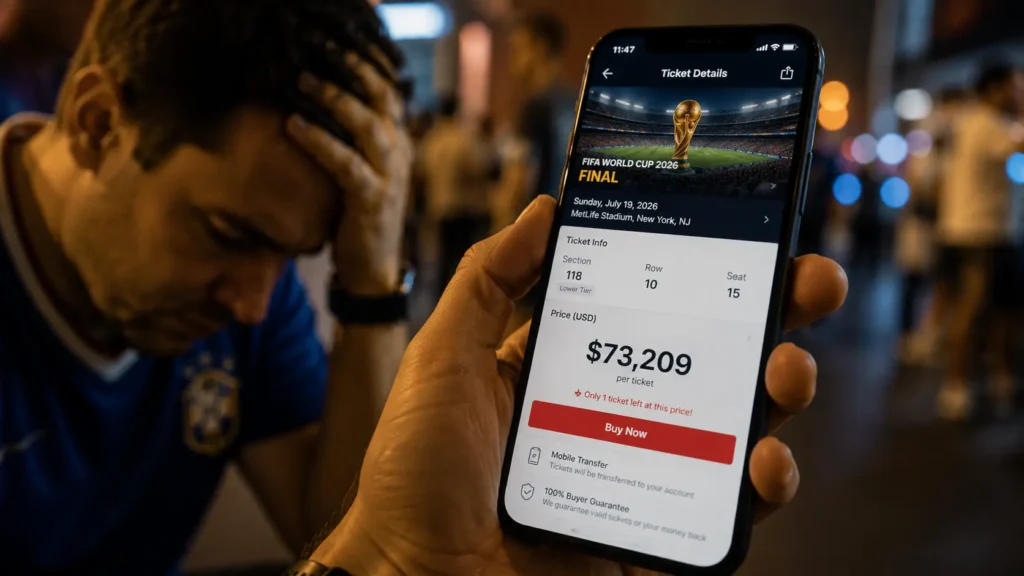
That last point matters more than most fans realize: this is the first World Cup where luxury hospitality packages and dynamic ticket pricing are functioning as core revenue engines, not side offerings.
Why Hosting Three Countries Changes the Math Entirely
This tournament’s profitability isn’t an accident it’s a direct result of structural decisions FIFA made years in advance.
Unlike Brazil in 2014, which required major stadium construction and renovation, the 2026 tournament is relying on existing major sports venues in all three countries. This reduces the financial risk tied to new construction of venues that may have limited use once the tournament ends.
In simple terms: FIFA gets the revenue of hosting in the world’s wealthiest consumer market, without absorbing the massive infrastructure costs that crippled the economics of past tournaments like Qatar 2022.
Qatar had enough capital to bid aggressively and spend an estimated $220 billion to host the event, making it the most expensive World Cup in history. The 2026 model flips that equation almost entirely lower build costs, higher commercial returns.
The Scale Effect: More Games, More Money, More Everything
Simple math is doing a lot of the heavy lifting here.
There’s more of everything this time. More matches, 104 instead of 64. More teams, 48 instead of 32. And a bigger global audience tuning in from every corner of the world. Put it together, and the equation is clear: more football equals more revenue.
The 2026 World Cup is set to be the richest sporting event ever staged a roughly $13 billion machine powered by American broadcasters, a globe-spanning roster of corporate backers and, more controversially, the fans in the seats.

The Controversial Side of the Profit Machine
Not everyone is celebrating these numbers and the criticism is becoming part of the story itself.
FIFA’s first-ever dynamic pricing pushed final-match resale listings toward $2 million and triggered a US state investigation.
Exorbitant ticket prices, dictated by dynamic pricing and both authorised and unauthorised scalpers, were debuted at the FIFA Club World Cup, seen as a dry run for 2026. Amid the storm and incredulity and fury that has greeted FIFA’s profiteering, the question of how Infantino actually intends to spend the money has arguably been missed.
After FIFA pays its staff and covers operating costs, profits are distributed to the football associations of its 211 member nations though that distribution will probably take no more than 10 per cent of the revenues from the competition. Even accounting for higher running costs for the expanded tournament, FIFA is still going to be looking at probably a $10bn profit.
The Bigger Economic Picture Beyond FIFA Itself
FIFA’s own revenue is actually a small slice of the total economic story.
The 2026 FIFA World Cup could generate more than $80 billion in global economic impact when accounting for tourism, hospitality, local business activity, and broadcasting infrastructure across all three host nations.
But economists caution against taking these figures at pure face value. Economists have long argued that such estimates can overstate the overall impact by overlooking displacement effects regular tourists may avoid crowded host cities, residents may shift spending rather than increase it, and governments may divert public funds from other priorities to support the event.
Research by Natixis suggests the broader economic impact of the 2026 World Cup could be relatively modest compared to the headline projections a reminder that FIFA’s profit and a host city’s actual economic gain are two very different numbers.
Why FIFA Isn’t Worried About the “Loss Years”
Here’s a detail that surprises most fans: FIFA technically loses money most years.
The losses recorded by FIFA from 2023 to 2025 should not be viewed as a sign of weakness, but rather as a logical and expected consequence of its financial model. The organization operates on a four-year cycle, traditionally in the red in years leading up to the World Cup due to massive investments required to prepare the tournament.
According to projections, FIFA is expected to record more than US$1 billion in net profit over the 2023–26 four-year cycle, confirming the strength of its business model.
In other words: the “deficit years” were never a warning sign. They were simply FIFA loading the cannon for this exact summer.
The Bottom Line
FIFA World Cup 2026 isn’t just breaking attendance and viewership records it’s rewriting what’s financially possible for a single sporting event. This tournament marks a major turning point, backed by an extremely lucrative North American market.
Whatever happens on the pitch over the next several weeks, one outcome is already mathematically certain: this World Cup will be remembered as much for its economics as for its football.
Read Also:
- 🔗 The $50,000 FIFA 2026 Travel Packages Rich Fans Are Buying
- 🔗 How Americans Are Making Thousands Renting Their Homes During FIFA 2026
© AiwalaNews | Global Tech & Privacy Edition | June 2026
