
Every time the World Cup draw airs live, something predictable happens. Commentators pull up the seeding pots, a “weak” looking team sits comfortably in Pot 1, and social media erupts. How did that side avoid the group of death while a team that looked genuinely frightening in warm up friendlies got dropped into a brutal group instead? The answer isn’t punditry, gut feeling, or recent form the way casual fans imagine it. It comes down to a single evolving number, recalculated after almost every match a national team plays, known officially as the FIFA World Ranking.
Borrowed From Chess, Not Football
The ranking system runs on a modified version of the Elo rating system, the very same mathematical framework originally built decades ago to rank competitive chess players. Every national team carries a numeric rating that shifts upward or downward after each official match instead of being recalculated from scratch on a fixed schedule. FIFA refers to the current version as the “SUM” method, since it adds or subtracts points from a team’s existing total after every game rather than averaging results across a set time window like the older system used to.
That distinction matters more than it sounds. The pre 2018 model averaged a team’s performance across the previous four years, meaning a federation could quietly protect its position by simply avoiding risky fixtures. The current model reacts instantly. Win convincingly against a strong opponent and the points land immediately. Lose unexpectedly and the damage shows up right away too, with nowhere to hide behind an old average.
The Core Formula
Stripped of jargon, the math looks roughly like this. New rating equals old rating plus an importance multiplier times the gap between actual result and expected result. Three ingredients drive that equation. The actual result itself, meaning a win, loss, draw, or shootout outcome converted into a numeric value. The expected result, calculated from the gap between both teams’ ratings before kickoff, which essentially measures how big an upset or how routine a win truly was. And finally a match importance multiplier, since not every fixture on the calendar counts the same.
That final ingredient explains most of the “why did that team suddenly jump the table” confusion fans experience every year.
Why a Friendly Isn’t Worth the Same as a Knockout Tie
FIFA assigns every match a weighting based on its stakes, and the range between categories is dramatic. A meaningless late season friendly between two already eliminated nations barely nudges the number at all. A World Cup knockout match, on the other hand, carries one of the heaviest multipliers built into the entire system. This tiered structure exists deliberately, designed to stop federations from artificially inflating their position by scheduling a string of easy friendlies against weaker opposition right before a major seeding date, a trick that plagued the older averaging system for years.
In simple terms, defeating a part time squad from a minor footballing nation during a June friendly does almost nothing for a team’s rating. Grinding out a hard fought win against a genuine contender in a qualifier or a knockout tie does a tremendous amount.
What “Dangerous” Actually Means in This Context
It helps to be precise about what the ranking truly measures, because it isn’t quite what most fans assume. The formula rewards a long stretch of consistent results far more heavily than it rewards a single spectacular tournament run, and it punishes one disappointing tournament less severely than people expect. A team that reliably wins its qualifiers, even against modest opposition, while avoiding damaging upsets, will hold a high position even without ever lifting a major trophy. That explains why a squad with fading stars and no recent silverware can still sit near the top for years. The number tracks sustained consistency over time, not trophies, star power, or the raw “eye test” a fan applies while watching a match unfold live.
The honest takeaway is that this ranking answers a very specific question, which teams have been hardest to beat over a long stretch, rather than which team looks most terrifying walking into this particular tournament.
Where the Number Actually Matters: The Draw
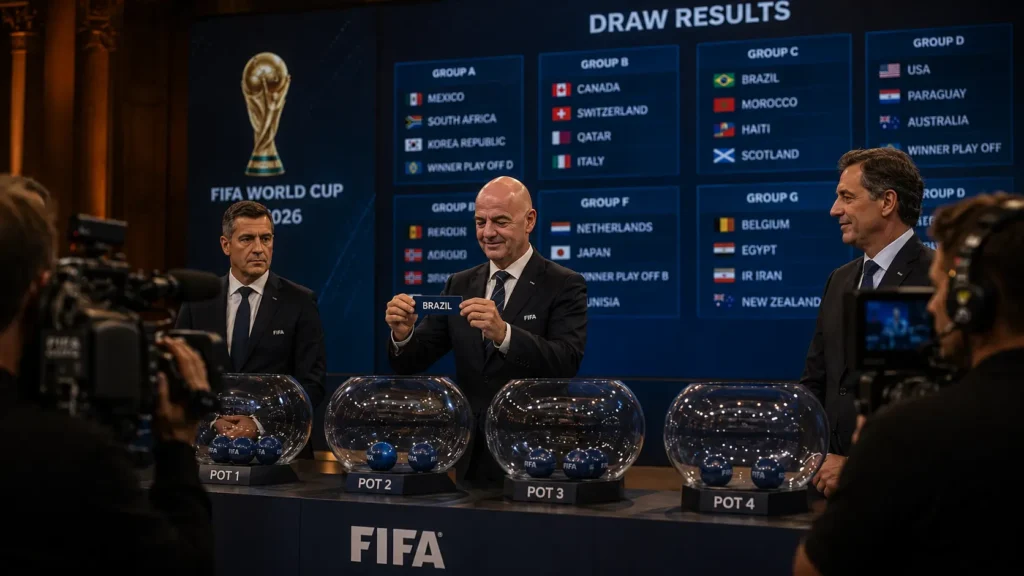
This is where the ranking carries genuine consequences beyond bragging rights. When FIFA sorts nations into seeding pots for qualifying rounds or the finals draw itself, it relies on the current ranking to spread the strongest sides across different groups instead of letting them cluster together into one brutal group of death. The same principle applies across regional tournaments and youth competitions FIFA oversees as well. A team sitting just inside a higher pot rather than just outside it can end up with a noticeably easier or harder route through an entire campaign, purely because of where the numbers landed on publication day.
For the 2026 World Cup specifically, the overwhelming majority of qualified nations sit comfortably inside the upper half of the global rankings, a reminder that despite its quirks, the system’s picture of footballing strength broadly aligns with who actually earns a spot on the biggest stage.
The Catch Fans Often Miss
A strong ranking is never a guarantee of anything on matchday. It functions purely as a seeding tool rather than a form guide, and it says nothing about injuries, tactical setup, or the specific opponent standing across the pitch. A side can arrive with an excellent ranking and still crash out in the group stage against a lower ranked team simply playing better football that day. The number describes a trajectory built over years, not who wins Tuesday’s match under floodlights.
That, in the end, is the honest way to understand FIFA’s “danger” score. It isn’t really a prediction of who will terrify opponents at this World Cup. It’s a rolling scoreboard of who has quietly avoided losing to teams they shouldn’t, consistently, against opponents that genuinely mattered.
Read also this: World Cup 2026 Format Explained
Read also this: How FIFA Seeding Shapes the Draw
© AiwalaNews | Global Tech & Privacy Edition | April 2026
