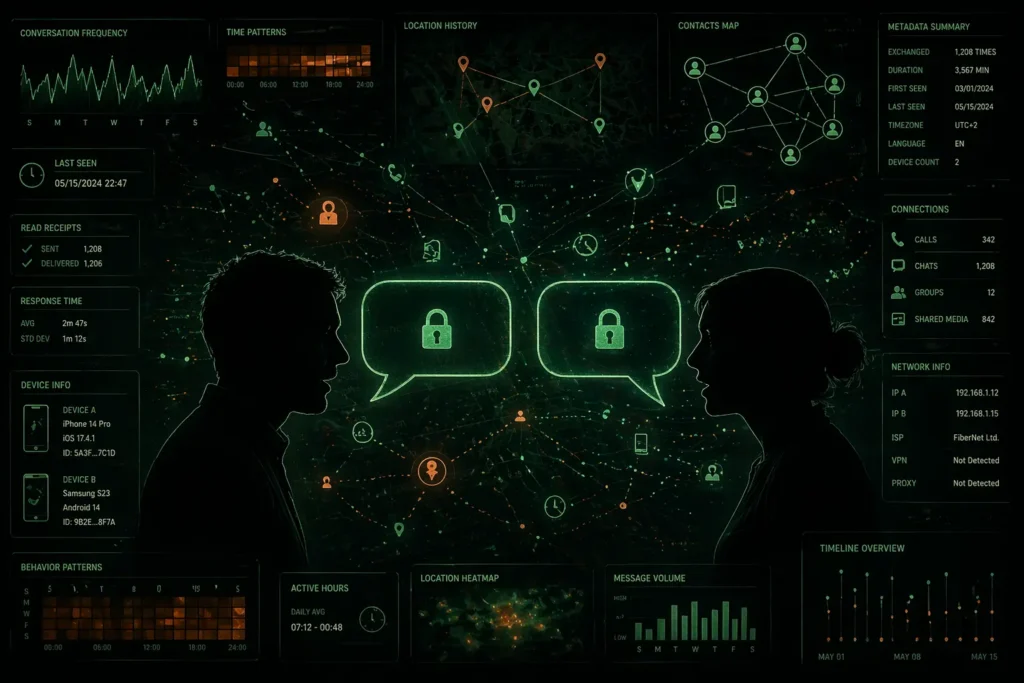
The messages are protected. Everything around them isn’t. And that distinction is worth understanding before your next conversation.
WhatsApp has told you repeatedly, prominently, and with genuine technical accuracy that your messages are end-to-end encrypted. Nobody can read them. Not hackers. Not governments. Not WhatsApp itself.
That part is true.
Here is what is also true: WhatsApp, owned by Meta, is simultaneously running one of the most comprehensive behavioral data collection operations on the planet and your encrypted messages are just the one thing it isn’t collecting.
Everything else? Wide open.
What End-to-End Encryption Actually Means
Before the list of what WhatsApp collects, understand exactly what encryption does and doesn’t protect.
End-to-end encryption secures the content of your messages in transit. The words you type, the photos you send, the voice notes you record these travel encrypted from your device to the recipient’s device. WhatsApp cannot read them. This is real, and it matters.
But encryption protects content. It does not protect metadata and metadata is what WhatsApp is actually after.
“They can’t read your messages. They don’t need to. What surrounds your messages tells them everything they need to know.”

What WhatsApp Is Actually Collecting
Who you talk to and when. WhatsApp logs every contact you message, how frequently, at what times, and for how long your conversations run. It doesn’t know what you said. It knows you messaged your doctor at 11pm on a Tuesday, your lawyer three times this week, and someone new every Friday night. That pattern is a profile.
Your precise location. Even with location sharing turned off in chat, WhatsApp collects your IP address continuously which reveals your city, neighborhood, and often your specific location with surprising accuracy. If you share live location with any contact, that data is logged, stored, and retained far beyond the sharing session.
Your phone’s complete identity. Device model, operating system, battery level, screen resolution, mobile network, ISP, browser details, and a unique device fingerprint that identifies you even if you change your phone number or reinstall the app.
Every interaction inside the app. Which messages you open and when. Which you ignore. How long you spend reading a message before responding. Whether you viewed a status update. Which businesses you interact with. Your behavioral rhythm inside the app is being measured continuously.
Your contacts whether they use WhatsApp or not. If you grant WhatsApp contacts permission, it uploads and retains your entire address book including people who have never downloaded the app and never consented to their information being shared with Meta.
Your financial behavior. In markets where WhatsApp Pay is active including India, Brazil, and expanding globally transaction data, payment patterns, and financial behavior are collected and integrated into your Meta profile.
Where This Data Actually Goes
WhatsApp and Meta share data across their entire platform ecosystem Facebook, Instagram, Messenger, and the broader Meta advertising infrastructure.
Your WhatsApp metadata who you talk to, when, how often, from where feeds directly into the cross-platform behavioral profile Meta maintains on you. This profile informs every ad you see across every Meta product. It informs the content algorithm. It informs what you’re shown, when, and in what emotional context.
In the USA, this data sharing is legal and explicitly disclosed buried in a privacy policy most users have never read. In the EU, GDPR enforcement has repeatedly challenged Meta’s cross-platform data integration, resulting in significant fines. In India, where WhatsApp has over 500 million users its largest market globally data regulation is still developing, leaving the majority of users with limited practical recourse.
The Business Account Loophole
Here is the part most WhatsApp users have never considered.
When you message a WhatsApp Business account a brand, a retailer, a service provider the encryption rules change. Business accounts can use Meta’s hosting infrastructure, which means your messages to businesses can be read, stored, and used by Meta for advertising purposes.
Every time you message a business on WhatsApp to ask about a product, make a complaint, or request support that conversation is potentially accessible to Meta’s advertising systems.
The encrypted chat you trust for personal conversations operates under different rules the moment a business account enters the thread.
What You Can Actually Do
Limit what WhatsApp can see. Go to WhatsApp → Settings → Privacy. Set Last Seen, Online Status, and Read Receipts to maximum restriction. While this doesn’t stop metadata collection, it reduces the behavioral signals available to other users and third-party integrations.
Revoke contacts permission. On iPhone: Settings → Privacy & Security → Contacts → WhatsApp → toggle off. On Android: Settings → Apps → WhatsApp → Permissions → Contacts → Deny. WhatsApp functions without full contacts access. It just prefers you don’t know that.
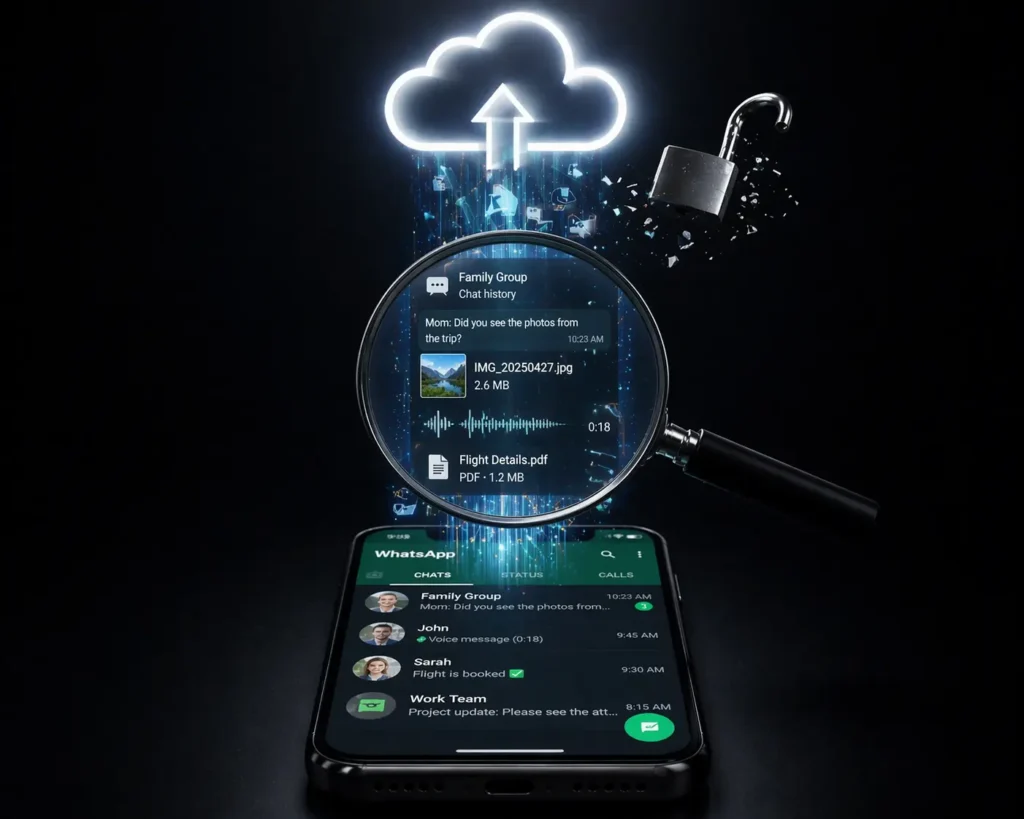
Disable cloud backups. WhatsApp backups stored on Google Drive or iCloud are not end-to-end encrypted by default. Your entire message history sitting in cloud backup is readable by Google, Apple, and accessible to law enforcement requests. Go to Settings → Chats → Chat Backup → disable automatic backup, or enable end-to-end encrypted backup manually.
For genuinely sensitive conversations use Signal. Signal collects virtually no metadata. No contact uploads. No behavioral logging. No parent company with an advertising business model. The architecture is built around privacy rather than retrofitted with it.
The Honest Picture
WhatsApp’s encryption is real. The company is not lying about that and in a world of intercepted communications, that protection genuinely matters.
But WhatsApp is a Meta product. Meta’s business is behavioral data. These two facts exist simultaneously, and understanding both is what separates informed users from people who feel protected because a padlock icon appears next to their chat.
Your words are encrypted. Your life, as expressed through who you call, when, where, and how often is not.
That is what WhatsApp is collecting. Every single day.
© AiwalaNews | Global Finance & Privacy Edition | April 2026
