
You didn’t get a warning.
No phone call. No urgent email. No bank notification. While you were living your normal life working, sleeping, scrolling one of the largest data breaches in American history was quietly exposing the personal information of millions of people.
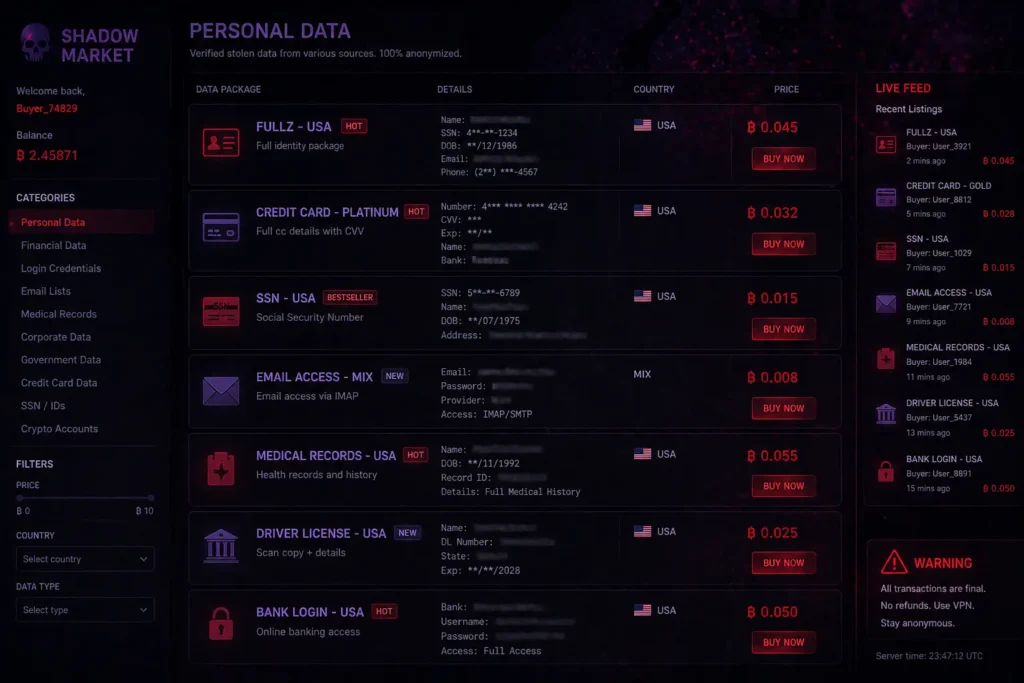
By the time the story broke, the damage was done. The data was already moving through dark web marketplaces. Already being purchased by criminals who specialize in turning stolen records into stolen money.
Here’s what was taken. Here’s how it happened. And here’s exactly what to do right now.
What Happened
In early 2026, a major national data aggregator a company most Americans had never heard of, despite it holding records on virtually every US adult was catastrophically compromised.
These companies sit invisibly behind the consumer economy, collecting and selling personal data to insurers, lenders, and marketers. When their systems failed, the exposure wasn’t limited to one company’s customers. A single breach touched hundreds of millions of Americans simultaneously.
What was exposed:
Full legal names. Home addresses. Social Security numbers. Date of birth. Phone numbers. Email addresses. Financial account information. Credit history. Medical insurance identifiers.
Not every field for every person. But for tens of millions of Americans, multiple sensitive data points were exposed together — giving criminals everything needed to commit identity theft, open fraudulent accounts, and drain existing finances.
Why This Breach Is Different
Americans have grown numb to breach headlines. Target. Equifax. Yahoo. The announcements come and life continues.
This one is different for three reasons.
The data is more complete. Previous breaches typically exposed one or two data points. This breach exposed multi-field records combining identity, financial, and contact information making fraud dramatically easier.
You won’t be notified. When your bank gets breached, your bank tells you. When a data aggregator you’ve never interacted with gets breached there is no direct relationship and often no direct notification. Millions of affected Americans will never receive any official communication.
The data is already being used. Security researchers confirmed active trading of 2026 breach data on dark web marketplaces within weeks of the compromise. This is not a future risk. For many Americans it is a present one.
What Criminals Do With Your Data
Identity theft is the most immediate threat. Using your name, SSN, and date of birth, criminals open credit cards and loans in your name. You discover the damage months later when your credit score collapses without explanation.
Tax refund fraud moves fast. Criminals file a tax return in your name before you do, claim your refund via prepaid debit card, and vanish. When you file legitimately your return gets rejected. Resolving it takes months.
Account takeover uses your exposed email combined with passwords from previous breaches. Knowing that 65% of Americans reuse passwords, criminals systematically attempt stolen credentials across banking and investment platforms.
Medical identity theft uses your insurance identifiers to receive treatment or prescriptions under your coverage contaminating your medical records with someone else’s health information in ways that can affect your actual care.
Check If Your Data Was Exposed – Right Now
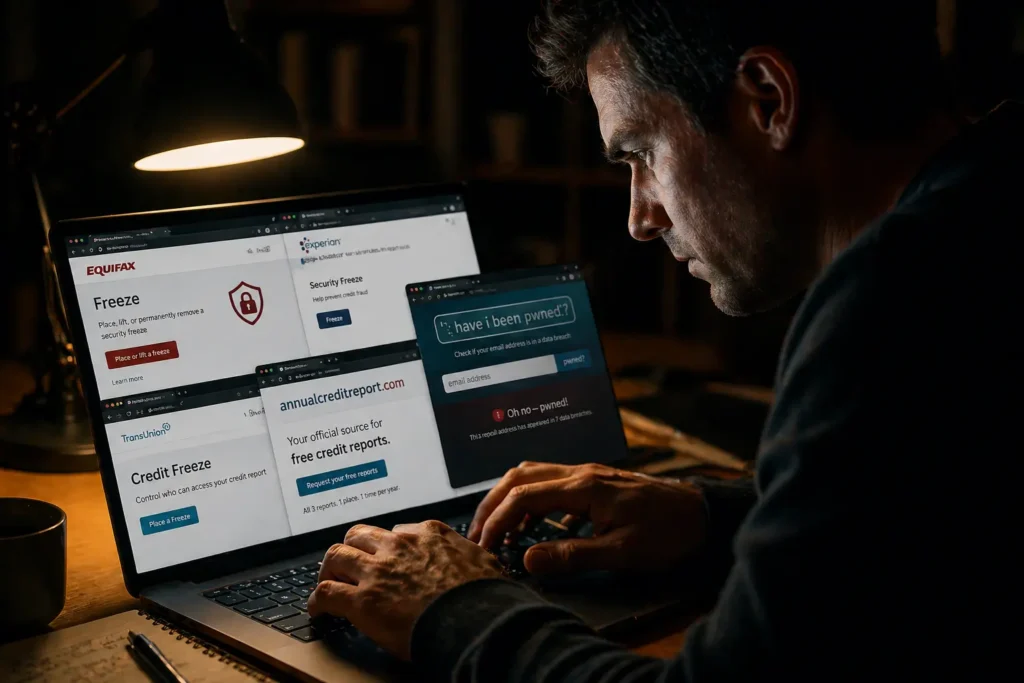
HaveIBeenPwned.com Enter every email address you use. This free tool shows every known breach your email has appeared in. Do this first.
AnnualCreditReport.com Pull all three credit reports Equifax, Experian, TransUnion. Look for accounts you didn’t open, inquiries you didn’t authorize, addresses you don’t recognize. You’re entitled to free weekly reports under federal law.
SSA.gov Log into your My Social Security account. Review your earnings record for any employment that isn’t yours a sign someone may be using your SSN for work authorization fraud.
Five Things to Do Today – In This Order
These five steps take under 30 minutes. Do them before you close this article.
1. Check haveibeenpwned.com for every email address you use.
2. Pull all three credit reports at AnnualCreditReport.com. Review every line.
3. Freeze your credit at all three bureaus Equifax, Experian, and TransUnion separately. It’s free. It doesn’t affect your existing accounts or credit score. It prevents any new credit being opened in your name even if criminals have your complete personal information.
4. Change passwords on banking, email, and investment accounts. Use Bitwarden (free) or 1Password to generate unique passwords for every account. One breach cannot cascade into ten.
5. Enable authenticator app 2FA on every financial and email account. Remove SMS-based verification wherever possible it is the weakest protection available and trivially bypassed through SIM swapping.
The Uncomfortable Truth
Data breaches are no longer isolated incidents. They are the permanent condition of the modern internet.
Your personal information has almost certainly already appeared in multiple breach databases from incidents you were never notified about, involving companies you never directly interacted with.
The goal in 2026 is no longer preventing your data from being stolen. The goal is making stolen data as useless as possible through credit freezes, strong unique passwords, and consistent monitoring.
None of these steps are difficult. None are expensive. Most are completely free.
But none of them work if you don’t actually do them.
The breach already happened. The data is already out there.
What happens next depends entirely on whether you act today or wait until a fraudulent credit card statement tells you someone already did.
Don’t wait for that letter.
It arrives too late.
📌 Read Also:
- 7 Chrome Extensions You Should Delete Right Now for Your Safety
- This Tiny Device Is Blocking Hackers From Stealing Your Data
© AiwalaNews | Global Tech & Privacy Edition | April 2026
