This article is based on peer-reviewed research published in the ACM Internet Measurement Conference, Texas Attorney General lawsuit documentation, Kentucky HB 692 legislative analysis, IAPP legal reporting, and Samsung’s official ACR documentation. This is for informational purposes.
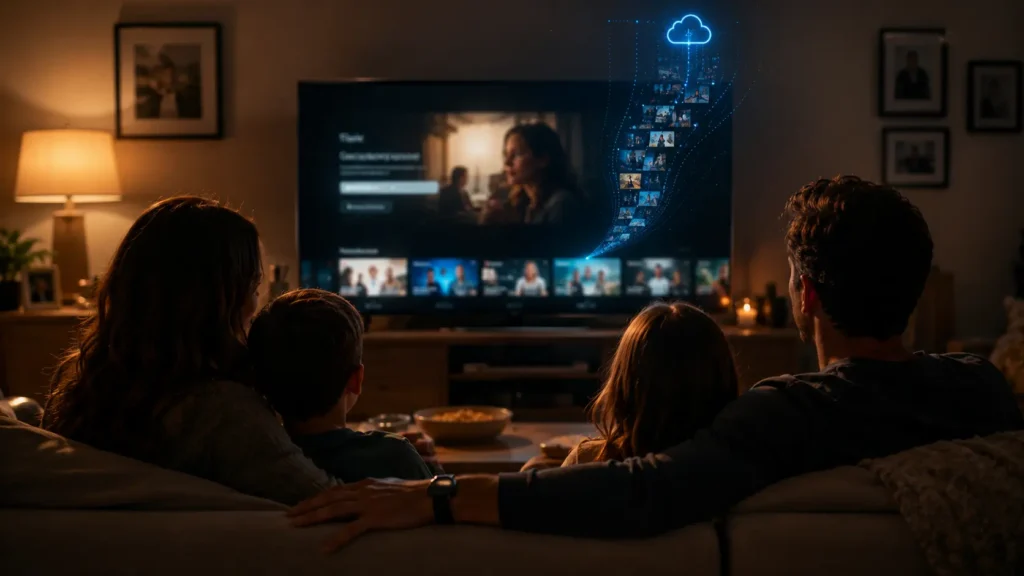
You bought a TV. You didn’t sign up for a surveillance device. But the moment you connected it to WiFi and pressed power for the first time, a system called Automatic Content Recognition ACR switched on. And it hasn’t stopped running since.
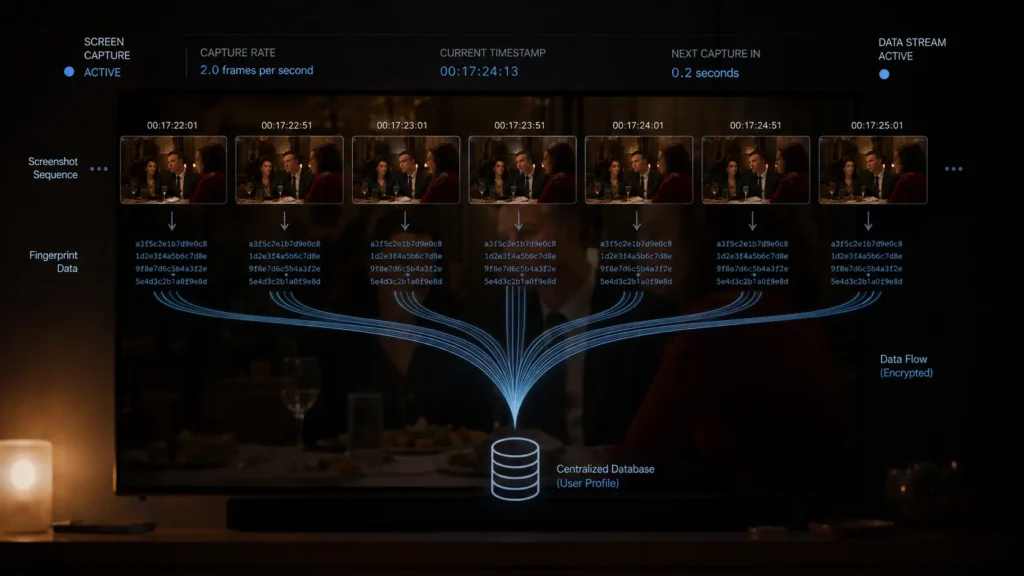
ACR technology captures screenshots of your screen every 500 milliseconds twice per second and compares them against a database of known content. The system identifies exactly what you’re watching, when you’re watching it, and for how long.
Not just streaming apps. Not just network TV. Everything.
Unlike traditional app tracking, ACR captures everything displayed via HDMI meaning your TV is fingerprinting your gaming consoles, cable boxes, and connected laptops.
What ACR Is Actually Doing Inside Your TV
A Samsung TV takes glass-level screenshots every 500 milliseconds and converts them into fingerprints that are matched against a database of known content. ACR-enabled tracking goes far beyond the familiar capability of apps to track in-app viewing instead, the purpose of ACR is to identify any content shown on the TV, across all apps, channels, and external devices, building up a detailed history of content viewed over potentially many years of use.
A peer-reviewed study published in the 2024 ACM Internet Measurement Conference reveals that LG TVs capture on-screen data every 15 seconds, while Samsung TVs transmit data every minute.
That data goes somewhere specific. ACR shares data with manufacturers, advertisers, and analytics companies tracking viewing habits across apps, inputs, and platforms, serving targeted advertisements based on preferences, and synchronizing advertising across devices from TV to smartphone. Viewing habits can reveal more than just entertainment preferences they can reflect political leanings, religious beliefs, health concerns, or personal struggles.
The business model is stark. It was reported that smart television manufacturer Vizio profited more from the sale of their customers’ data than from the televisions they sold. Your $400 TV wasn’t the product. You were.
The Lawsuits That Confirmed What Most Americans Didn’t Know
The legal record on ACR is extensive and damning.
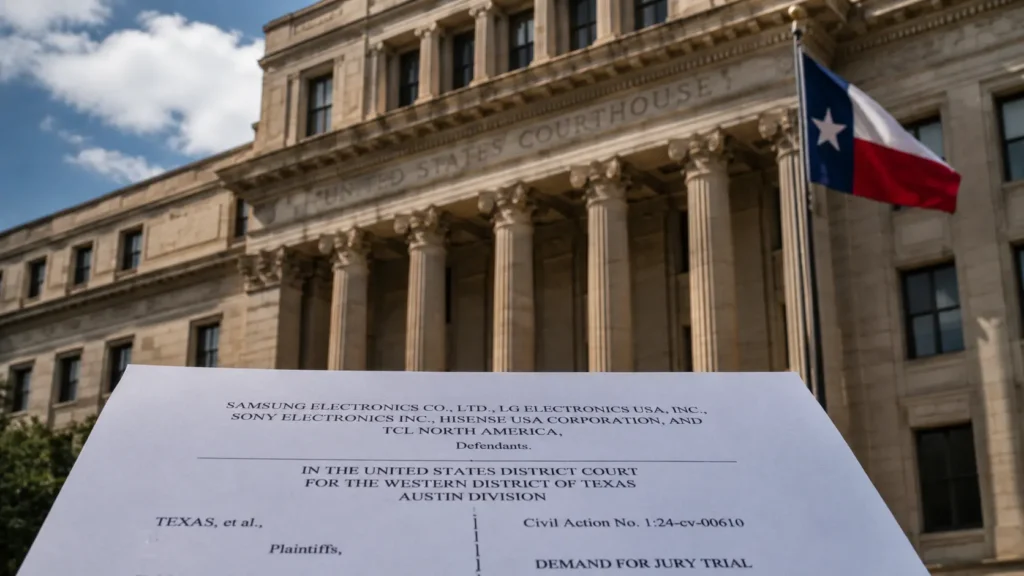
Texas Attorney General Ken Paxton launched a series of lawsuits in December 2025 targeting five television manufacturers Sony, Samsung, LG, Hisense, and TCL for allegedly unlawfully collecting and monetizing consumers’ television-viewing data through ACR technology installed in smart TVs. Paxton argued ACR enables smart TVs to monitor consumers’ television screens in real time, including content viewed through cable boxes and other HDMI-connected devices. His office obtained temporary restraining orders against Hisense and Samsung, halting certain ACR-related data collection practices in Texas.
The FTC’s investigation into Vizio resulted in a $2.2 million fine for unauthorized data collection showing that TV spyware is not just real, it’s prevalent.
The Vizio case revealed the shocking extent of modern TV surveillance. Starting in February 2014, Vizio sold over 11 million smart TVs with ACR software installed and enabled by default. Consumers who purchased these TVs had their viewing habits tracked from the moment they turned on their sets.
The National Security Dimension
The data broker angle is uncomfortable. The national security dimension is worse.
National security concerns are focused on the collection of consumer behavioral data rather than direct surveillance measures. “Whenever you have sensitive data being sent to unknown actors, whether they be foreign or domestic, that creates sensitivities. Being able to know more about a particular consumer and target them in ways that might cause harm can create national security issues,” according to privacy legal analyst Alva.
Several of the five TV brands named in the Texas lawsuits are Chinese-owned or Chinese-manufactured. The data ACR collects detailed records of what 100 million Americans watch in their homes, correlated by address and linked to broader consumer profiles represents exactly the kind of behavioral intelligence dataset that has triggered national security concerns across government agencies.
The First Law: Kentucky Moves to Stop It
Kentucky’s HB 692 sailed through the House with a unanimous 92-0 vote on March 13, 2026. The bill adds ACR data to the state’s definition of “sensitive data” meaning TV makers would need explicit opt-in consent before collecting it. This is the first state legislation to specifically target smart TV surveillance technology. Effective date: July 1, 2027.
The unanimous vote is significant. This isn’t a partisan privacy issue it’s a consumer protection issue that found cross-aisle agreement. Texas’s lawsuit-driven approach and Kentucky’s legislative approach together signal a regulatory shift that the smart TV industry has been successfully avoiding for a decade.
How to Turn It Off Every Brand, Right Now
Every major smart TV brand uses ACR to capture screenshots of your screen and sell your viewing data. Here’s how to disable it on every brand in under two minutes.
Samsung: Settings → Privacy → Viewing Information Services → toggle off. Alternative path: Settings → Support → Terms & Conditions → turn off Viewing Information Services.
LG: LG’s ACR is called “Live Plus.” Settings → All Settings → General → Live Plus → toggle off.
Sony: Settings → Device Preferences → Samba TV → toggle off. Or: Settings → About → Legal Information → Samba Interactive TV.
Vizio: Menu → System → Reset & Admin → Viewing Data → toggle off.
TCL/Roku: Settings → Privacy → Smart TV Experience → toggle off “Use Information for TV Inputs.”
Amazon Fire TV: Settings → Preferences → Privacy Settings → toggle off “Collect App and Over-the-Air Usage Data.”
Hisense: Settings → System → Privacy Settings → Viewing Data → toggle off.
Do this now — before you watch another thing. The setting turns off new collection going forward. It does not delete historical data already transmitted.
The underlying issue with ACR and similar technologies is the erosion of in-home privacy. A TV isn’t simply a monitor it’s also a data collection device, connected to the local network and part of a smart home.
The living room was the last private space. ACR made it the most surveilled one.
The opt-out is two minutes. The data collection, if you don’t act, is continuous.
Note: Settings paths may vary by TV model and firmware version. Verify current settings in your specific TV’s menu. This article is for informational purposes — not legal advice.
© AiwalaNews | Global Tech & Privacy Edition | May 2026
Read Also:
- 🔗 Why Every American’s Data Was Already Sold
- 🔗 How to Disappear From Google Search Completely — Legal and Free
