You and your neighbor drive the same model car. You both live on the same street, in the same ZIP code, under the same weather, the same crime rate, the same roads. And yet your car insurance bill is $40 a month higher than theirs.
It feels random. It isn’t. The gap isn’t pricing whim it’s the output of a multi-factor risk model that carriers refine over decades, drawing on factors ranging from driving history to credit-report signals to connected-vehicle data.
Here’s exactly what’s happening behind the scenes and what you can actually do about it.
It Starts With an Algorithm You’ll Never See
Insurance companies use a complicated math equation called an algorithm to determine how they price their coverage. Each company prices coverage differently, and they don’t share this information with each other which is exactly why rates differ depending on your personal information.
A base rate is determined for your profile and vehicle, then adjusted using surcharges and discounts. Each carrier determines how much weight it places on each individual factor, with higher rates applied to risk pools the carrier prefers to limit.
This means two people with nearly identical situations can get two completely different numbers not because one company made a mistake, but because each insurer is quietly running its own private formula.
Same Street, Different Risk Score
This is the part that surprises people the most: your address matters at a much more granular level than just “city” or “state.”
Location is one of the most powerful pricing factors in car insurance, and it operates at every level from state down to ZIP code. Two drivers with identical profiles can pay very different premiums simply because of where their car is garaged.
To assess risk, insurers study crime rates, neighborhood densities, the number and severity of claims made annually, and even local weather patterns.
So even within the same neighborhood, the exact block, parking situation, or even which side of a street divide your home sits on can shift your risk score.
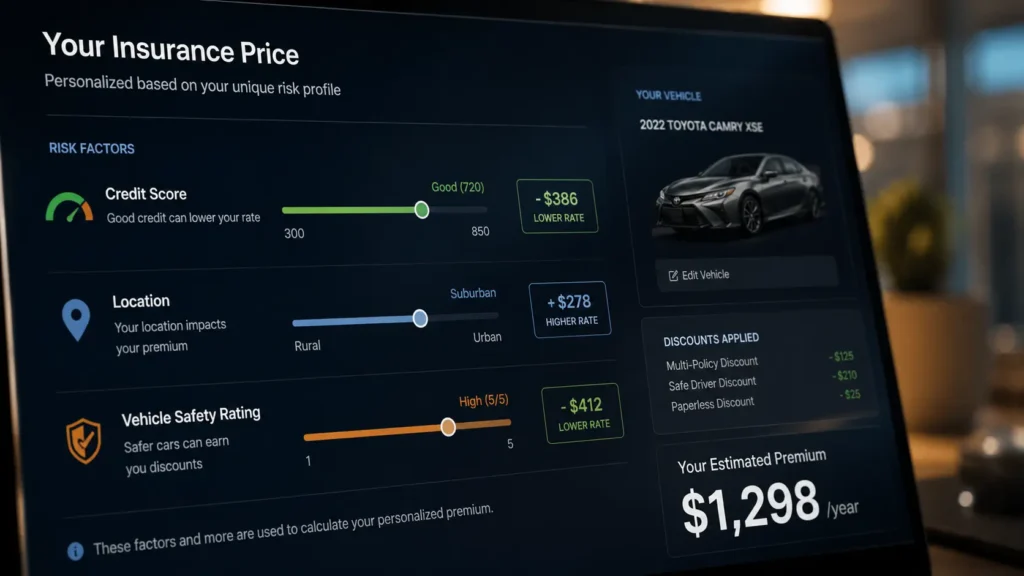
Your Credit Score Is Quietly Setting Your Price
Here’s a factor most drivers don’t realize is even legal but in most states, it is.
In a real example used by industry experts, a base rate of $1,200 a year dropped to $1,050 once the driver’s good credit history was factored in. In most U.S. states, underwriters pull credit-based information as part of the rating process meaning your neighbor’s slightly better credit history alone could be the entire difference between your two bills.
The Car Itself Tells a Hidden Story
Even an identical-looking car can carry a different price tag depending on small details.
Insurers consider factors such as repair costs, engine size, safety ratings, and accident and theft rates when determining auto insurance rates. Higher trim levels and aftermarket performance parts can increase your rates, while safety enhancements can often lower them.
Advanced driver-assistance systems are now tracked at the VIN level and increasingly factored directly into rate calculations. Real-world crash data shows automatic emergency braking cuts rear-end collision rates by roughly half in equipped vehicles and carriers translate findings like that directly into safety-feature discounts.
If your neighbor’s car has a slightly higher safety-tech trim than yours, that alone can shave real money off their bill.
Age, Marital Status, and a History You Didn’t Know Mattered
Personal life details not just driving records quietly shape your price too.
Married couples save 4% to 10% on car insurance compared to single drivers, since some insurers consider married people to lead less-risky lives.
Continuous coverage history matters more than people realize a lapse in coverage signals to insurers that you were either unable or unwilling to maintain insurance, which is treated as a risk factor regardless of your actual driving record.
Rates also often increase at the first renewal after switching carriers, when new-customer discounts drop off meaning your neighbor may simply be earlier or later in their loyalty discount cycle than you are.
The Telematics Factor: Are You Being Watched While You Drive?
This is the newest and most controversial piece of the puzzle.
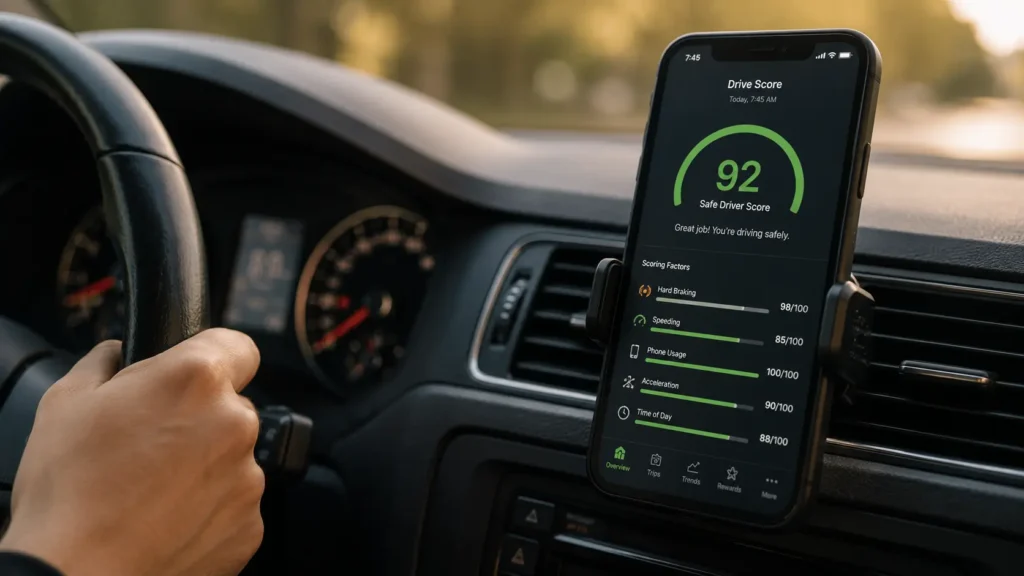
In 2026, usage-based insurance and telematics programs continue expanding across carriers, with insurers using behavioral data like speed, braking, and acceleration to refine individual risk scores. Safe driving patterns may result in discounts, while consistently aggressive driving behavior can increase renewal premiums.
For safe drivers, telematics programs are one of the most effective ways to lower premiums, with potential savings of up to 30 percent for safe driving behavior. If your neighbor opted in and you didn’t or vice versa that alone could explain a meaningful chunk of the gap.
Loyalty Isn’t Always Rewarded It’s Sometimes Punished
Here’s an uncomfortable truth most long-term customers never learn.
Many drivers believe sticking with the same insurer for years will automatically result in lower rates. However, some insurance companies practice price optimization gradually increasing premiums for long-term customers who are less likely to shop around.
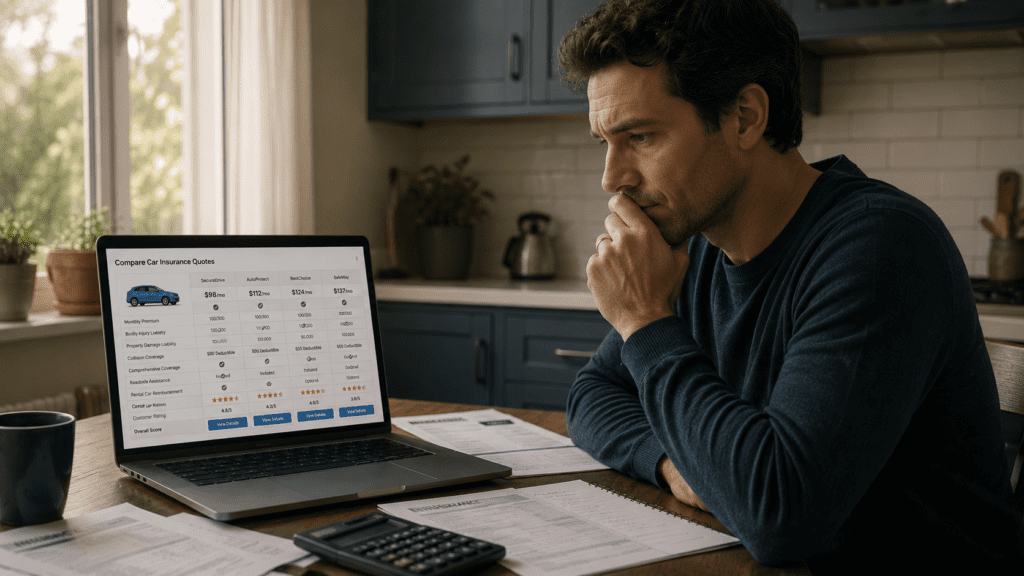
Comparing quotes from different insurers every year or two can help ensure you’re still getting the best deal, and some companies even offer new-customer discounts that make switching worthwhile.
If your neighbor switched insurers more recently than you, that alone could be costing you hundreds per year.
What You Can Actually Do About the Gap
The good news: most of these factors aren’t fixed. They’re levers.
1. Shop your policy every 1–2 years not just when something changes.
Compare quotes every one to two years, or whenever you experience a major life change, such as moving, getting married, or buying a new car.
2. Ask about telematics but read the fine print first.
Before enrolling in a telematics program, review how the insurer uses your data some programs offer participation discounts, while others adjust renewal pricing based on performance metrics.
3. Check whether your credit score is dragging your rate down.
A small credit improvement can directly translate into a measurably lower base rate.
4. Bundle and ask about every discount available.
Multi-policy bundles, paid-in-full discounts, defensive-driving certificates, and good-student rates can each shave another 5 to 15 percent off the base premium.
5. Don’t assume your renewal price is your best price.
Discounts and surcharges are not always visible in the initial quote carriers vary in how they weight individual factors and which discounts they surface automatically, which is why two quotes for the same coverage can differ even after every underwriting input has been matched.
The Bottom Line
Your neighbor isn’t paying less because of luck, or because their insurer “likes them more.” They’re paying less because dozens of small variables credit, car trim, telematics enrollment, time since their last switch quietly stacked in their favor instead of yours.
The good news is that almost every single one of those variables is something you can influence, starting with your very next renewal.
Read Also:
- 🔗 How Your Bank Decides to Block a Transaction in 0.08 Seconds — The Fraud AI Behind It
- 🔗 The Invisible Companies Buying and Selling Your Data Every Day
© AiwalaNews | Global Tech & Privacy Edition | June 2026
