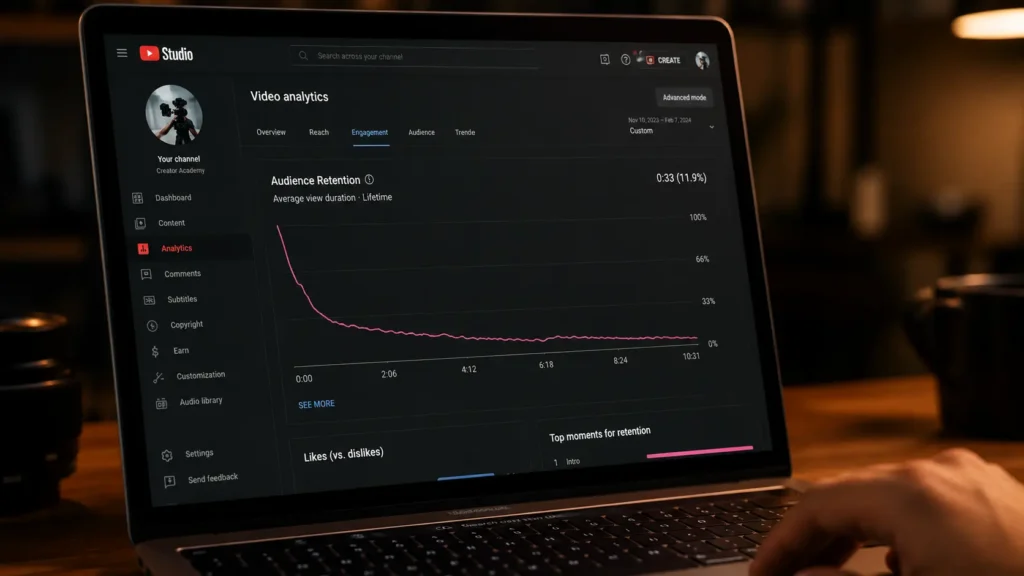
Two creators upload nearly identical videos on the same day. One explodes to a million views. The other sits at 200 views, forgotten by Monday. It’s not luck, and it’s not a conspiracy. It’s a prediction engine evaluating your video in real time and most creators have no idea how it actually thinks.
Every minute, creators upload more than 500 hours of video to YouTube. The algorithm’s single job is to predict which videos will keep each viewer watching, clicking, and coming back for more. If your video fails that prediction test, it simply never reaches the audience that could have made it go viral.
It’s Not One Algorithm It’s Several, Working Independently
The biggest misconception holding creators back is thinking there’s a single formula to crack.
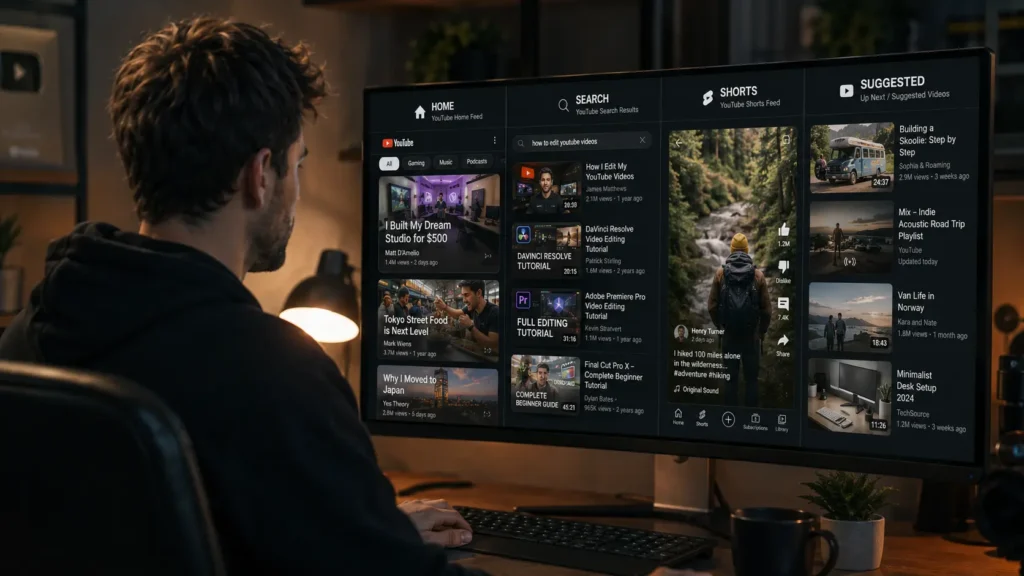
The YouTube algorithm is not a single system. It’s a collection of recommendation engines, each optimized for a different surface: Browse (homepage), Suggested (sidebar and autoplay), Shorts feed, Search results, and Notifications. The algorithm that decides what shows up on the Home feed works differently from the one that ranks videos in search results, which is different again from the system that drives the Shorts feed.
The One Question the AI Is Actually Trying to Answer
Strip away all the technical complexity, and the system boils down to one core prediction.
At its core, the algorithm tries to answer one question for every viewer: “What video will this specific person find most satisfying right now?” That shift from “what keeps people watching longest” to “what leaves people most satisfied” is the single biggest philosophical change YouTube has made in the last three years.
The YouTube algorithm predicts which videos each viewer will enjoy by analyzing three ranking signals: engagement (click-through rate and watch time), satisfaction, and relevance.
Why the First 30 Seconds Decide Everything
This is the single most important technical detail any creator needs to understand and most never learn it until it’s too late.
The first 30 seconds of every video are now a core ranking input, the strongest early predictor of downstream satisfaction. A viewer who watches 100% of an 8-minute video and clicks “like” sends a stronger algorithmic signal than a viewer who watches 40% of a 25-minute video and leaves.
The pattern YouTube loves: a viewer watches your video, engages with it, then watches 2-3 more videos. The pattern YouTube avoids: a viewer clicks, watches 20 seconds, and closes the app.
If your video can’t earn those crucial first seconds, the algorithm essentially makes its decision before your content even has a chance to deliver value.
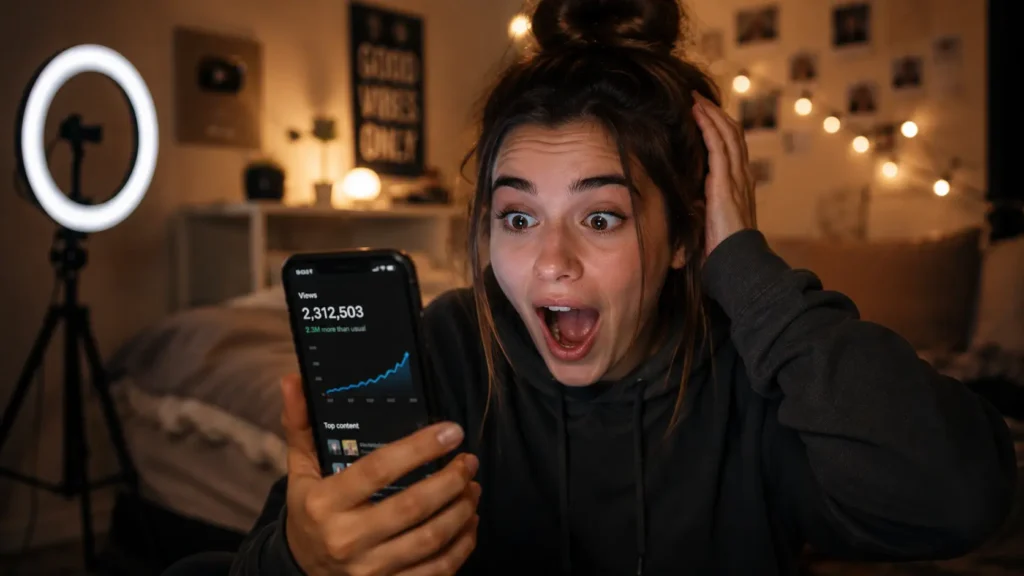
What Actually Causes a Video to Get Buried
This is where most creators get it wrong they assume invisible “suppression,” when the real cause is usually measurable and avoidable.
Misleading metadata titles or thumbnails that produce high click-through rate but very low average view duration trigger the algorithm to flag your video as “clickbait.” Repeated offenses can reduce your channel’s overall distribution.
If a significant portion of your test audience clicks “not interested” or “don’t recommend channel,” the algorithm will stop showing your content to that audience segment permanently.
Reused or repetitive content faces aggressive suppression under YouTube’s policy updates, which actively target channels that repost the same content with minor changes or use unlicensed clips without transformation.
There’s also a quieter, more common reason videos fail: sudden changes in content type. If your channel built an audience for tech reviews and you publish a vlog, the algorithm won’t know who to recommend it to.
Every Video Gets a Mini Trial Run First
Before any video has a chance to go viral, it gets quietly tested on a small audience and the results of that test decide everything.
Subscriber count is a vanity metric the algorithm treats each video independently, though established channels benefit from a larger test audience.
YouTube increased its emphasis on content responsibility signals videos that receive high rates of “not interested” or “don’t recommend channel” feedback see reduced distribution more quickly than in previous years.
If your video performs well with that small initial test group, the algorithm expands distribution further. If it underperforms, that’s the moment a video quietly stops being show not because of any manual penalty, but because the test simply failed.
What About AI-Generated Videos?
This has become one of the most asked questions of 2026 and the answer surprises a lot of creators.
A well-made, disclosed AI-assisted video that satisfies viewers is distributed normally; undisclosed or mass-produced AI content is what gets suppressed or removed under YouTube’s inauthentic-content enforcement.
YouTube’s own statement is unambiguous: “We welcome creators using AI tools to enhance their storytelling, and channels that use AI in their content remain eligible to monetize.” The key distinction is AI as a tool versus AI as a replacement for any creative effort at all.
According to a May 2025 benchmark report, even low-quality human narration outperforms the best AI narration for holding audience attention monotonous AI narration leads to an average 35% higher viewer drop-off within the first 45 seconds compared to human narration. That drop-off signals low quality to YouTube, and the video stops being recommended. That’s suppression but it’s caused by performance, not AI origin.
The Myths Costing Creators Real Views
Some of the most common beliefs about the algorithm are simply wrong and chasing them wastes real opportunity.
YouTube does not penalize you for uploading too frequently or too infrequently. There is no optimal upload schedule that the algorithm rewards. Uploading daily does not guarantee more distribution, and taking a week off does not trigger a penalty.
YouTube does not penalize you for deleting or unlisting videos. Removing underperforming content does not harm your channel’s standing with the algorithm each video is evaluated independently.
“The algorithm is suppressing my channel” is a persistent myth YouTube does not manually suppress individual channels.
Why Old Videos Suddenly Go Viral Years Later
This explains one of the strangest patterns creators notice and it’s not random at all.
YouTube resurfaces years-old long-form content in 2026 for niches that maintained relevance over time. A well-optimized tutorial from 2022 can reappear in recommendations if it continues to satisfy viewers watching similar content today.
It also explains why some older videos suddenly start getting views again if viewer behavior patterns shift, or YouTube finds a new audience segment that responds well to an older video, the feedback loop can restart months or even years after the original upload.
What Actually Moves the Needle
Strip away the myths, and the real levers are surprisingly consistent.
1. Win the first 5–30 seconds, every single time.
YouTube’s vision and audio models now read relevance from on-screen text in the first 5 seconds, the visual content of your thumbnail, and your spoken intro not just your title, description, and tags.
2. Improve retention, not just views.
Channels improving average retention by 10 percentage points experience a correlated 25%+ increase in impressions from YouTube’s algorithm.
3. Stay consistent in topic and quality not upload frequency.
A channel that uploads one excellent video per week can outperform a channel that uploads daily with mediocre content.
4. Disclose AI use if you’re using it.
YouTube requires creators to label AI-generated or significantly AI-altered content as “Altered or Synthetic” failure to comply risks suppression from recommendations and removal from the YouTube Partner Program.
The Bottom Line
The AI deciding which videos go viral isn’t hunting for reasons to bury you it’s on a mission to surface content that viewers actually watch and enjoy. Videos don’t fail because of secret suppression. They fail the same invisible test millions of others pass every day: did real people actually want to keep watching?
That’s the entire algorithm, distilled into one sentence and it’s the same test every viral video on the platform has already passed.
Read Also:
- 🔗 How AI Decides Which Job Applicants Get Rejected
- 🔗 The Dark Technology Behind Every “Recommended for You” — How Big Tech Controls What You See
© AiwalaNews | Global Tech & Privacy Edition | June 2026
