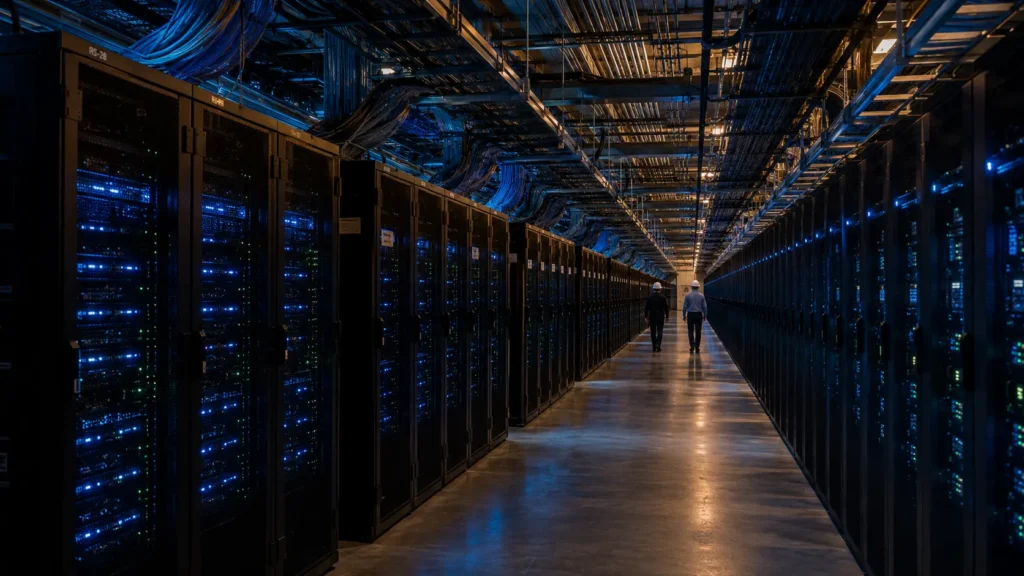
Somewhere in Ashburn, Virginia a quiet suburb 35 miles from Washington D.C. sits a cluster of plain, unmarked buildings that most Americans drive past without a second glance. No corporate logo. No visible activity. Just concrete, cooling vents, and chain-link fencing.
Inside those buildings, nearly every email, Netflix stream, financial transaction, and Google search that passes through the Eastern United States gets routed, exchanged, and delivered in milliseconds. These buildings are called Internet Exchange Points and they are, quietly, some of the most important pieces of infrastructure in the country.
What an Internet Exchange Point Actually Is
Most people picture the internet as a cloud a formless, everywhere thing that just works. The reality is far more physical, and far more concentrated.
An internet exchange is a digital meeting place where different networks, clouds and enterprises connect directly to each other to exchange internet traffic efficiently a super-secure, ultra-reliable hub hosted inside a neutral data center that stores the servers and networking equipment needed to complete connections between different participants.
Think of it like a postal sorting facility except instead of letters, it’s sorting billions of data packets per second, at the speed of light, with zero tolerance for error.
Internet exchange points allow participant Internet service providers to exchange data destined for their respective networks, reducing the portion of traffic that must be delivered via upstream transit providers thereby reducing the average per-bit delivery cost and improving routing efficiency.
Without these buildings, every time you sent an email to someone on a different network, that message would have to travel through an expensive, slow chain of middlemen bouncing between providers across the country before reaching its destination. IXPs cut that journey down to a direct handoff, often in the same room.
Why Ashburn, Virginia Is the Most Important Town on the American Internet
If America’s internet has a capital city, it’s Ashburn and most Americans have never heard of it.
By the mid-2000s, Loudoun County’s permissive zoning, tax incentives, abundant land, and robust fiber routes much of it laid along utility and rail corridors made it the natural choice for hyperscalers like AOL, Yahoo, Google, Microsoft, and later Amazon Web Services to build at scale. Today, thousands of networks connect through Ashburn’s exchange points. TeleGeography counts 17 buildings in Ashburn hosting exchange switches, run by four different operators.
That density is unrivaled anywhere else in the U.S. But it also means a huge share of the nation’s internet, data center, and AI traffic leans on a single metro area.
That concentration isn’t just a statistic it’s a genuine vulnerability. A single catastrophic failure in Ashburn’s exchange infrastructure wouldn’t just slow down a few websites. It would disrupt a significant portion of internet traffic for the entire Eastern United States.
The Scale: How Many of These Buildings Exist Across America?
The network is larger than most people imagine but also more concentrated than it should be.
As of the latest data, the United States has 194 Internet Exchanges present across 478 facilities, with 3,055 unique networks physically connected. The largest Internet Exchange organization in the U.S. by number of IXs operated is Equinix, Inc. operating 45 IXs with 1,955 peers.
TeleGeography’s interactive Internet Exchange Map depicts over 300 active Internet exchanges and more than 500 buildings in which those exchanges reside globally, with a significant concentration in the United States, particularly along the East Coast corridor.
The biggest exchanges operate at a scale that’s difficult to comprehend. Ports with 100 gigabits per second are available at the largest centers, while all Ethernet port speeds are found at modern IXPs, ranging from 10 megabits per second at small developing-country IXPs to ganged 10 gigabit-per-second ports in major centers like New York, London, Frankfurt, Amsterdam, and Palo Alto.
What Actually Happens Inside These Buildings
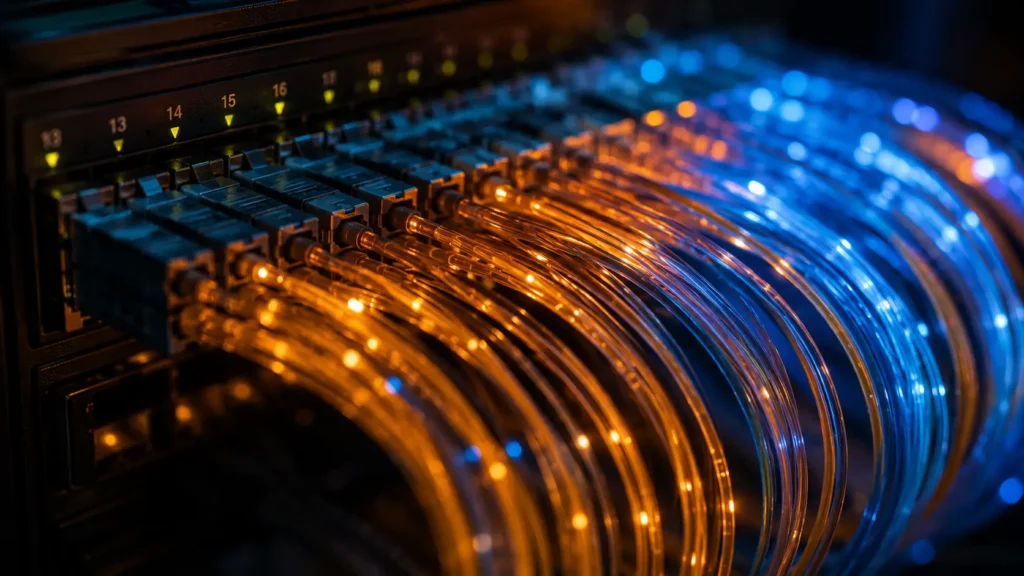
The physical reality inside an IXP is deliberately unglamorous rows of humming switches, miles of fiber-optic cable, and precisely controlled temperature and power systems. But the process running inside is anything but simple.
IXPs are large Layer 2 networks built with one or many Ethernet switches interconnected together across one or more physical buildings not different in basic concept from a home network, with the only real difference being scale. IXPs can range from hundreds of megabits per second to many terabits per second of exchanged traffic, with the primary goal of making sure that many networks’ routers are connected together cleanly and efficiently.
Every time you press play on a video, send a message, or load a webpage, your data request leaves your device, travels to your internet provider, then gets handed off at an IXP to whatever network actually hosts the content you’re trying to reach all without you ever noticing the handoff.
When you press play on a music streaming app, your request may be routed through an IXP to reach the content delivery network server located closest to you. That routing decision happens in nanoseconds, inside one of these plain, windowless buildings.
Why These Buildings Have No Signs On Purpose
The physical security model of IXPs is worth understanding, because it explains why these facilities look the way they do.
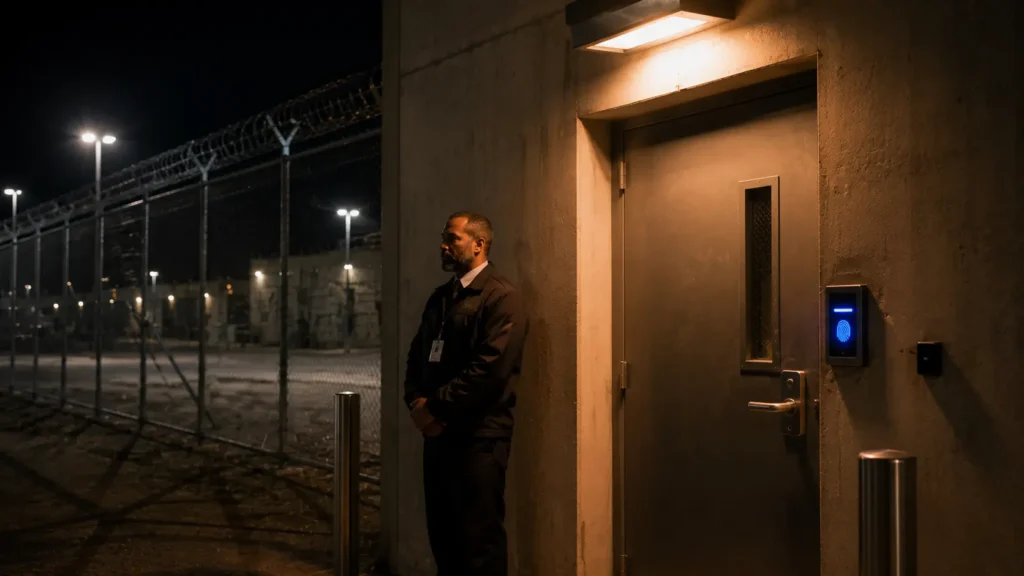
There are no signs because visibility creates targets. No windows because windows create vulnerabilities. IXPs are typically housed in carrier-neutral data centers where no single network has control, creating a level playing field for all participants. The neutrality isn’t just a business principle it’s a security architecture. No single company owning the facility means no single point of political or commercial leverage over the traffic flowing through it.
Access to these buildings is tightly controlled biometric authentication, man-traps, 24/7 armed security, and multiple redundant power systems are standard. Some facilities have enough backup power to operate independently for days during a grid outage.
The New Pressure: AI Is Changing Everything
In 2026, these buildings face a demand curve they were never originally designed for.
IXP density and peering capacity are now key indicators for regional connectivity, content delivery performance, and low-latency access to cloud and AI inference workloads. Real-time inference and edge inference workloads require the lowest possible latency to deliver instant responses and internet exchanges provide direct peering between networks, minimizing the number of network hops and reducing round-trip time. This is critical for real-time inference applications like conversational AI and autonomous vehicles.
Precision agriculture and autonomous manufacturing are use cases that will require the lower latency connections enabled by closer exchange points. New IXPs are actively being planned and built across the country including a university-campus exchange in Kansas that broke ground in 2025, backed by a $5 million state grant precisely because the existing concentration in Ashburn creates both a bottleneck and a risk.
The Bottom Line
The next time your internet feels instant your video loads in a blink, your message arrives before you’ve put your phone down remember that somewhere nearby, in a building you’ve probably never noticed, fiber-optic cables are exchanging your data with another network at the speed of light, inside infrastructure that took decades to build and that most Americans will never think about once in their lives.
That invisibility isn’t an accident. It’s the entire point. The best infrastructure is the kind you never have to think about until the day it isn’t there.
Read Also:
- 🔗 How Banks Move Billions of Dollars Every Day Without Losing Track
- 🔗 What Really Happens During a Massive Data Breach
© AiwalaNews | Global Tech & Privacy Edition | June 2026
