Millions of people ask artificial intelligence questions every day. Whether it’s writing an email, generating an image, solving a coding problem, or planning a vacation, AI tools have become part of daily life.
To users, the experience feels almost magical. Type a question, wait a few seconds, and receive an answer.
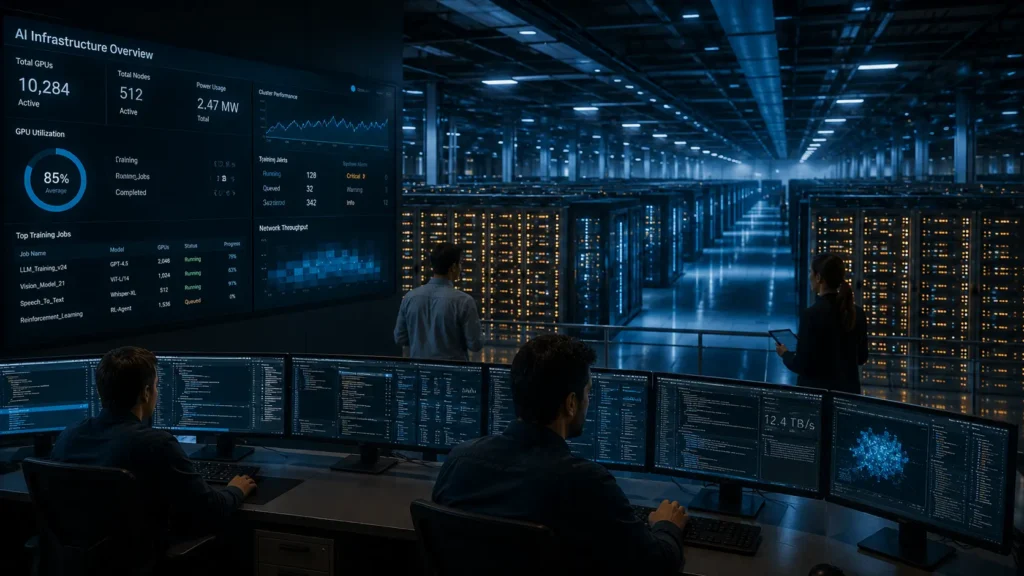
But behind every seemingly simple prompt lies an enormous network of powerful computers, specialized AI chips, cooling systems, and data centers working together in real time.
While AI appears effortless on the surface, every interaction carries a hidden cost one that most people never think about.
Every Prompt Travels Across the World
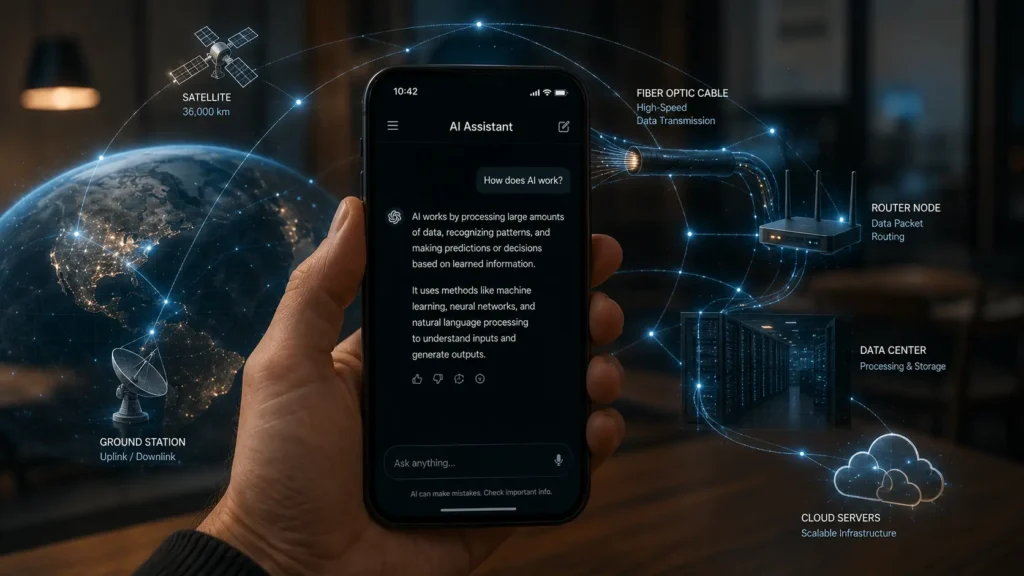
When you submit an AI prompt, it doesn’t stay on your phone or laptop.
Instead, your request travels through internet infrastructure to massive AI data centers filled with thousands or even hundreds of thousands of specialized processors.
These facilities are designed specifically for running large language models.
Within seconds:
- Your request reaches the servers.
- Powerful AI chips process billions of mathematical calculations.
- The model predicts the next words.
- The response is sent back through the internet.
All of this usually happens in just a few seconds.
AI Runs on Specialized Hardware
Unlike traditional software, modern AI models rely heavily on high-performance GPUs and specialized AI accelerators.
These processors perform enormous numbers of calculations simultaneously.
Training one advanced AI model can require thousands of these chips working together for weeks or even months.
Even after training is complete, answering millions of user prompts every day requires vast computing infrastructure operating around the clock.
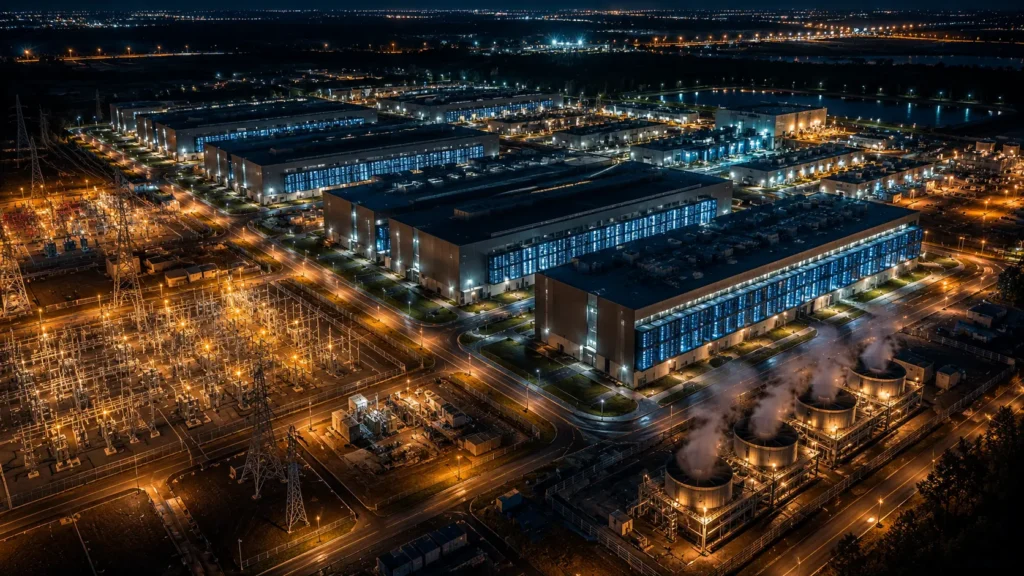
This is why AI companies invest billions of dollars in new data centers and semiconductor hardware.
Electricity Is One of AI’s Biggest Costs
Every AI response consumes electricity.
One prompt doesn’t use much power on its own, but when hundreds of millions of prompts are processed every day, the total energy demand becomes significant.
Data centers must power:
- AI processors
- Storage systems
- Networking equipment
- Security infrastructure
- Backup systems
- Cooling equipment
Industry analysts expect AI to become one of the fastest-growing sources of electricity demand for data centers over the coming years.
That’s why major technology companies continue investing in renewable energy projects alongside expanding AI infrastructure.
Cooling the World’s AI Requires Water
Powerful computers generate enormous amounts of heat.
To keep them operating safely, many data centers rely on advanced cooling systems.
Some facilities use air cooling.
Others use liquid cooling or water-based cooling technologies.
While designs vary between operators, water consumption has become an important part of discussions about sustainable AI infrastructure.
Many companies are now investing in more efficient cooling methods to reduce environmental impact.
Why AI Companies Spend Billions
Running AI isn’t just expensive because of electricity.
Companies also pay for:
- Specialized AI chips
- Massive data centers
- High-speed networking
- Engineers
- Security
- Software development
- Research
- Maintenance
These investments explain why leading AI providers continue spending billions to expand their computing capacity.
Demand for AI services continues to grow faster than available infrastructure.
The Cost Isn’t Only Financial
Every AI prompt also has another hidden cost:
Data.
Many AI systems temporarily process information you provide in order to generate responses.
Reputable providers publish privacy policies explaining how prompts may be handled, stored, or used to improve services, depending on user settings and product type.
For this reason, cybersecurity experts recommend avoiding the sharing of:
- passwords
- financial information
- confidential business documents
- medical records
- sensitive personal data
Understanding how your chosen AI service handles prompts helps you make informed decisions.
Smarter AI Is Becoming More Efficient
The good news is that AI hardware continues improving rapidly.
New processors deliver more computing performance while consuming less electricity.
Researchers are also developing:
- smaller AI models
- faster inference techniques
- improved software optimization
- energy-efficient chips
These advances allow companies to serve more users while reducing the cost of each individual AI request.
Efficiency has become one of the industry’s biggest priorities.
Should Users Feel Guilty About Using AI?
Not at all.
Technology has always required infrastructure.
Search engines, video streaming, cloud storage, online banking, and social media all consume energy and computing resources.
AI simply introduces a new type of workload that is more computationally intensive.
The important point isn’t to stop using AI.
It’s to understand that every digital service depends on physical infrastructure somewhere in the world.
Behind every response are engineers, servers, networking equipment, power systems, and cooling technologies working together almost instantly.
The Future of Sustainable AI
Governments and technology companies are investing heavily in making AI more sustainable.
Future improvements are expected to include:
- More energy-efficient AI chips
- Cleaner power sources
- Better cooling technologies
- More efficient AI models
- Smarter data center design
The goal is to support growing AI demand while reducing environmental impact.
As AI becomes part of everyday life, efficiency will be just as important as intelligence.
The Bottom Line
Typing an AI prompt feels effortless, but behind every response lies one of the most advanced computing systems ever built. Massive data centers, specialized AI processors, electricity, cooling systems, and global internet infrastructure all work together in seconds to answer a single question.
Understanding this hidden ecosystem doesn’t make AI less impressive it makes it even more remarkable. The next time an AI responds instantly, remember that countless invisible technologies are working behind the scenes to make that moment possible.
Read Also
➡️ How Undersea Internet Cables Carry 99% of Global Data
https://aiwalanews.com/how-undersea-internet-cables-carry-99-of-global-data/
➡️ How a Website Loads in Another Country in Under 1 Second: The Hidden Network Behind It
https://aiwalanews.com/how-a-website-loads-in-another-country-in-under-1-second-the-hidden-network-behind-it/
© AiwalaNews | Global Tech & Privacy Edition | April 2026
