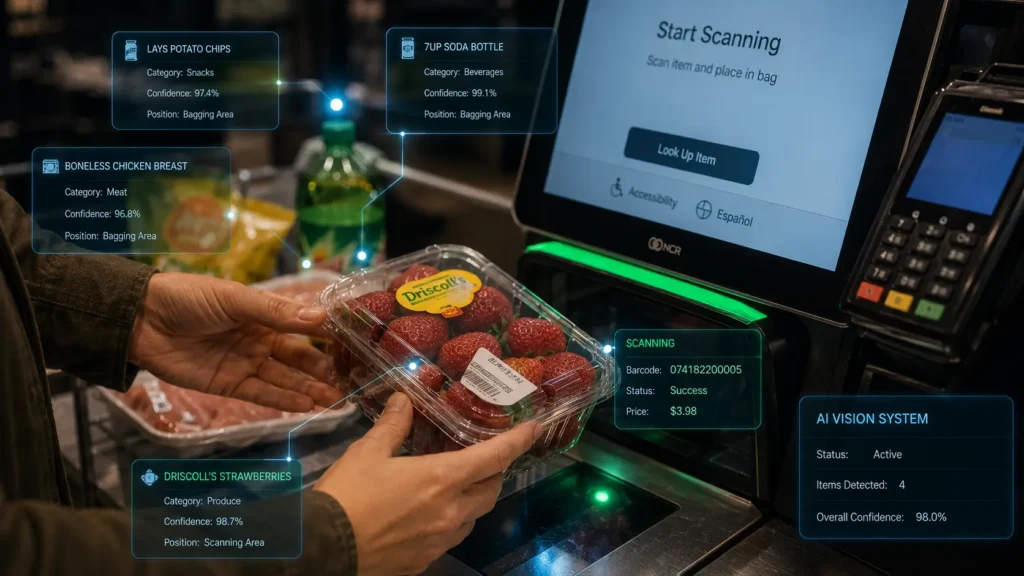
Self-checkout machines have transformed the way millions of Americans shop. They promise faster checkout lines, greater convenience, and less waiting. Today, they’re a common sight in supermarkets, home improvement stores, pharmacies, and big-box retailers.
But while shoppers scan groceries or household items themselves, many don’t realize they’re also interacting with an advanced layer of artificial intelligence working quietly in the background.
Modern self-checkout systems do more than calculate prices. Many retailers now use AI-powered fraud detection, computer vision, weight sensors, and behavioral analytics to identify scanning mistakes and suspicious activity in real time.
The goal isn’t to spy on honest customers it’s to reduce billions of dollars in retail losses while keeping the checkout experience quick and convenient.
Why Retailers Are Investing in AI
Retail theft remains a major challenge worldwide.
Losses don’t come only from organized shoplifting. They also include:
- Missed scans
- Incorrect item selections
- Barcode switching
- Accidental mistakes
- Deliberate theft
Industry experts estimate retailers lose billions of dollars every year through inventory shrink.
Because self-checkout places scanning responsibility on customers, stores increasingly rely on AI to identify unusual behavior that might indicate errors or fraud.
The Cameras Are Doing More Than Recording
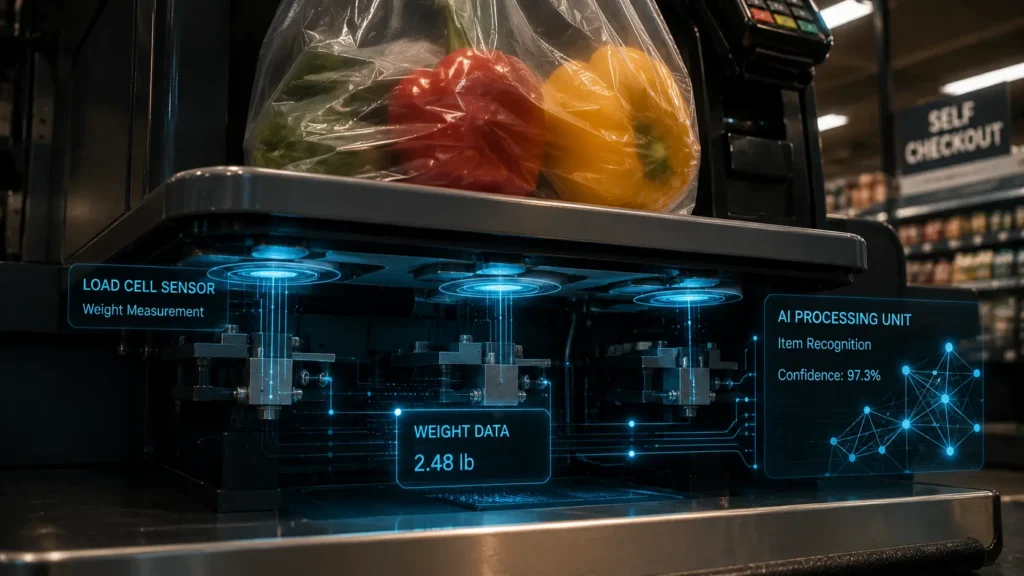
Many self-checkout lanes now include overhead or front-facing cameras.
These cameras don’t simply record video for later review.
With the help of computer vision AI, some systems can compare:
- Items picked up
- Items scanned
- Movements near the scanner
- Objects placed into shopping bags
If the system detects that an item appears to enter the bagging area without a corresponding scan, it may alert the customer or request employee assistance.
The technology focuses on shopping activity rather than identifying individuals in many implementations.
Weight Sensors Add Another Layer
AI isn’t working alone.
Most modern self-checkout stations include sensitive weight sensors beneath the bagging area.
After you scan an item, the system expects the bagging platform to detect approximately the correct weight.
If something doesn’t match, the checkout may display messages such as:
“Unexpected item in bagging area.”
or
“Please wait for assistance.”
AI combines these sensor readings with camera information to reduce false alarms and improve accuracy.
Behavior Matters Too
Some retailers are beginning to use behavioral analytics alongside cameras and sensors.
Instead of looking only at products, AI can evaluate shopping patterns such as:
- Extremely rapid scanning
- Frequent canceled scans
- Repeated barcode failures
- Unusual hand movements
- Items repeatedly lifted without scanning
These patterns don’t automatically indicate theft.
Instead, they may increase the likelihood that the system requests employee verification.
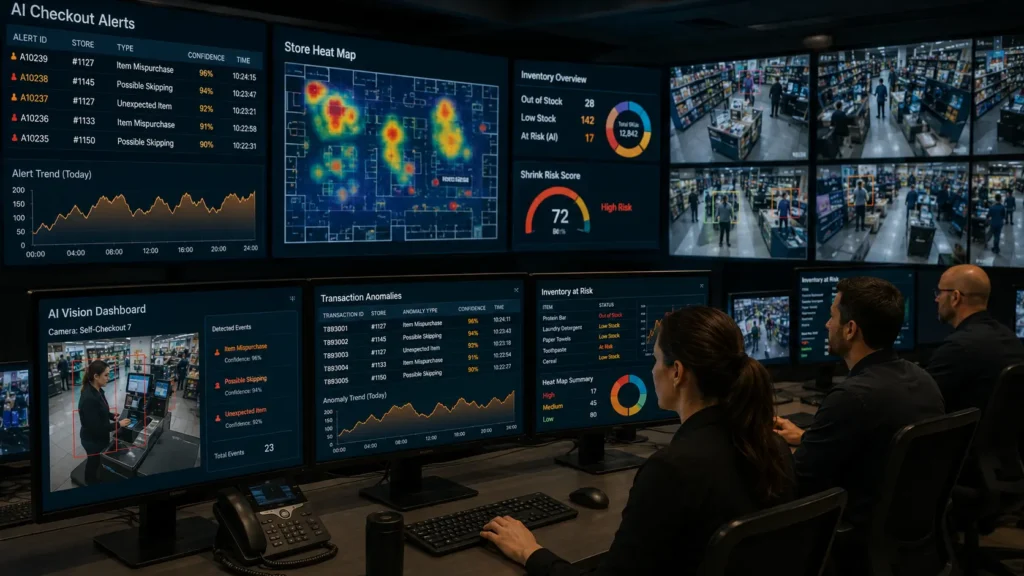
Can AI Tell the Difference Between a Mistake and Theft?
Not perfectly.
This is one of the biggest challenges.
Someone may accidentally:
- Miss a barcode.
- Scan the wrong produce item.
- Place an item in the bag too early.
- Forget something underneath the shopping cart.
AI systems generally don’t determine guilt.
Instead, they identify situations that deserve additional attention.
Human employees usually make the final decision when intervention is required.
Why False Alerts Still Happen
No AI system is perfect.
Retail environments are complex.
Problems can occur because:
- Similar-looking products confuse computer vision.
- Reflective packaging affects cameras.
- Customers move unusually fast.
- Children interact with the scanner.
- Multiple people use the same checkout.
Developers continuously improve algorithms using real-world shopping data to reduce unnecessary alerts while maintaining security.
Privacy Questions Are Growing
As AI becomes more common inside stores, privacy experts continue discussing how customer data should be handled.
Questions include:
- How long is checkout footage stored?
- Is facial recognition being used?
- Are videos linked to loyalty accounts?
- Who can access the information?
Policies vary between retailers and jurisdictions.
Many companies state that surveillance technologies are used primarily for security, fraud prevention, and operational improvement.
Consumers concerned about privacy can review store privacy policies or ask customer service how checkout data is handled.
The Future of AI Checkout
Retail technology continues evolving rapidly.
Future systems may include:
- Cart-level AI recognition
- Automatic product identification
- Smart shopping carts
- Cashier-free checkout
- Improved computer vision
- Faster fraud detection
- Personalized checkout experiences
Some experimental stores already allow customers to walk out without scanning items manually, while AI calculates purchases automatically.
These technologies remain under active development and continue expanding across the retail industry.
What Shoppers Should Know
For most customers, AI at self-checkout operates quietly in the background.
If you’re scanning items honestly, you’ll likely never notice it.
Simple habits can help ensure a smooth checkout experience:
- Scan one item at a time.
- Wait for confirmation before bagging.
- Place items carefully in the bagging area.
- Double-check produce selections.
- Ask for assistance if something doesn’t scan correctly.
Understanding how these systems work can reduce frustration and make checkout faster for everyone.
The Bottom Line
Self-checkout isn’t just replacing cashiers it’s becoming one of retail’s most advanced AI environments. Cameras, weight sensors, and behavioral analytics work together to detect potential scanning errors and reduce fraud, often in real time.
While these technologies raise important privacy and accuracy questions, they also help retailers tackle costly inventory losses without slowing the shopping experience. The next time you scan an item yourself, remember: behind that simple touchscreen is a sophisticated AI system quietly helping every transaction run smoothly.
Read Also
➡️ How AI Learns Your Weaknesses From Just a Few Clicks
https://aiwalanews.com/how-ai-learns-your-weaknesses-from-just-a-few-click/
➡️ How Stores Track You via Bluetooth Even With Wi-Fi Off
https://aiwalanews.com/how-stores-track-you-via-bluetooth-even-with-wi-fi-off/
© AiwalaNews | Global Tech & Privacy Edition | April 2026
