
A tiny sensor built for something as simple as screen rotation is now saving lives around the world, and the science behind it is more human than you think.
I still remember reading about the Turkey earthquake in April 2025 and pausing on one detail that felt almost unbelievable. Millions of phones, ordinary phones sitting in pockets and on nightstands, had sensed the earthquake and warned people before the shaking reached them. Not a government sensor network built at the cost of millions of dollars. Just phones.
That is the story of the Android Earthquake Alerts system, and it is one of the more quietly remarkable pieces of technology most people carry without realizing it.
The Sensor Was Never Built for This
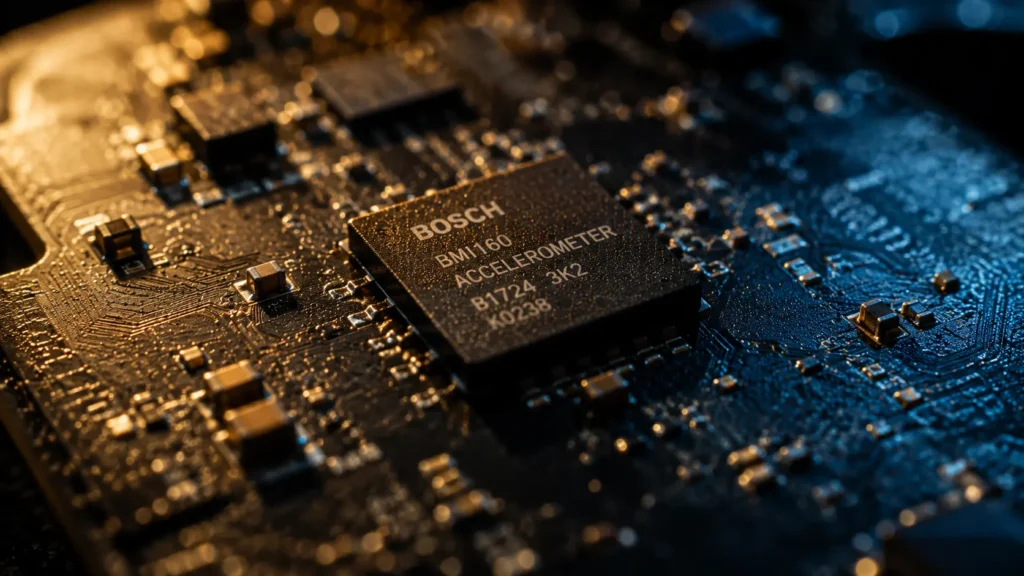
Every Android phone has an accelerometer. It is the same tiny chip that rotates your screen when you tilt your phone sideways or counts your steps while you walk. Nobody designed it to detect earthquakes. But the accelerometer in an Android phone can also detect the ground shaking from an earthquake, and if a stationary phone detects the initial, faster moving P wave of an earthquake, it sends a signal to Google’s detection server along with a coarse location of where the shaking occurred.
That single idea, repurposing a sensor meant for auto rotate, is the foundation of what is now the world’s largest earthquake detection network.
Why Seconds Matter So Much
An earthquake produces two main types of seismic waves. The P wave, or primary wave, travels fastest but causes only mild shaking. The S wave, the secondary wave, arrives slightly later but is the one that causes the real damage. The gap between them, often just seconds to tens of seconds depending on distance from the epicenter, is the entire window this system works within.
When enough nearby phones detect that early P wave signal at once, Google’s servers estimate the earthquake’s location and likely magnitude, then push an alert to phones in the path of the incoming S wave. It sounds simple. It is not. Over three years of operation, the system detected an average of 312 earthquakes per month, with alerts delivered across 98 countries for earthquakes of magnitude 4.5 or higher, corresponding to roughly 60 events and 18 million alerts per month.
Real Earthquakes, Real Warnings
Numbers on a research page are one thing. Real events are what actually prove a system works.
During the magnitude 6.7 earthquake in the Philippines in November 2023, the first alert went out just 18.3 seconds after the quake began. People closest to the epicenter got up to 15 seconds of warning, while those farther away received up to a full minute, and nearly 2.5 million people were alerted before they felt the shaking.
A similar pattern showed up in Nepal that same month. During the magnitude 5.7 earthquake, the first alert was issued 15.6 seconds after it began, with warning times ranging from 10 to 60 seconds and over 10 million alerts delivered.
Then came Turkey in April 2025. In the magnitude 6.2 earthquake, the first alert was issued 8.0 seconds after the earthquake began, and people who experienced moderate to strong shaking had a warning window of a few seconds up to 20 seconds, with over 11 million alerts delivered.
Perhaps the most striking case came from Venezuela. Google’s system alerted 11.4 million people ahead of a double earthquake that struck on June 24, with the first alert dispatched just nine seconds after the quake started underground, and some users reportedly received warning up to two minutes before shaking arrived.
Two minutes does not sound like much until you imagine actually needing it. That is enough time to get off a ladder, step away from a window, or simply get under a sturdy table.
The System Keeps Getting Smarter
What makes this genuinely impressive is not just that it works, but that it keeps improving. Google’s magnitude estimation accuracy has improved substantially, with the median absolute error of the first magnitude estimate dropping from 0.5 to 0.25, putting its accuracy on par with or better than traditional seismic networks.
The scale of adoption tells its own story too. The system rolled out across 98 countries, increasing total access to earthquake early warning technology tenfold, from roughly 250 million people to about 2.5 billion, over just three years.
It has not replaced dedicated scientific networks either. In places like California, Washington, and Oregon, Android relies on a network of 1,675 seismic sensors belonging to the ShakeAlert system operated by the US Geological Survey, rather than phone data alone. Where official networks exist, the phone based system works alongside them rather than instead of them. Where they do not exist, which is most of the earthquake prone world, phones fill a gap that used to simply not be filled at all.

Do People Actually Trust It
A warning system is only as good as whether people believe it and act on it. Google built that question directly into the alerts through a short survey. Among people who received an alert, 85 percent said they actually felt tremors, and 36 percent received the alert before noticing shaking, 28 percent during the event, and 23 percent afterward. About 84 percent said they would trust the system more the next time.
That last figure matters more than it seems. Trust in a warning system tends to build slowly and break instantly. A system that keeps proving itself earthquake after earthquake is one people will actually respond to when it counts.
A Sensor Doing More Than It Was Asked To
There is something quietly moving about this whole story. A chip meant to rotate your screen is now part of a system protecting billions of people from one of nature’s least predictable threats. No new hardware, no expensive installation, just better use of what was already sitting in your pocket.
The next time your phone buzzes with an earthquake alert, it is worth remembering just how far that little signal traveled, and how many seconds of warning it just handed you for free.
Read also this: How AI Is Quietly Changing Everyday Technology
Read also this: The Hidden Sensors Inside Your Smartphone
© AiwalaNews | Global Tech & Privacy Edition | April 2026
