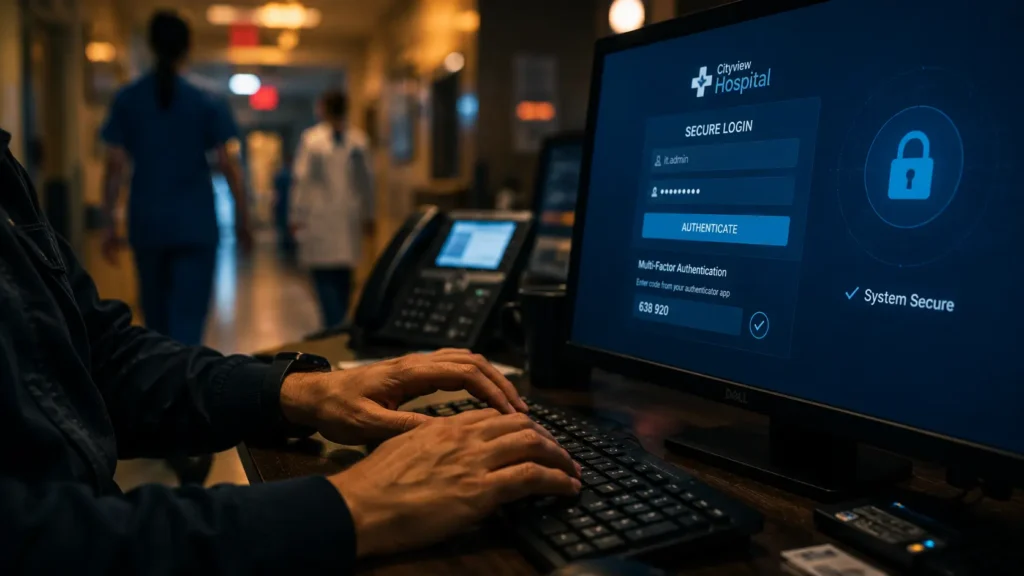
One hospital chain lost data on 192.7 million people in a single attack, and yet most patients still have no idea how much invisible defense stands between their medical file and a hacker halfway across the world.
A few months ago I was reading through breach reports and stopped cold at one number. The Change Healthcare ransomware attack, confirmed by the US Department of Health and Human Services, ultimately affected approximately 192.7 million individuals, nearly two thirds of the entire US population. One single incident. That is not a statistic you forget easily.
Healthcare has quietly become the most targeted industry in the world for a reason most people never think about. A stolen credit card gets cancelled in a day. A stolen medical record cannot be reissued. It contains your diagnosis history, your medications, your insurance details, and often your Social Security number, all bundled together in one file that criminals can resell for years. That is exactly why healthcare data breaches cost an average of $7.42 million per incident in 2025, the highest of any industry for the fourteenth consecutive year.
So how do hospitals actually fight back against this constant pressure? The answer is less about one big firewall and more about several overlapping layers, each one built to fail gracefully if another gets breached.
Encryption Everywhere, Even When It Is Inconvenient
The first and most basic layer is encryption, both for data sitting on servers and data moving between systems. Electronic health record platforms encrypt patient files so that even if someone copies the raw storage drive, the contents remain unreadable without the proper key. This sounds simple, but applying it consistently across decades old hospital systems, lab equipment, imaging machines, and cloud platforms that all need to talk to each other is genuinely difficult, which is part of why breaches still happen despite it.
Access Controls That Assume Nobody Should Be Trusted By Default
Modern hospital security increasingly follows what is called a zero trust approach. Instead of assuming anyone inside the network is safe, every login, every device, and every request to view a patient file gets verified again and again. A nurse on the cardiology floor typically cannot open psychiatric records from another department without a specific reason logged into the system. This is not paranoia. In 2023, regulators fined four hospitals roughly $1.3 million combined for failing to stop staff from snooping on celebrity patient records, proof that internal access is just as important to lock down as external threats.
Multi Factor Authentication As The Simple Fix That Actually Works
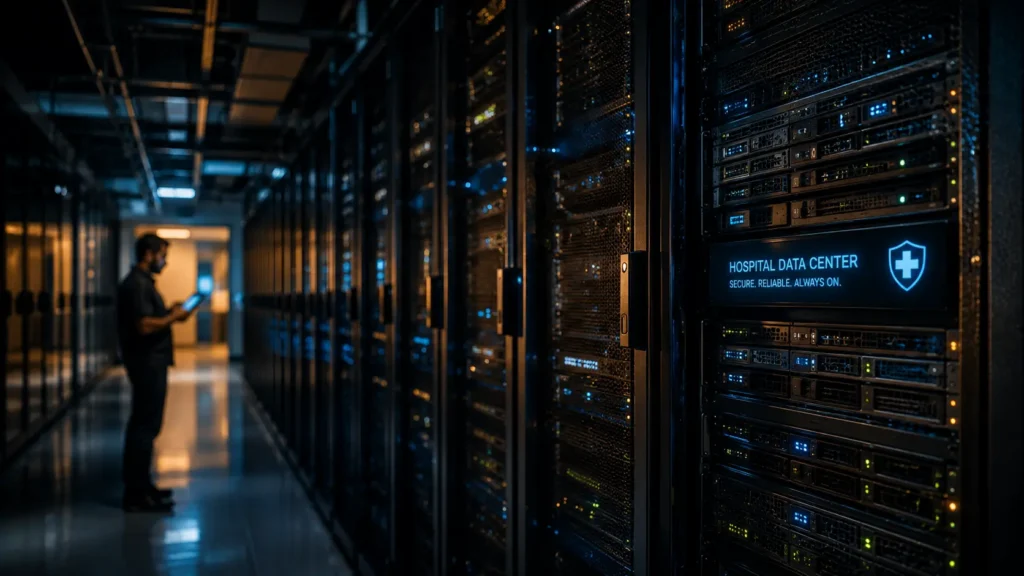
One of the most effective, least glamorous defenses is multi factor authentication, requiring a second step beyond just a password, like a code sent to a phone. Compromised credentials have been one of the leading root causes of healthcare breaches for years. In 2025, for the first time in three years, exploited software vulnerabilities edged out stolen credentials as the top technical cause of healthcare attacks, a small sign that basic login protections are finally closing one of the industry’s biggest open doors.
Watching The Network Like A Hospital Watches Vital Signs
Hospitals now run continuous monitoring systems that behave a bit like a cardiac monitor, but for computer networks instead of heartbeats. These systems flag unusual activity, like a login from an unexpected location or a sudden spike in data being copied, often before a human notices anything wrong. This matters because attackers do not smash through the front door anymore. Nearly three quarters of 2025 healthcare cases involved data being quietly stolen before or instead of encryption, meaning the intrusion itself has to be caught early, not after files start disappearing.
Segmenting The Network So One Breach Does Not Become Every Breach
Picture a hospital network built like a submarine, split into sealed compartments. If one area floods, the rest stays dry. That is the idea behind network segmentation. If a hacker breaks into, say, a scheduling system, segmentation is designed to stop them from freely wandering into the pharmacy database or the imaging archive next door. This single design choice can be the difference between a contained incident and a catastrophic one.
Preparing For The Worst With Backups And Practice Drills
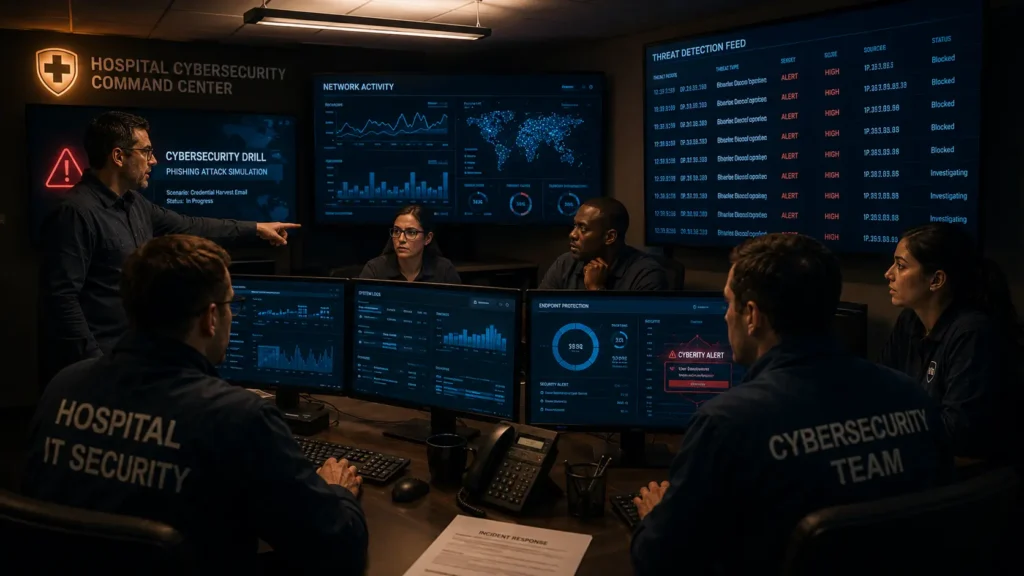
Backups sound boring until the day they save an entire hospital. Organizations with strong backup validation and regularly tested recovery plans reported fewer days of disruption and lower legal, forensic, and notification costs after an attack. This tracks with a broader trend too. The share of hospitals paying any ransom actually fell to 36 percent in 2025, down from 61 percent in 2022, and 58 percent of providers hit by ransomware were back online within a week, more than double the rate from just the year before. Preparation, it turns out, is a genuine deterrent.
Training The Humans, Not Just The Machines
Every layer above can be undone by one tired employee clicking the wrong link. Phishing remains one of the most common ways attackers first get inside a hospital’s systems, and healthcare staff face this risk more than almost any other industry. That is why ongoing staff training, fake phishing tests, and simple habits like double checking sender addresses have become as central to hospital cybersecurity as any piece of software.
The Fight Is Not Over, But It Is Not Hopeless Either
None of this makes hospitals invincible. Attacks are still happening weekly, and the criminals adapt just as fast as the defenses do. But the direction is encouraging. Faster recovery times, fewer ransom payments, and smarter internal controls suggest the industry has learned hard lessons from disasters like Change Healthcare and is quietly, steadily getting better at protecting the one thing that cannot simply be replaced once it is stolen, your medical history.
The next time you fill out a form at a hospital front desk, it is worth remembering just how much invisible machinery exists behind that single sheet of paper, working around the clock to keep your file exactly where it belongs.
Read also this: How Your Phone Knows Earthquakes Before You Feel Them
Read also this: The Hidden Sensors Inside Your Smartphone
© AiwalaNews | Global Tech & Privacy Edition | April 2026
