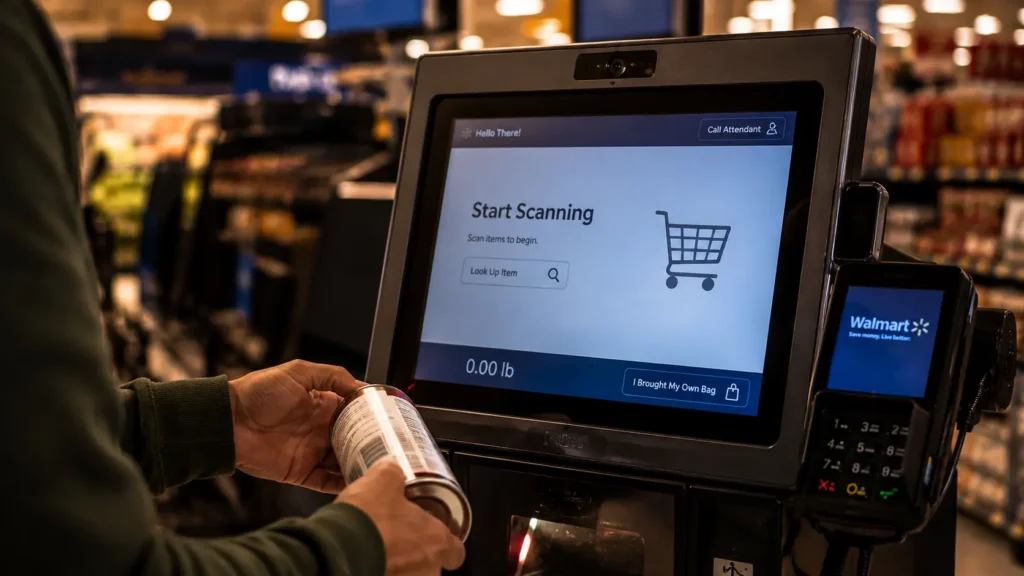
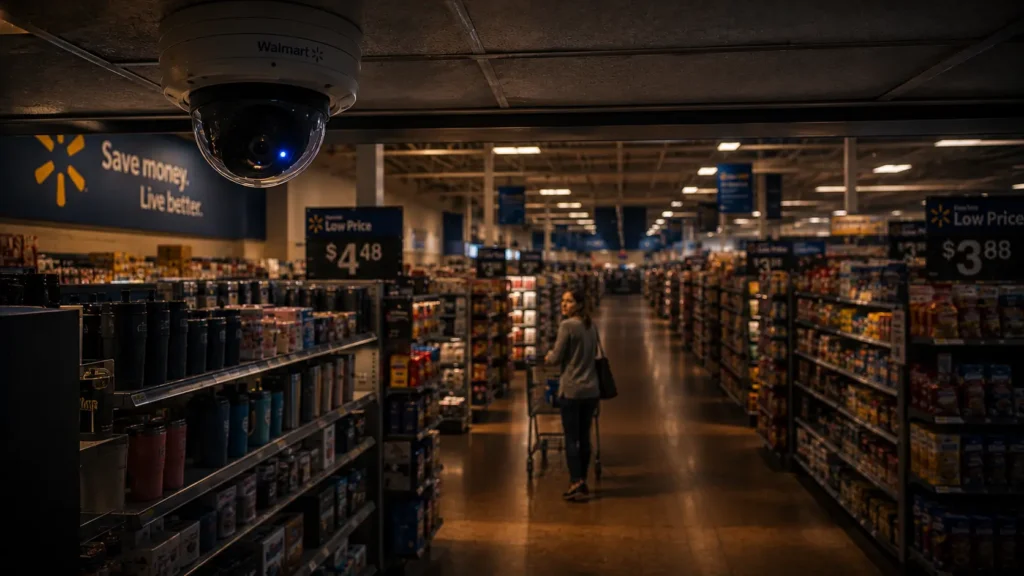
Walk into a big box store today and something invisible might be happening the moment you cross the entrance. A camera is not just recording. In some locations, it is analyzing. It is comparing. It is deciding whether your face matches someone in a database. This is not science fiction anymore. It is a documented reality, and Walmart sits right in the middle of the conversation.
What Walmart Actually Uses
Walmart has confirmed it runs a program internally called Missed Scan Detection in more than 1,000 stores. According to reporting first surfaced through Business Insider, this system uses cameras positioned near self checkout lanes to catch scanning errors and potential theft. The artificial intelligence vision technology behind parts of this program comes from a company called Everseen AI, which has stated the program has been running for years.
Whether this specific system uses full facial recognition or simply object and motion tracking has been debated by journalists and privacy researchers. What is not debated is Walmart’s history of testing true facial recognition tools. Back in 2015, Fortune reported that Walmart piloted a system that scanned the face of every person entering select stores, flagged suspected shoplifters, and sent instant alerts to security staff through mobile devices. The company ended that particular trial after several months, but the underlying question never went away. If the technology worked once, what stops a quieter version of it from returning under a different name.
It Is Not Just Walmart
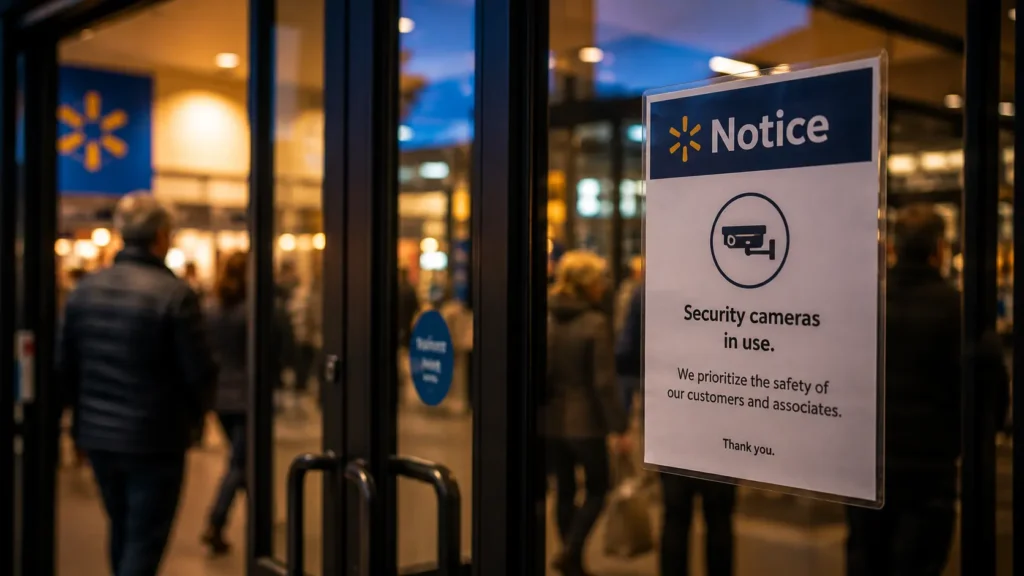
This is where the story becomes bigger than one retailer. In early 2026, small signs began appearing near the entrances of Wegmans stores in Manhattan and Brooklyn. The signs stated plainly that the grocery chain collects, retains, and may share customers’ biometric information, including facial recognition data, eye scans, and voiceprints. Wegmans later admitted it runs facial recognition in what it called a small fraction of its stores to identify people flagged for past misconduct.
The American Civil Liberties Union then asked twenty major retailers, including Walmart, Kroger, Target, Home Depot, Costco, and CVS, whether they scan customer faces in stores. Most refused to answer directly. Lowe’s was one of the few that confirmed it does use the technology. That silence from so many well known brands is itself telling. If a company had nothing to hide, transparency would cost nothing.
Why Retailers Say They Need It
The official reasoning usually falls into two categories. The first is loss prevention. Shoplifting costs retailers billions every year, and a camera that can flag a repeat offender the moment they walk in feels, from a business standpoint, like an easy win. The second reasoning is customer experience. Some patents and pilot programs, including ones associated with Walmart, describe using cameras and emotion AI to detect dissatisfied shoppers in checkout lines, allowing staff to intervene before a bad experience becomes a lost customer.
On paper this sounds harmless, even helpful. In practice, industry commentators have pushed back hard. Retail analyst Mark Ryski, writing for RetailWire, argued that biometric data is highly sensitive and personal, and that using it to improve customer experience while cutting staffing costs is a significant overreach. His deeper concern was what happens once facial data is combined with transaction history, loyalty programs, and even social media profiles. At that point, a store is no longer just watching your face. It is building a profile of who you are.
Lawmakers Are Starting to Push Back
Connecticut is currently drafting legislation that would ban facial recognition in retail settings entirely. Senate leaders Bob Duff and James Maroney introduced the effort as part of a broader 2026 data privacy package. Duff stated that residents should not have to worry about surrendering personal information simply while grocery shopping. Maroney added that lawmakers need to act proactively to protect consumers from surveillance they never agreed to.
If passed, Connecticut would join Illinois, which already enforces one of the strictest biometric privacy laws in the country through its Biometric Information Privacy Act. That law is part of the reason facial recognition company Clearview AI reached a settlement agreement barring it from selling its face database to private businesses across the United States.
What This Means for Ordinary Shoppers
Most people entering a store today have no clear way of knowing whether their face is being scanned, stored, or compared against a database. Some locations post small signage. Many do not. Consumer protection groups suggest a few practical steps for anyone concerned. Look for posted biometric notices near entrances. Ask store staff directly whether facial recognition is in use. Support state level privacy legislation, since federal rules remain limited. And where possible, use cash or self checkout lanes that rely less on camera based monitoring.
The Bigger Picture
What began as a tool to catch shoplifters has quietly expanded into a much larger question about consent, data ownership, and the line between security and surveillance. Walmart’s history shows a company willing to test this technology repeatedly, then step back when scrutiny grows, only for similar tools to resurface under new branding. As more retailers adopt computer vision and biometric systems, the real story is not whether the cameras exist. It is whether shoppers will ever be given an honest choice about being watched.
Read also this:
The Hidden Data Trail Your Smartphone Leaves Every Day
How AI Is Quietly Rewriting Retail Pricing Rules
© AiwalaNews | Global Tech & Privacy Edition | April 2026
