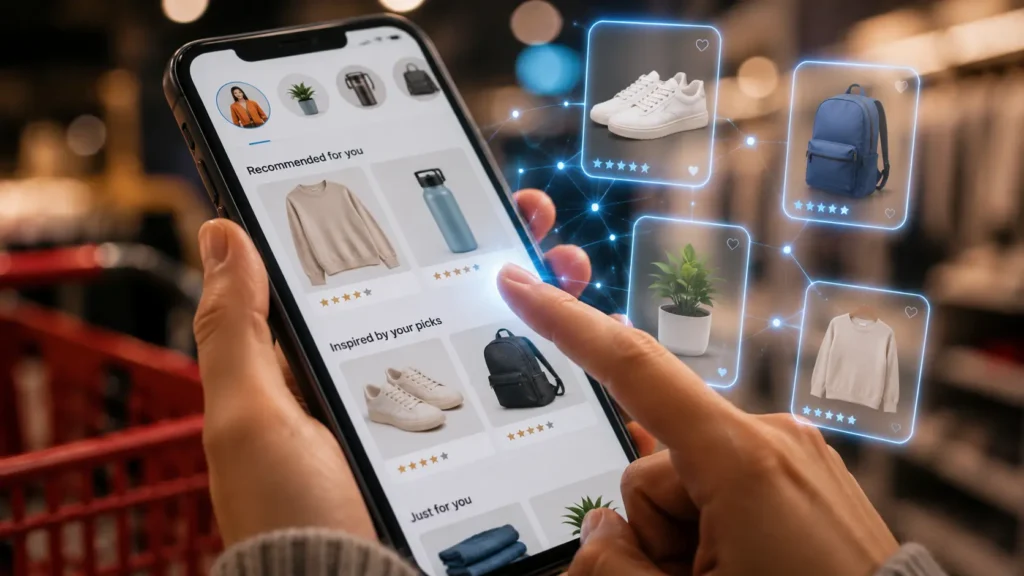
You open the Target app to buy toothpaste.
A few seconds later, it recommends paper towels, coffee pods, vitamins, and a storage box that matches the one you bought months ago.
It almost feels as if the app has been reading your mind.
It has not.
What you are seeing is the result of one of the most sophisticated retail recommendation systems ever built. Behind every product suggestion is a combination of shopping history, browsing behavior, inventory data, seasonal trends, and machine learning models that constantly predict what customers are most likely to need next.
The goal is not simply to sell more products.
It is to make shopping faster, more convenient, and surprisingly personal.
The App Starts Learning Long Before You Buy Anything
Most people assume recommendations begin after making a purchase.
In reality, the learning process often starts much earlier.
Every search, category you browse, product you tap, item you save, and time you spend looking at a page helps the system understand your interests.
Even if you leave without buying anything, that information can help improve future recommendations.
For example, spending several minutes comparing coffee makers tells the system something different from briefly scrolling through kitchen accessories.
Over time, thousands of these tiny signals create a shopping profile that becomes increasingly accurate.
It Is Looking For Patterns, Not Reading Your Mind
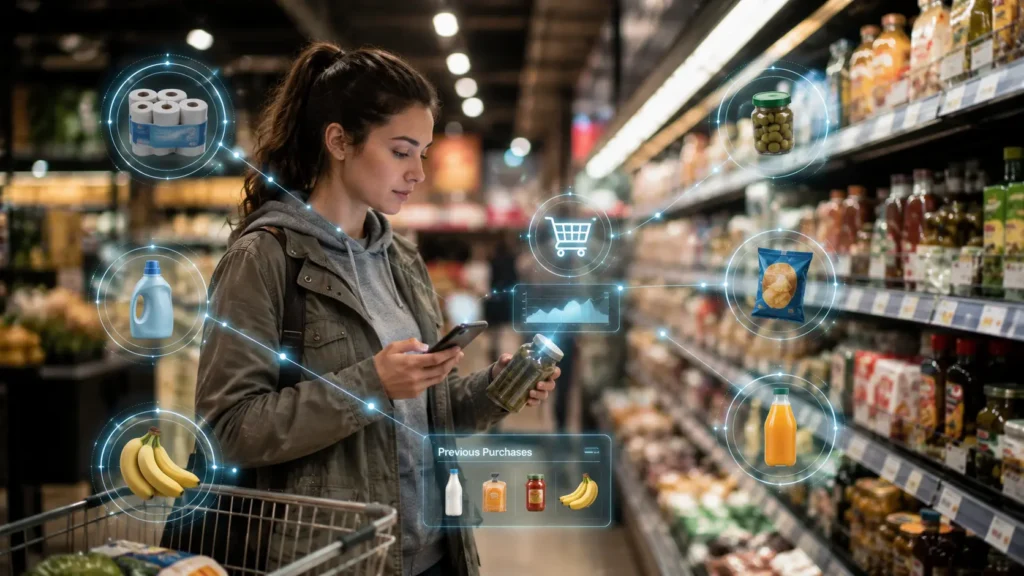
The intelligence behind Target’s recommendation technology comes from identifying patterns.
Imagine thousands of shoppers who buy laundry detergent.
The system may discover that many of those customers purchase dryer sheets within two weeks.
Others frequently buy replacement water filters shortly after purchasing a coffee machine.
These relationships are found by analyzing millions of anonymous shopping behaviors rather than focusing on any single individual.
When your activity begins matching similar patterns, the app predicts what you may need next.
It is statistical prediction rather than personal intuition.
Why Timing Matters As Much As The Product
Recommending the right product is only part of the challenge.
Showing it at the right moment is equally important.
Suppose you recently bought school supplies.
The app may avoid recommending notebooks again tomorrow because you probably already have enough.
Several months later, however, those recommendations might return as the next school season approaches.
Seasonal shopping habits, holidays, weather changes, and local demand all influence what appears on your screen.
That is why recommendations often feel surprisingly relevant.
A Real Shopping Scenario
Imagine a customer moving into a new apartment.
During the first week, they purchase storage bins, cleaning supplies, towels, and kitchen utensils.
The recommendation system recognizes a common pattern shared by many first time movers.
Instead of randomly suggesting unrelated products, it begins recommending hangers, bathroom organizers, lamps, laundry baskets, and food storage containers.
The customer saves time.
Target increases the likelihood of another purchase.
Both sides benefit from better recommendations.
The App Also Learns From Millions Of Other Shoppers
One person’s shopping history only tells part of the story.
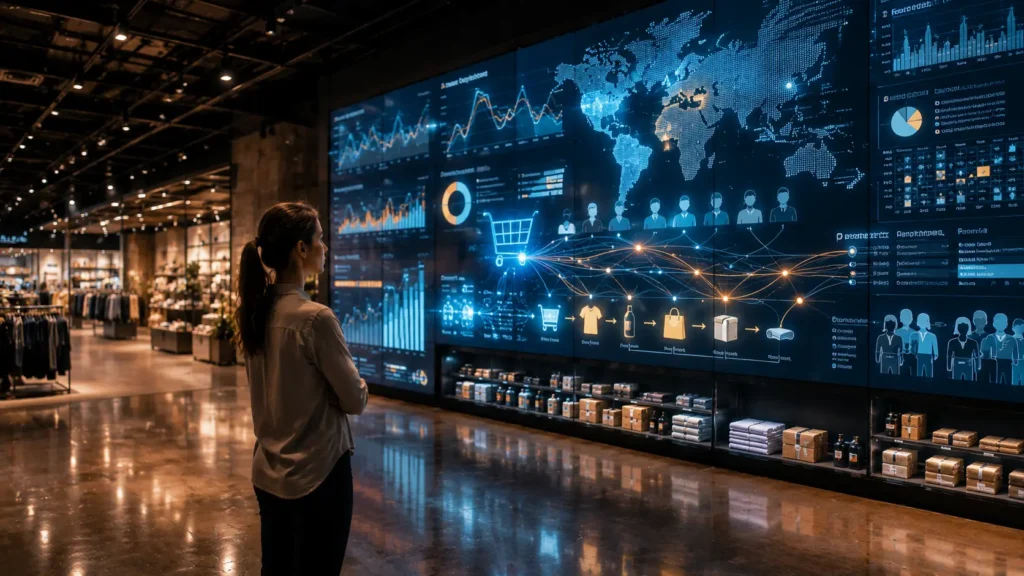
Recommendation systems become much smarter by learning from millions of similar purchasing journeys.
If customers with comparable shopping habits frequently buy certain products together, those relationships become valuable predictive signals.
This approach is called collaborative filtering, and it powers recommendation engines used by many of the world’s largest digital platforms.
The system does not assume everyone behaves the same.
Instead, it continuously searches for groups of similar shopping patterns.
Inventory Matters More Than You Think
A recommendation is only useful if the product is actually available.
That is why modern retail systems combine customer predictions with real time inventory information.
If an item is out of stock at your nearby store, the app may recommend a similar product instead.
Some suggestions are also influenced by regional demand.
A snow shovel might appear for shoppers in colder states during winter, while outdoor furniture becomes more visible as summer approaches.
Recommendations are shaped by both customer behavior and product availability.
Artificial Intelligence Makes The System Smarter Every Day
Older recommendation systems relied on simple purchase histories.
Today’s AI powered recommendation engines continuously improve themselves.
Machine learning models evaluate which recommendations customers ignore and which ones lead to purchases.
Every interaction becomes feedback.
If a suggested product performs well, similar recommendations become more common.
If customers consistently skip certain items, the model gradually reduces their visibility.
This ongoing learning process helps recommendations become more useful over time.
Does Target Actually Know Personal Secrets
One of the biggest misconceptions is that recommendation systems somehow know private details about customers.
The reality is more nuanced.
The app primarily analyzes shopping activity, browsing behavior, purchase history, loyalty program interactions, and other information customers choose to share while using the service.
The system predicts future needs because human shopping habits often follow recognizable patterns.
That prediction can sometimes feel surprisingly personal, even though it is driven by mathematics rather than human observation.
Understanding privacy settings and reviewing account preferences remain good habits for anyone using retail apps.
The Future Of Personalized Shopping
Retail recommendation systems continue evolving rapidly.
Future versions may better understand household routines, sustainability preferences, dietary choices, and even shopping budgets while giving customers greater control over personalization.
Instead of showing thousands of products, intelligent systems will increasingly focus on showing the few items most likely to be genuinely useful.
For busy shoppers, that could mean less time searching and more time finding exactly what they need.
The Invisible Technology Behind Every Recommendation
The next time the Target app recommends something you were already planning to buy, it may feel almost unbelievable.
But behind that convenient suggestion are powerful algorithms processing millions of shopping patterns, inventory updates, seasonal trends, and customer interactions every day.
The app is not predicting the future.
It is recognizing patterns that humans naturally create.
Sometimes those patterns are so accurate that the recommendation appears almost magical.
In reality, it is one of the most advanced examples of artificial intelligence, data science, and predictive retail technology quietly working behind every tap.
Read Also
Read also: https://aiwalanews.com/how-to-check-if-your-data-has-already-been-leaked/
© AiwalaNews | Global Tech & Privacy Edition | April 2026
