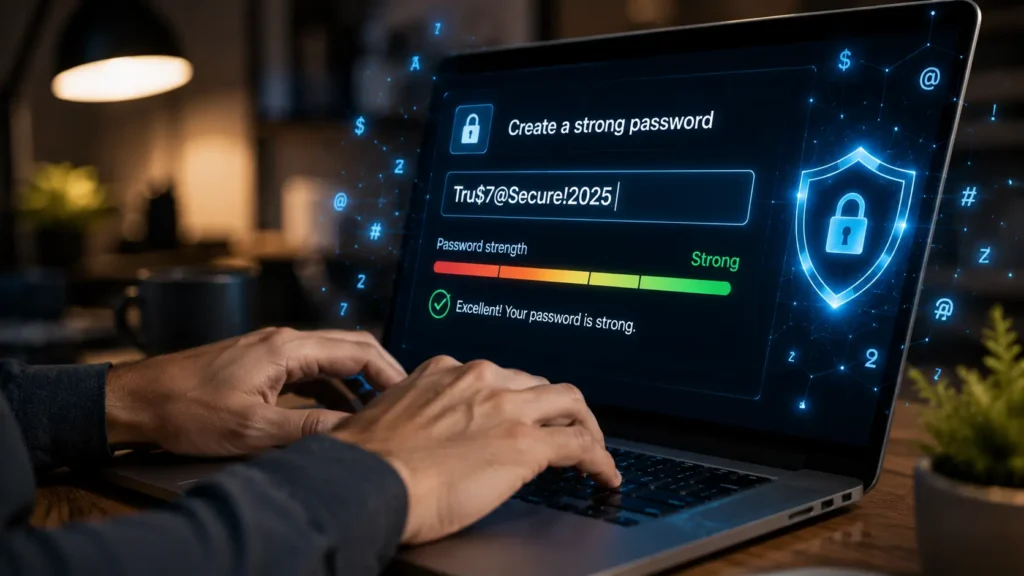
You create a new account, type in a password, and before you even finish, a message appears.
“This password is too weak.”
It feels almost strange.
How can a website know your password is risky if nobody has tried to hack it yet?
The answer is not that the website knows what hackers will do tomorrow. Instead, it uses powerful password strength analysis, breached password databases, and AI driven security algorithms to identify weaknesses in milliseconds, often before your account is ever created.
It is one of the most important cybersecurity technologies working quietly behind the scenes, protecting billions of online accounts every single day.
Your Password Is Analyzed The Moment You Type It
Most people believe websites simply check whether a password is long enough.
Modern systems do much more than that.
As you type, the security software evaluates dozens of characteristics almost instantly.
It checks the password length, the variety of characters, predictable patterns, repeated words, keyboard sequences, and common substitutions such as replacing the letter A with @ or O with 0.
The goal is not to judge how creative your password looks.
It is to estimate how easily criminals could guess it using modern hacking tools.
Hackers Already Know The World’s Most Common Passwords
One reason password checkers are so effective is that cybersecurity researchers have spent years studying passwords exposed in real data breaches.
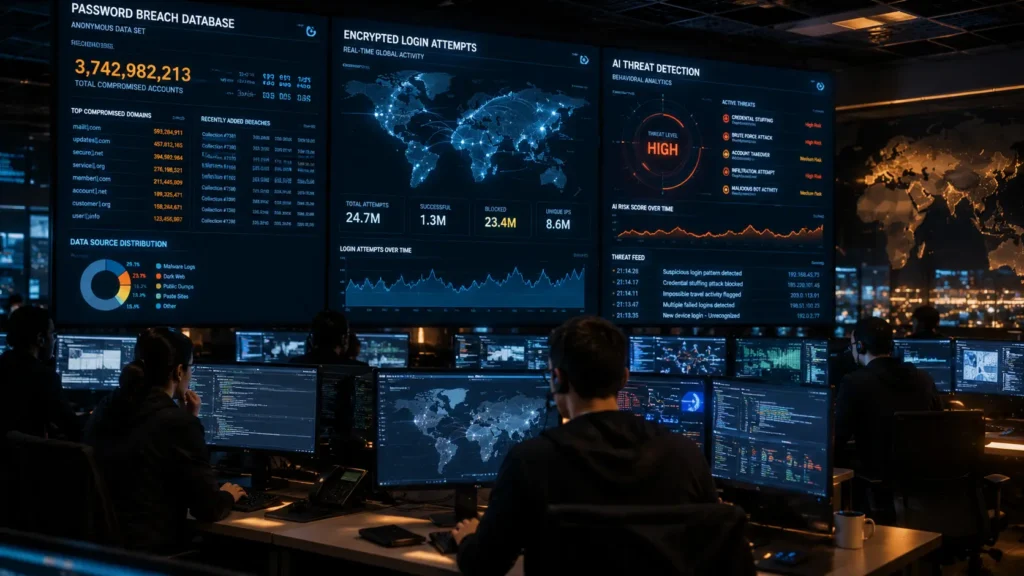
Today, security systems compare new passwords against enormous collections containing millions and sometimes billions of previously compromised passwords.
If you choose something like Password123, Welcome2026, or Summer2026, there is a strong chance it already appears in breach databases used by security companies.
Even if nobody has targeted your account, attackers have already tested those passwords against millions of others.
That is why many websites reject them immediately.
A Real Example Most People Experience
Imagine creating an account for a new streaming service.
You choose Football2026!
It feels unique because you have never shared it with anyone.
The website instantly marks it as weak.
Why?
Not because it knows your personal habits.
Because millions of people create passwords using favorite sports, current years, seasons, pets, birthdays, or family names.
Security systems recognize these predictable patterns because attackers use them every day.
What seems personal to one user often looks surprisingly common to a password algorithm.
The Technology Estimates How Long A Hacker Would Need
Modern password strength analyzers do not simply label passwords as weak or strong.
Many estimate how resistant a password would be against automated guessing attacks.
Instead of asking whether humans can remember it, they calculate how difficult it would be for powerful computers to crack using techniques such as dictionary attacks, brute force attempts, and password spraying.
A random password containing unrelated words and symbols may take dramatically longer to guess than a simple phrase with predictable numbers.
This calculation happens almost instantly while you are still typing.
Artificial Intelligence Has Changed Password Security
Years ago, password checkers relied on basic rules.
Use eight characters.
Add one number.
Include a symbol.
Cybercriminals adapted quickly.
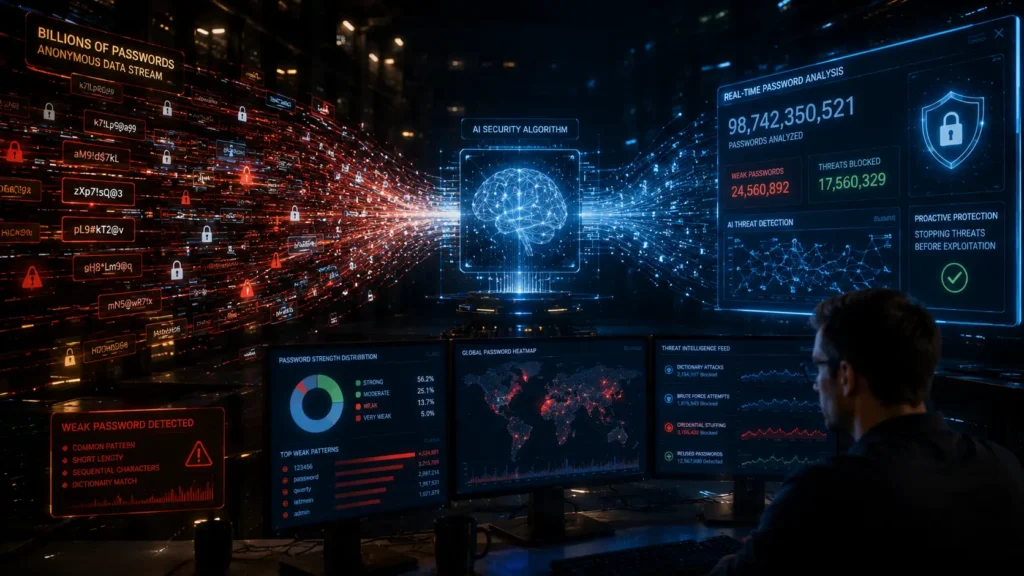
Today’s AI powered security systems understand patterns far more intelligently.
They recognize keyboard sequences, repeated structures, leaked passwords, commonly reused combinations, and human habits that traditional software often missed.
As hacking techniques evolve, these systems continue learning from newly discovered attack methods.
The technology improves because attackers themselves keep changing.
Why Password Managers Often Suggest Strange Passwords
Have you noticed that password managers generate combinations that look almost impossible to remember?
Something like this.
xF8!vQ2#mL9@Tp
There is a reason.
Humans naturally create patterns.
Computers do not.
Randomly generated passwords contain very little structure for attackers to exploit.
They avoid dictionary words, birthdays, sports teams, favorite movies, and other predictable choices that criminals test first.
That randomness makes them dramatically harder to crack.
The Biggest Mistake Is Reusing Passwords
Even a strong password becomes dangerous if it is reused across multiple websites.
Imagine one online store suffers a data breach.
Attackers immediately try the same email address and password on banking sites, streaming platforms, shopping apps, and social media accounts.
This attack is known as credential stuffing.
Modern security systems increasingly monitor for reused credentials and may request additional verification when suspicious login attempts occur.
In many cases, your account is protected before you even realize another website has been hacked.
Security Is Becoming More Than Just Passwords
Passwords remain important, but they are no longer the only defense.
Many services now combine passwords with multi factor authentication, biometric verification, device recognition, and behavioral analysis.
Instead of asking only whether the password is correct, systems also evaluate where you are logging in from, what device you are using, how quickly you type, and whether the activity matches your normal behavior.
This layered approach makes it much harder for attackers to gain access using stolen credentials alone.
The Hidden Technology Protecting Billions Of Logins
Every day, billions of passwords are created, updated, and entered across the internet.
Behind every login screen, sophisticated security systems quietly evaluate passwords in real time, compare them against massive breach databases, identify predictable patterns, and estimate how resistant they are to modern hacking techniques.
Most users never notice this invisible protection.
They simply see a warning that says their password is too weak.
What feels like a simple message is actually the result of years of cybersecurity research, artificial intelligence, and data analysis working together in fractions of a second.
Long before hackers ever try your password, the technology has often already identified its weaknesses.
That silent protection is one of the reasons today’s internet is far safer than many people realize.
Read Also
Read also: https://aiwalanews.com/how-to-check-if-your-data-has-already-been-leaked/
Read also: https://aiwalanews.com/your-data-is-already-stolen-2026-guide/
© AiwalaNews | Global Tech & Privacy Edition | April 2026
