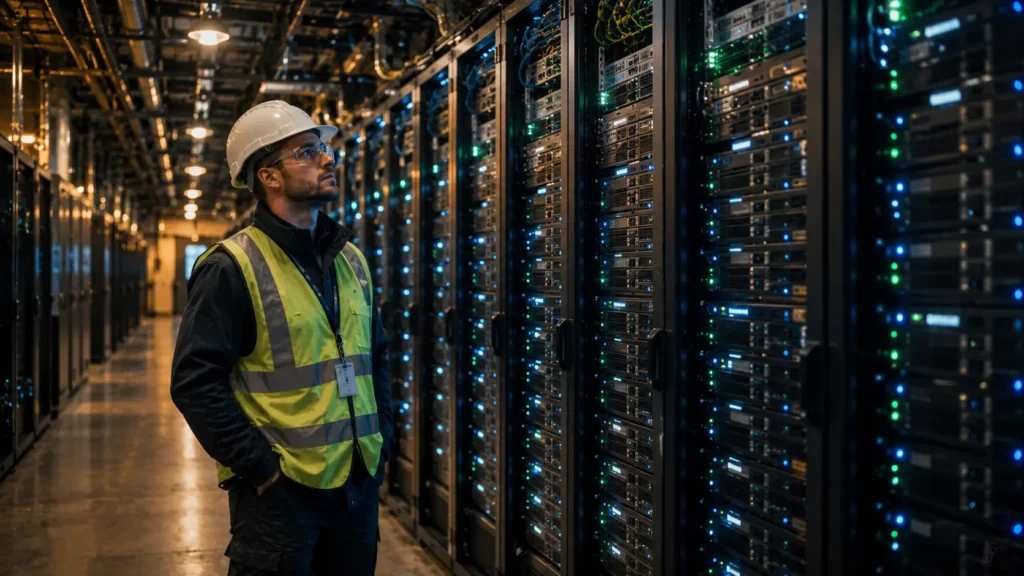
A former data center technician I spoke with, who worked contract jobs across several major cloud facilities before shifting into consulting (he asked not to be named since his current employer restricts comments on past client sites), described the first time he walked into a server hall running at full load during a heat wave. “It’s not like a loud office server room you’d imagine,” he told me. “It’s this constant, physical wall of warm air pressure, like standing near an idling jet engine, except it’s just racks of chips quietly working.”
That heat has to go somewhere, and the systems built to move it are some of the most quietly sophisticated engineering most people will never think about, right up until a headline about a data center’s water use makes them wonder what’s actually happening behind those unmarked buildings off the highway.
Why This Suddenly Became a Much Bigger Problem
For years, standard air conditioning handled most of what a data center needed. That’s changed fast. Modern AI chips pack far more computing power into a much smaller space than older server hardware, and that density has a direct physical cost: air cooling hits a practical ceiling around 15 kilowatts per server rack, while a rack full of GPUs built for AI workloads can now demand 40 kilowatts or more. Past that point, blowing cold air over the equipment simply isn’t enough anymore.
The Trick Nobody Expects: Raising the Temperature
Here’s a detail that genuinely surprised me. Google’s biggest cooling breakthrough years ago wasn’t a fancy new machine, it was deciding to stop keeping server rooms so cold. Industry standard practice used to hold data centers around 64°F, treated almost like a walk in freezer. Google tested raising that target closer to 80°F and found equipment ran just as reliably. That single change opened the door to a completely different cooling strategy, since the equipment no longer needed constant heavy duty air conditioning just to stay within a safe range.
Water Doing the Heavy Lifting
With that higher baseline temperature in place, Google leaned hard into evaporative cooling, a method that’s almost deceptively simple once you understand it. A fan pushes warm outside air over a wet, sponge like material called evaporative media. As the water evaporates off that surface, it pulls heat out of the air passing through it, the same basic principle as sweat cooling human skin. No heavy compressor required, and it uses meaningfully less electricity than traditional refrigeration based systems, particularly in hot, dry climates like Phoenix, where Google and several competitors have built major facilities specifically because the local air behaves well with this approach.
The tradeoff is real though. This method consumes genuine volumes of water, and Google’s own reporting put water use in the billions of gallons annually a few years back, enough that a planned facility in Chile actually got paused so engineers could redesign its cooling approach around local water concerns.
Liquid Cooling Enters the Picture
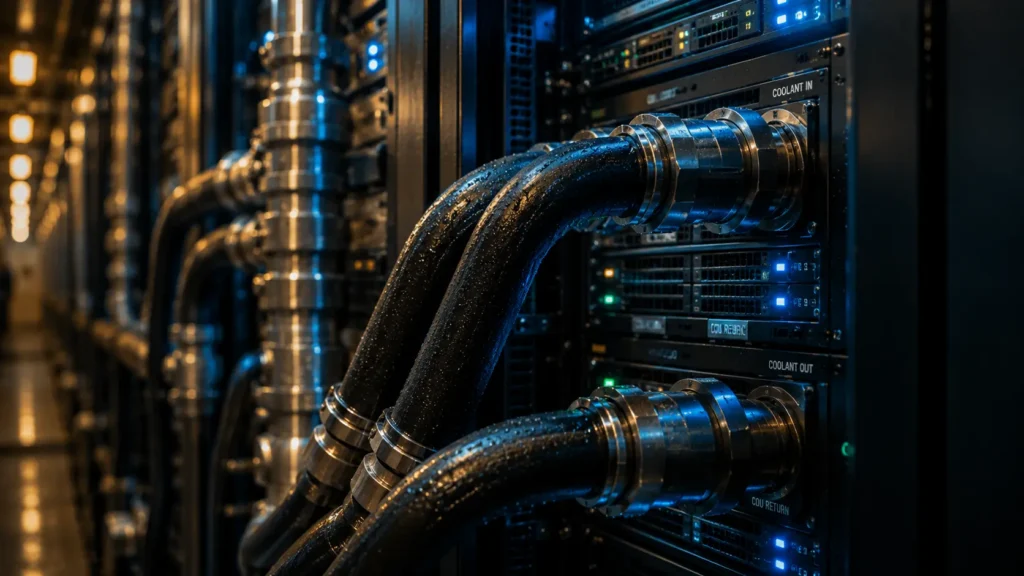
As AI hardware got hungrier for power, a newer method started showing up across the industry: liquid cooling, which moves coolant through sealed pipes directly to the hottest components rather than cooling the surrounding air at all. Some setups place a rear door heat exchanger directly behind a server rack. Others bring liquid straight to individual chips. The most extreme version, immersion cooling, actually submerges entire server components in a specially engineered, non conductive fluid, an idea that sounds risky until you learn these fluids are specifically designed not to damage electronics, the opposite of what most people instinctively assume about mixing liquid and circuitry.
Google describes its closed loop liquid systems as using relatively little fresh water overall, since the same fluid recirculates continuously rather than evaporating away. But that heat still has to leave the building eventually, one way or another, which keeps water back in the conversation even for facilities built around liquid cooling.
The Real Tradeoff Nobody Advertises
An engineer quoted in recent reporting on Google’s cooling standards put the underlying tension about as plainly as I’ve seen it stated: it becomes a choice between reducing stress on the electrical grid or reducing stress on the local water supply. Air based systems lean harder on electricity. Evaporative systems lean harder on water. There isn’t a version of this that avoids trade offs entirely, just different ways of distributing the cost depending on what a specific region can actually spare.
Software Is Quietly Running the Thermostat Too
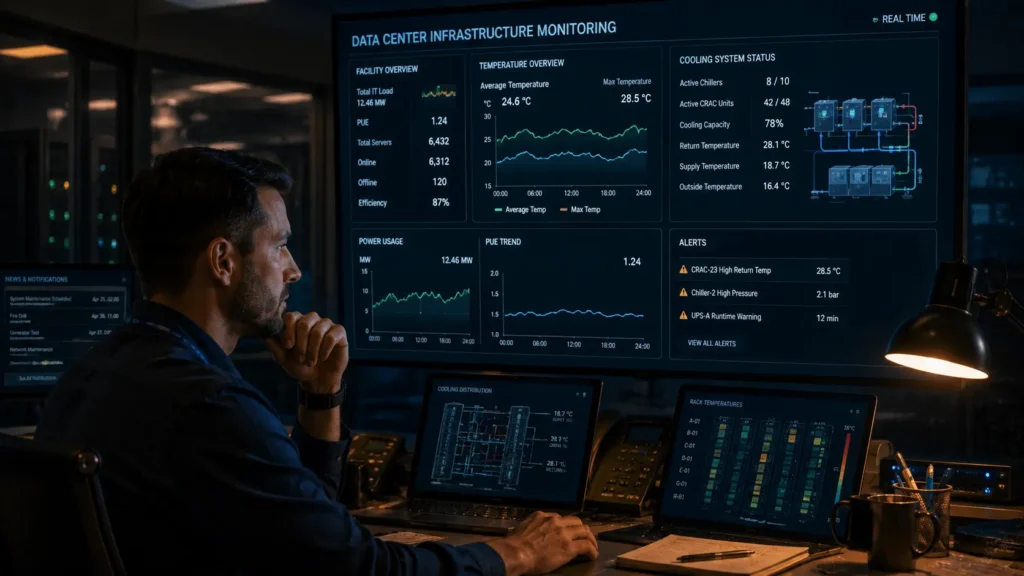
Beyond the physical hardware, Google engineers built machine learning systems specifically to optimize cooling in real time, constantly adjusting fans, pumps, and airflow based on live conditions rather than fixed settings. According to Google’s own published figures, this software layer alone cut cooling related energy costs by roughly 40 percent on top of everything the physical redesign already achieved.
Why This Actually Matters Beyond the Data Center Fence
None of this stays contained behind a corporate campus. Communities near major data centers have increasingly pushed back on water usage and electricity demand, and that pressure is part of why Google has started publishing its own water efficiency standards more openly this year, an unusual level of transparency for an industry that’s historically kept cooling infrastructure details fairly quiet.
The bottom line sitting underneath every one of these engineering choices is almost embarrassingly simple: chips generate heat, heat has to go somewhere, and the exact path it takes, through evaporating water, sealed liquid loops, or an algorithm quietly adjusting fan speed in the background, shapes decisions about electricity grids and local water tables in ways almost nobody scrolling past a search result ever pauses to consider.
Read also this: The Hidden Computers Sitting Inside Your Internet Provider | What Happens When An Entire Internet Cable Gets Cut
© AiwalaNews | Global Tech & Privacy Edition | April 2026
