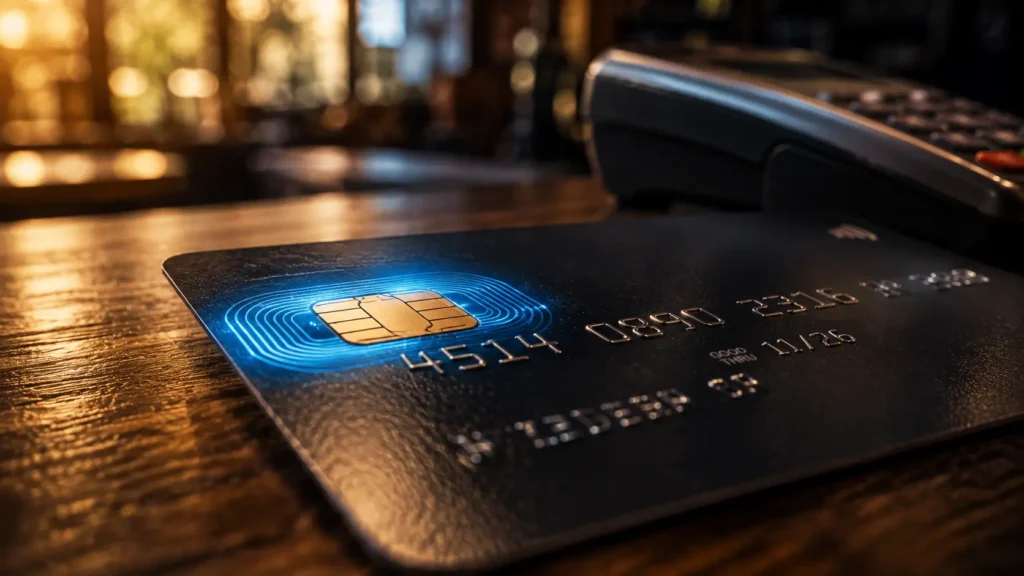
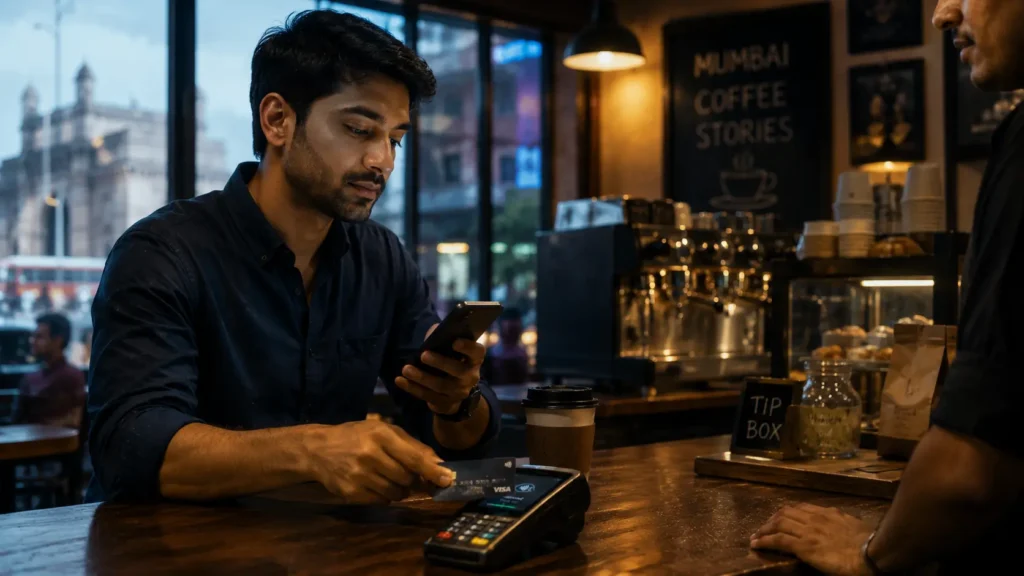
I remember standing at a coffee counter in Bengaluru last winter, half distracted, tapping my card almost by accident while checking a message on my phone. The receipt printed before I had even looked up. That tiny moment stuck with me, because it made me realize how little we actually think about what just happened. A machine confirmed my identity, checked my bank balance, verified security, and approved a payment, all in less time than it takes to blink twice.
As someone who has spent years covering consumer technology and payment systems, I can tell you this speed is not an accident. It is the result of very deliberate engineering choices made by banks, chip manufacturers, and payment networks working together for over a decade.
The Card Has No Battery, Yet It Wakes Up Instantly
Here is the part that surprises most people. Your contactless card does not have a power source of its own. Inside it sits a small chip connected to a coiled antenna, both completely dead until the moment you bring the card near a terminal.
Payment terminals constantly broadcast a radio field at 13.56 MHz, the frequency used by Near Field Communication (NFC). The instant your card enters that field, the antenna absorbs just enough energy to switch the chip on. There is no boot sequence like a phone or laptop. The chip simply borrows power from the terminal itself and becomes active in milliseconds.
I once asked a payments engineer at a fintech conference in Mumbai how this actually feels from the hardware side. He compared it to a small turbine spinning up the second wind touches it, rather than a machine that needs to warm up first.
A Very Short Radio Conversation
Once powered, the card and terminal do not exchange your full account history. They trade a handful of small structured messages. The terminal asks which payment application is stored on the chip. The card replies. The terminal requests transaction details. The card sends back account information along with a security code generated specifically for that single purchase.
Each of these messages is only a few hundred bytes. Because the devices are inches apart and the data packets are tiny, the entire exchange finishes in a fraction of a second. There is simply very little information that needs to travel.
The Real Secret Is Dynamic Authentication
This is where the actual magic happens, and it is the biggest reason taps feel instant compared to the old magnetic stripe cards many of us grew up using.
Every single tap generates a brand new cryptographic code, unique to that transaction. This is called dynamic authentication. The chip uses a secret key embedded during manufacturing, combines it with details like the purchase amount and an internal counter, and produces a one time code that can never be reused.
Think of it like a wax seal that changes its exact pattern every single time you stamp it, yet still proves it came from the same trusted source. Generating this code takes the tiny processor inside your card only microseconds.
Compare that to swiping a magnetic stripe, which simply replayed the same unchanging number every time, often followed by a signature or a slow PIN entry. That older system was not just physically slower, it required more steps by design.
Your Bank May Not Even Be Contacted in the Moment
Here is something that genuinely surprised me when I first learned it while researching a piece for a banking client. For many everyday purchases, your bank is not consulted live at all.
Terminals run on preset risk rules based on the transaction amount, merchant category, and recent card activity. Low risk purchases, such as a coffee or a bus fare, are frequently approved offline. The terminal checks the card’s cryptographic signature against known rules and lets the payment through immediately. The full transaction detail is then queued and settled with your bank quietly in the background, sometimes seconds later, sometimes minutes later.
This also explains why a large purchase occasionally takes a longer pause. It crosses a risk threshold that forces the terminal to request live approval from your bank, adding the delay of an actual network round trip.
The Terminal Itself Is Doing Very Little Work
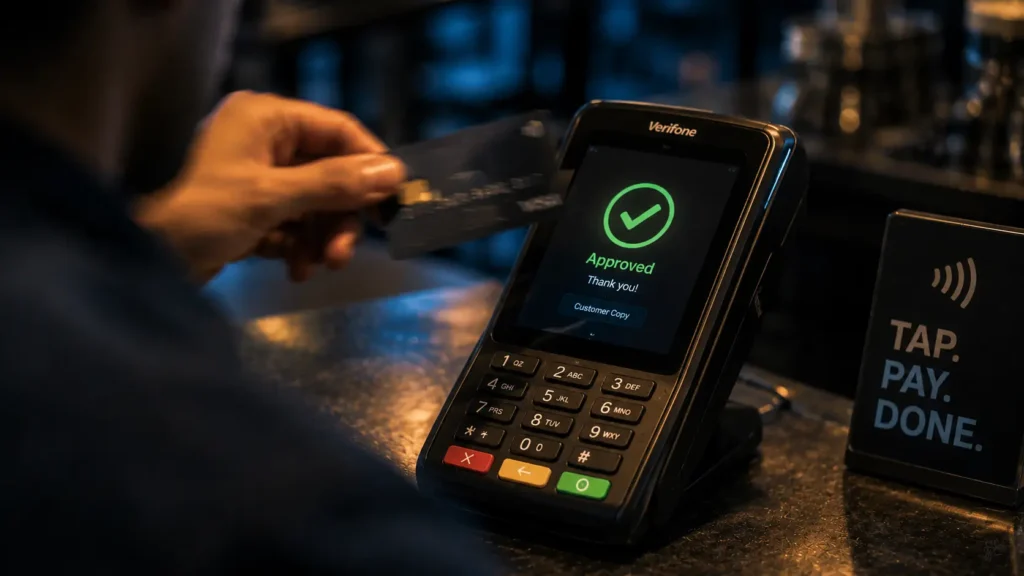
It is tempting to imagine complex fraud algorithms running the instant you tap, but in that specific moment the terminal is doing something far simpler. It relays a small set of messages and checks a cryptographic signature against known rules. This is fast, predictable math that a cheap embedded processor handles in microseconds. The heavier fraud modeling and pattern analysis happens later, inside your bank’s systems, well after your coffee is already in your hand.
Putting the Pieces Together
An under one second tap comes down to four things happening almost at once. Instant power drawn from the terminal’s radio field. A minimal exchange of tiny data packets. A freshly generated cryptographic code instead of a static reused number. And frequently, no live conversation with your bank at all.
Individually, each step saves only milliseconds. Together, they create something that feels instantaneous, a quiet blend of radio physics and applied cryptography disguised as a simple beep and a green checkmark.
Next time you tap your card without a second thought, remember there is a small, elegant system working behind that gesture, built by engineers who spent years shaving milliseconds off something most of us never even notice.
Read also this: How NFC Payment Security Actually Works
Read also this: Digital Wallets vs Physical Cards: A Privacy Guide
© AiwalaNews | Global Tech & Privacy Edition | April 2026
