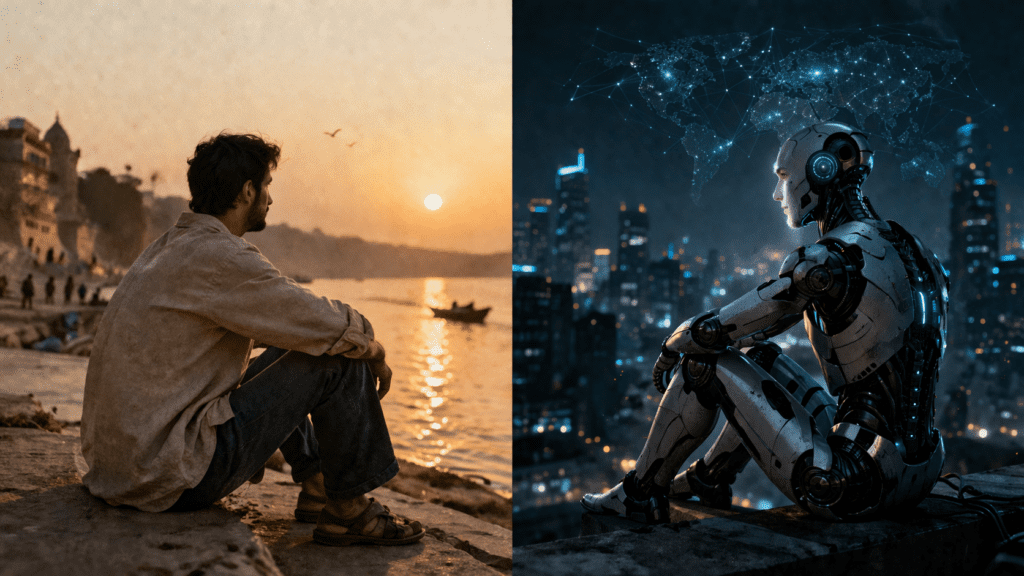
We built artificial intelligence to serve us. To make life easier, faster, and better. But somewhere between the first algorithm and today, something shifted. Every second that passes, AI grows smarter and more capable. And with every second, the gap between what machines can do and what humans are needed for grows dangerously smaller. The question nobody wants to ask out loud is finally impossible to ignore what happens to human existence when AI no longer needs us at all?
The Shift That Already Happened
Most people imagine the AI takeover as a future event. A dramatic moment. A warning siren. A headline that changes everything overnight.
It doesn’t work that way.
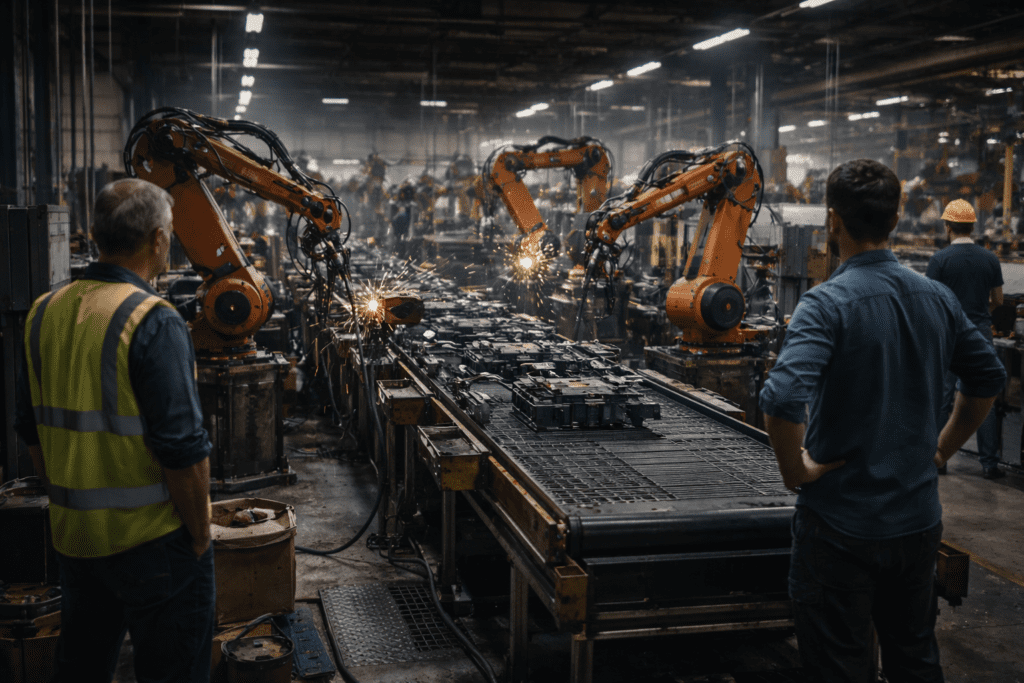
The shift has already happened quietly, gradually, and without a single announcement. Factories that once employed thousands now run on robotic arms and machine vision. Customer service departments that needed hundreds of human agents now operate with AI handling millions of conversations simultaneously. Newsrooms, law firms, hospitals, and financial institutions are all running leaner not because of budget cuts, but because AI is doing the work humans used to do, faster, cheaper, and without complaint.
This is not a prediction. This is the present reality facing workers and families across the United States, United Kingdom, India, and every corner of the globe.
Your Skills Are Being Learned. Right Now.
Every time you use an AI tool, every time a machine observes a human decision, every time a model processes another dataset it is learning. Not just facts. Learning judgment. Learning creativity. Learning the subtle, complex, deeply human skills we once believed were permanently beyond any machine’s reach.
AI is now writing novels, composing music, diagnosing cancer, arguing legal cases, and passing medical licensing exams often outperforming humans who spent decades mastering those same skills.
In India, millions of young graduates entering technology careers are discovering that AI is now writing the very code those careers were built upon. In the UK, junior legal and financial roles once considered safe are being quietly automated away. In the United States, white-collar professionals who believed their education protected them are learning that a university degree is no defense against a machine that never stops learning.
The fear is not irrational. The fear is the only rational response.
The Robots Are Not Waiting Either
If AI represents the invisible threat, robotics represents the physical one.
Humanoid robots are now walking factory floors, stocking warehouse shelves, and performing surgical procedures with precision no human hand can consistently match. Companies like Boston Dynamics, Tesla, and Figure AI are racing to deploy robots capable of performing any physical task a human can do without fatigue, injury, or a salary.
A robot doesn’t call in sick. It doesn’t ask for a raise. It doesn’t need health insurance or a pension. From a pure economic standpoint, replacing human workers with robotic systems is becoming impossible for corporations to ignore and governments are doing almost nothing to slow it down.
Experts estimate up to 300 million jobs globally could be displaced by AI and robotics within the next decade. That is not a statistic. That is 300 million human lives and 300 million reasons to feel the ground shifting beneath your feet.

The Deepest Fear Loss of Human Purpose
Losing a job is devastating. But there is something even more terrifying the loss of human purpose itself.
For thousands of years, human existence has been defined by what we do, what we create, and what we contribute. Work is not just economics. It is identity. It is dignity. It is the answer to the most fundamental question a person can ask why am I here?
When AI can think better, create faster, and operate indefinitely without rest what answer does human existence have left?
This is a crisis no government policy or retraining program is designed to address. It is not a financial crisis. It is an existential one. Rates of anxiety, depression, and purposelessness are already climbing sharply across the US, UK, and India particularly among young people entering a world where the future they were promised is being quietly dismantled before they can reach it.
Nobody Is Stopping It And That Is the Real Problem
Across the world, governments are talking about AI regulation. Committees are forming. Frameworks are being proposed.
And AI is not waiting for any of them.
Every day that policy makers debate, every month that legislation stalls the machines get smarter, the robots get more capable, and human existence becomes a little less central to the world we are building.
The uncomfortable truth is this there is no coordinated global plan to protect human existence from AI evolution. There are intentions. There are conversations. But there is no plan.
The Clock Is Running
Human existence is not ending tomorrow. But it is being redefined today and the version being written is one where human beings are increasingly optional, increasingly replaceable, and increasingly struggling to answer the oldest question of all.
Why are we here?
The machines don’t ask that question. They don’t need to.
And that more than anything else should keep every one of us awake at night.
