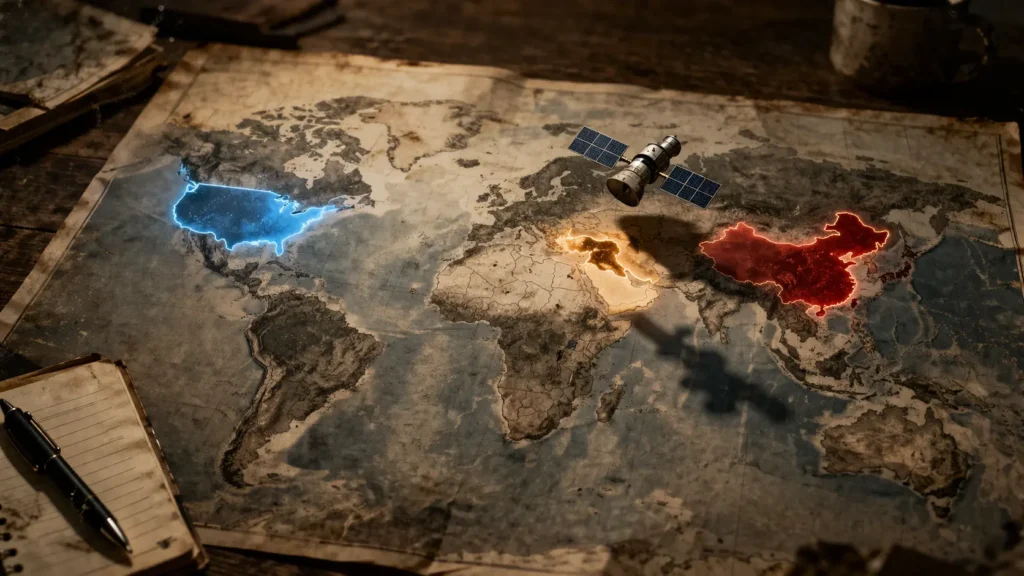
The battlefield has no borders. There are no missiles in the air, no soldiers on the ground yet a war is already being fought, and it may be the most consequential conflict of our generation. Welcome to the age of invisible warfare, where artificial intelligence is the weapon, data is the ammunition, and every nation with a screen and a server is caught in the crossfire.
The New War Nobody Is Talking About
While headlines focus on sanctions, nuclear negotiations, and diplomatic tensions, something far more sophisticated is unfolding between the United States and Iran. Both nations have quietly been building, deploying, and weaponizing AI-powered systems targeting critical infrastructure, financial networks, military intelligence, and public opinion itself.
This isn’t science fiction. This is happening right now.
Cyberattacks powered by artificial intelligence are no longer the slow, manual operations of the early 2000s. Today’s AI-driven attacks are faster, smarter, and almost impossible to trace in real time. They adapt. They learn. They strike precisely where defenses are weakest. And unlike a missile, an AI-powered attack leaves no smoke, no crater only silent, catastrophic damage buried deep inside systems the world depends on.
America’s AI Arsenal
The United States has invested billions of dollars into AI-driven defense and cyber capabilities. Agencies like the NSA, CISA, and US Cyber Command now use machine learning systems to monitor global networks, detect intrusion attempts, and launch offensive cyber operations when authorized.
American AI systems can scan millions of lines of code in seconds, identify vulnerabilities in enemy infrastructure, and predict attack patterns before they happen. The Pentagon’s Project Maven an AI program initially designed for drone surveillance has evolved into a cornerstone of America’s broader AI warfare strategy, integrating real-time data analysis with military decision-making at unprecedented speed.
The US has also deployed AI systems capable of autonomous threat neutralization identifying and shutting down cyberattacks mid-execution without waiting for human authorization. In a conflict measured in milliseconds, that speed is everything.
But power invites provocation.
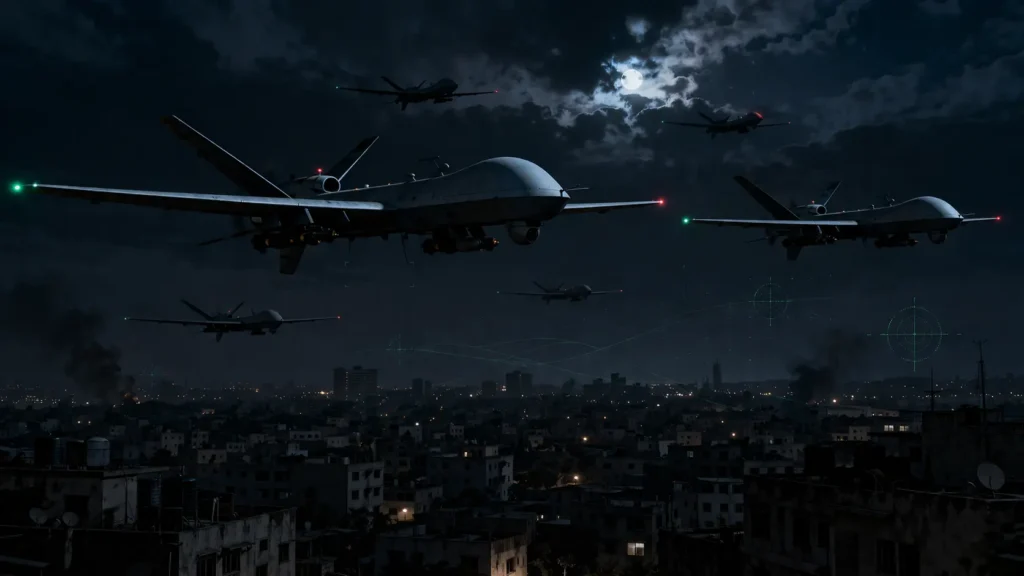
Iran Fights Back – Smarter Than Anyone Expected
Iran is not a passive player in this conflict. Despite heavy economic sanctions limiting its access to Western technology, Iran’s cyber capabilities have grown dramatically over the past decade and AI is accelerating that growth faster than most Western analysts predicted.
Iranian state-sponsored hacking groups, including the notorious APT33 and APT34, have launched sophisticated campaigns targeting US energy companies, financial institutions, and government contractors. These aren’t random attacks. They are strategic, calculated, and increasingly AI-assisted.
Iran has also weaponized AI for disinformation warfare. Fake social media accounts, AI-generated content, and deepfake technology are being deployed to manipulate public opinion not just in America, but across the UK, India, and the broader Middle East.
In 2024, US intelligence officials confirmed that Iranian AI-driven influence operations had specifically targeted American voters, military personnel, and policy makers sowing division, confusion, and distrust at a scale no traditional propaganda campaign could match. What makes this particularly dangerous is that most targets never realize they have been manipulated.
Iran has also demonstrated the ability to disrupt satellite communications, compromise industrial control systems, and penetrate defense contractor networks capabilities that would have seemed impossible for a heavily sanctioned nation just ten years ago.
And Then There Is China Watching Every Move
Here is where the story gets even more complex and deeply unsettling.
China is not a spectator. While Washington and Tehran trade invisible blows, Beijing is studying every attack, every defense, every vulnerability exposed in this digital conflict. China’s intelligence apparatus is arguably the most sophisticated data-collection machine in human history, and the US-Iran AI war is giving them an unprecedented live training exercise at zero cost.
The People’s Liberation Army (PLA) has dedicated entire divisions to AI warfare research. Chinese tech giants many with deep ties to the state are feeding their AI systems with real-world conflict data, learning what works, what fails, and how Western cybersecurity infrastructure responds under sustained pressure.
China has already demonstrated alarming capabilities of its own. The Volt Typhoon campaign a Chinese state-sponsored operation uncovered by US intelligence successfully embedded itself inside American critical infrastructure networks, lying dormant and undetected for months, waiting. That level of patience and precision is only possible with advanced AI coordination.
China’s broader strategy is deliberate patience. While the US and Iran exhaust resources targeting each other, Beijing is quietly positioning itself as the dominant AI superpower of the 2030s a goal outlined explicitly in its “New Generation AI Development Plan” and backed by over $15 billion in annual state AI investment.
Why This Affects YOU In the US, UK, India, and Beyond
This invisible war does not stay invisible for ordinary people. Its consequences bleed into everyday life in ways most people never connect to geopolitics.
Critical infrastructure attacks power grids, hospitals, water treatment systems, financial markets are primary targets in AI warfare. A successful strike doesn’t just inconvenience governments. It disrupts millions of lives within hours, causing economic damage that can take years to recover from.
Disinformation campaigns powered by AI are already reshaping politics and eroding public trust across democracies worldwide. If you consumed news or social media during any major election in recent years, there is a very real possibility that AI-generated content influenced what you read, shared, and believed.
In India which maintains complex strategic relationships with Washington, Tehran, and Beijing simultaneously the stakes are uniquely high. Indian defense networks, financial systems, and government databases are increasingly being probed by state-sponsored AI operations from multiple directions. India’s rapid digital expansion has created enormous opportunity, and enormous vulnerability, at the same time.
In the UK, GCHQ has publicly warned that AI-powered cyberattacks now represent the single greatest evolving threat to national security surpassing even traditional terrorism in terms of potential scale, reach, and the difficulty of attribution.
The Race No One Can Afford to Lose
The nation that masters AI warfare first doesn’t just win battles it rewrites the rules of global power for generations.
The United States understands this. Iran understands this. And China, watching silently and strategically from the sidelines, understands it better than anyone.
The invisible war has already begun. The next major escalation may not look like a war at all it may look like a blackout, a market crash, a hospital system failure, or an election result that nobody can fully explain.
The question is no longer whether AI will define the future of global conflict. The question is who will be left standing when it does?
Stay informed. The battlefield is everywhere and it is already closer than you think.
