
You spent hours perfecting your resume. You hit “Apply.” And then… silence.
Not a callback. Not even a rejection email. Just a void. Here’s the brutal truth that nobody in the hiring world wants to admit out loud: your resume was probably never read by a human being.
Not once.
The Invisible Gatekeeper You Never Knew Existed
Before your resume lands on any hiring manager’s desk, it must survive something far less forgiving than human judgment. It faces an Applicant Tracking System or ATS a piece of software now used by over 98% of Fortune 500 companies, and rapidly adopted by mid-size firms across the USA, UK, India, and global markets.
The ATS doesn’t feel impressed by your internship at a top firm. It doesn’t care about the three hours you spent rewriting your summary. It scans for specific keywords, formatting patterns, and structural signals and if your resume doesn’t match, it moves you to the rejection folder. Automatically. Often within milliseconds.
You never even knew the interview existed.
The Numbers That Should Terrify Every Job Seeker
- 90% of resumes are filtered out before a recruiter sees them
- 250+ applications flood in for every single corporate job posting
- Hiring managers who do see your resume spend an average of 7 seconds on it
- 85 million jobs are projected to face automation displacement and the hiring process itself is already automated against you
This isn’t pessimism. This is the landscape. And the candidates winning right now are the ones who understand it completely.
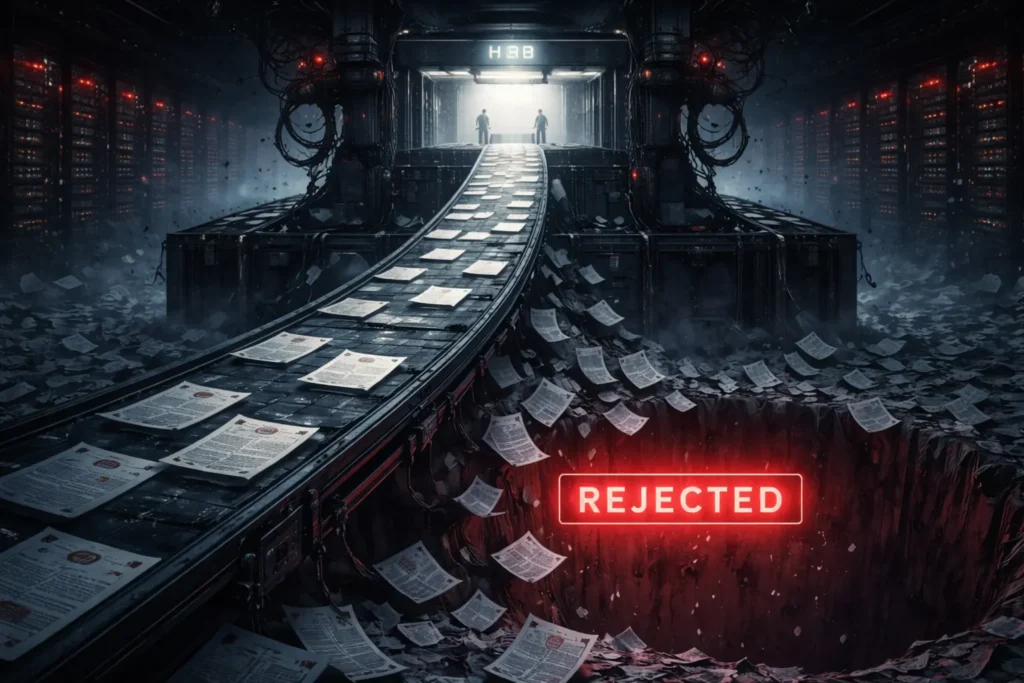
Why Your “Perfect” Resume Keeps Failing
Here are the five silent killers the ATS uses against you and most applicants have no idea:
01 – Keyword Mismatch. The job description says “revenue growth.” Your resume says “increased sales.” To a human, identical. To an ATS, completely different. It needs exact language mirroring from the job posting to rank you as a match.
02 – Graphic-Heavy Formatting. That sleek two-column resume with icons and colored headers? The ATS parser reads it as scrambled text or skips it entirely. Plain, clean, single-column formatting almost always performs better algorithmically.
03 – Creative Section Headers. “My Journey” and “Where I’ve Grown” may feel personal and human. The ATS is looking for “Work Experience” and “Education.” It literally cannot categorize anything else.
04 – No Quantifiable Achievements. “Managed a team” tells the algorithm almost nothing. “Led a 14-person team, reducing customer churn by 31% in Q2” feeds the system what it ranks highly specificity, numbers, impact.
05 – Wrong File Type or Encoding. Corrupted PDFs, incompatible fonts, and non-standard characters cause parsing failures. Your resume may reach the system and still register as blank.
The Pull Quote Every Job Seeker Needs to Read
“The ATS decides who gets filtered. People decide who gets hired. Master both and you become impossible to overlook.”

70% Human – The Part the Algorithm Can’t Replace
Here’s what the doom-scrollers won’t tell you: the algorithm is only the first wall.
Study after study from LinkedIn’s own hiring data to Harvard Business School research confirms that 70% of jobs are filled through networking and referrals, many of which bypass the ATS entirely. When someone inside a company recommends you, your profile often goes directly to the hiring manager’s inbox. No keyword scan. No automated rejection.
This is why genuine professional relationships are not a soft skill they are a hard career strategy. Commenting meaningfully on industry posts. Reaching out to people whose work you admire. Offering value before asking for anything. These are the moves that create the shortcut past the machine.
The candidates who feel “lucky” in their job search are almost always the ones who invested in people before they needed them.
20% Environment – Your Digital Presence Is Already Being Judged
Recruiters Google you. Always. In 2024, your digital environment your LinkedIn profile, your published work, your GitHub, your thought leadership functions as a second resume that never gets filtered by ATS.
In talent-dense markets like London, Bengaluru, New York, and Singapore, two candidates may have near-identical resumes. The one with a robust personal brand online — clear expertise, visible recommendations, consistent professional presence almost always gets the call.
Your online environment is either working for you or against you, 24 hours a day, whether you’re applying for jobs or not. The time to build it is not when you need a job. The time to build it is right now.
10% Symbolic Signal – The Invisible Edge
The final 10% is the detail most people never think about and it’s often what separates the “maybe” pile from the “call today” folder.
It’s the specific company value you weave into your opening summary. It’s the micro-detail that tells a hiring manager you didn’t just read their job description you read their mission. It’s the industry certification placed strategically above your education section because you know this particular firm prioritizes it. It’s two sentences that communicate: I understand why you exist, not just what you do.
These symbolic signals cannot be templated. They require you to think like the decision-maker and that’s precisely why so few candidates bother.
What You Can Do – Starting Today
The combination that actually works in the current job market isn’t a secret. It’s just underused.
Run your resume through an ATS simulator before every application. Tools like Jobscan or Resume Worded score your match rate against the job description. Aim above 80%. Mirror the exact language of the posting not paraphrased, mirrored. Use the precise words they use for the precise skills they need.
Optimize your LinkedIn aggressively. A complete profile, a keyword-rich headline, 500+ connections, and at least three strong written recommendations turn your profile into a searchable asset that works even when you’re asleep.
And stop applying in isolation. Identify your target companies. Find people inside them. Start real conversations. Send value before you send your resume.
The algorithm is not going away. But the candidates who combine ATS-optimized documents + a strong digital environment + genuine human connection are the ones the system is consistently failing to filter out because they’ve made themselves impossible to ignore at every layer of the process.
© AiwalaNews | Global Tech & Privacy Edition | April 2026
