They didn’t send a notification. They didn’t hold a press conference. They just pushed the update and most iPhone users still have no idea what changed.
This is how Apple operates when it doesn’t want a conversation. No headline feature. No keynote slide. Just a quiet update, buried inside a settings menu most people have never opened, that fundamentally changes how your iPhone handles something you do hundreds of times a day.
Whether this change protects you or exposes you depends entirely on whether you know it happened.
What Actually Changed
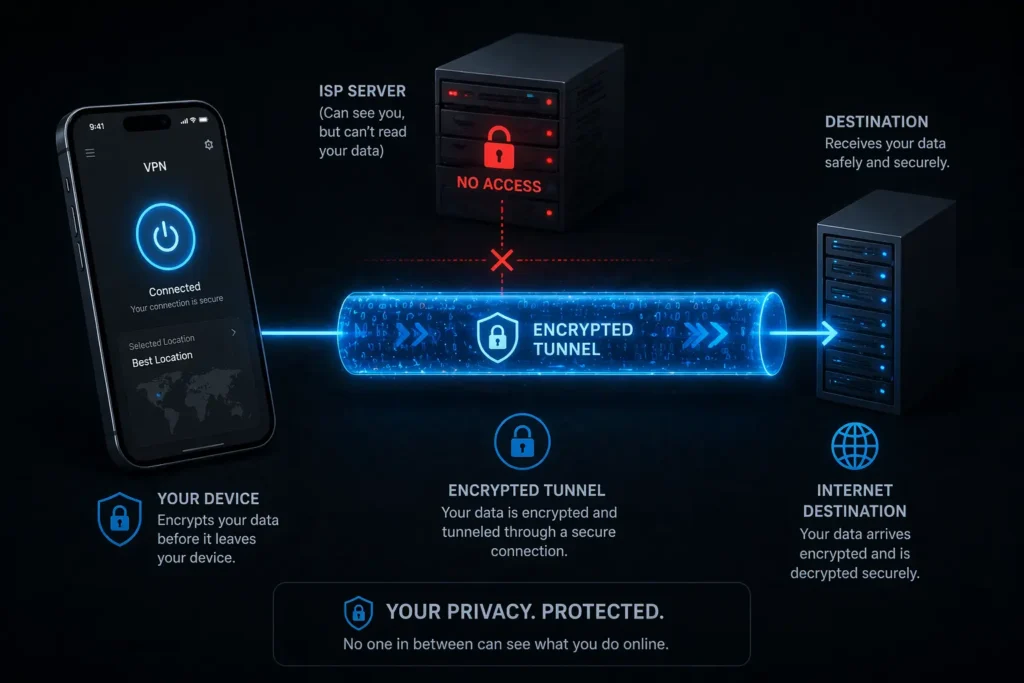
Every time you visit a website, open an app, or send a message, your phone performs DNS resolution the invisible process of translating a website name into the numerical address your device actually uses to connect.
Until recently, that translation happened through your internet service provider’s servers. Your ISP could see every domain you visited, log it, and in many countries legally sell that information.
Apple’s quiet change enables Encrypted DNS by default meaning that translation now happens through an encrypted tunnel your ISP cannot read. Your browsing requests are no longer visible to the network you’re connected to.
On paper, pure win. In practice, significantly more complicated.
The Part Apple Isn’t Advertising
When your ISP loses visibility Apple gains it.
Encrypted DNS routes through Apple’s own infrastructure, particularly through iCloud Private Relay Apple’s feature that splits your internet traffic so no single entity sees both who you are and what you’re accessing.
The architecture is clever. Apple sees your identity but not your destination. A third-party relay sees your destination but not your identity. Neither can build a complete profile.
But Apple is still the infrastructure. Apple still controls what gets logged, retained, and handed over when governments ask. And governments ask constantly.
In 2023 alone, Apple received over 13,000 government data requests globally and complied with the majority. The encryption protecting you from your ISP does not protect you from Apple. It just changes who the gatekeeper is.

What This Means for Your Daily Life
On public WiFi coffee shops, airports, hotels this change is genuinely protective. Public networks are among the most dangerous environments for data interception. Encrypting DNS requests here meaningfully reduces your exposure.
Concerned about ISP tracking? Particularly in the US, where ISPs can legally sell browsing data, this change reduces what your provider can see and monetize. That is a real improvement.
On corporate or school networks, this may break things. Enterprise networks rely on DNS visibility for content filtering and security monitoring. Encrypted DNS bypasses these controls IT departments are actively working to override it.
In countries with aggressive government surveillance including parts of India, the Middle East, and Southeast Asia the change shifts but does not eliminate your exposure. Your government may no longer see requests at the ISP level. They may simply ask Apple instead.
The Feature Inside the Feature
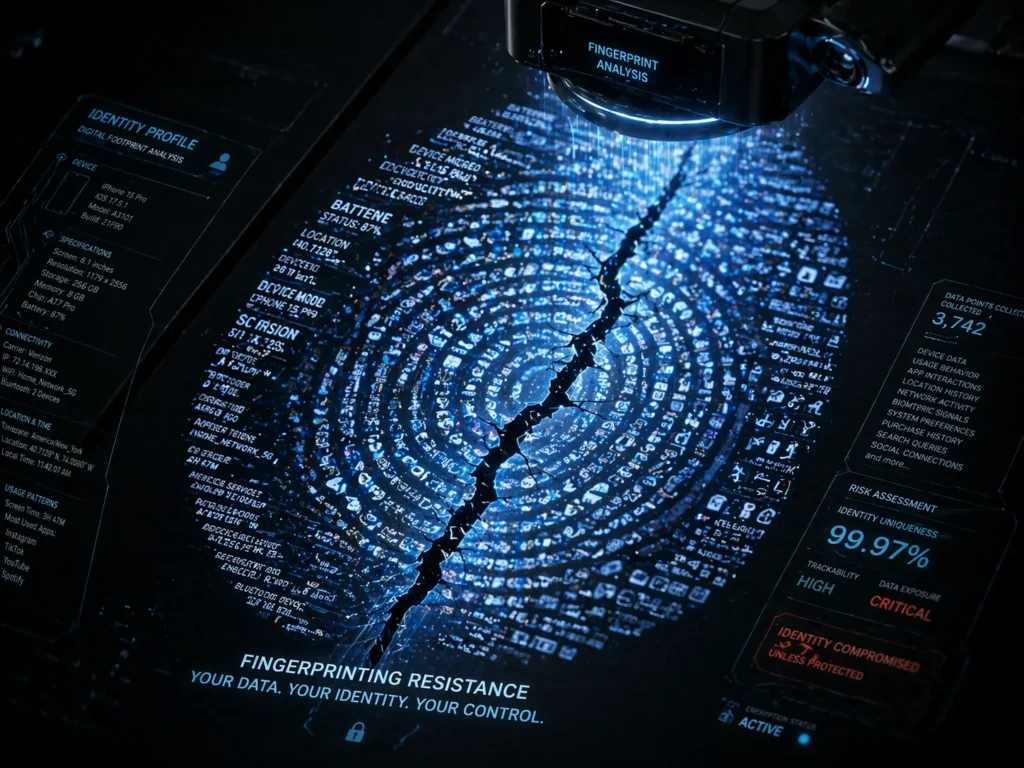
Buried even deeper is a modification to how iPhone handles fingerprinting resistance across apps not just browsers.
Fingerprinting is the technique advertisers use to identify your device even after you’ve denied tracking permission combining your screen size, battery level, timezone, language settings, and dozens of other signals into a unique identifier that follows you everywhere.
Apple has made this fingerprint significantly harder to read for third-party apps. Apps that previously tracked you despite your “Ask App Not to Track” selection now have measurably less ability to do so.
This is the change the advertising industry is quietly furious about. It received almost no mainstream coverage. It affects every app on your phone.
Who Is Actually Winning Here
Apple wins because privacy is now a core product differentiator against Android. Every genuine privacy improvement is also a marketing weapon and a justification for premium pricing. Apple’s privacy features are real. They are also strategically deployed.
Users win – partially. Protection against ISP surveillance, network-level tracking, and advertiser fingerprinting is genuine. Your data is harder to harvest than before. That matters.
Advertisers lose – and are building workarounds. Every time Apple closes a tracking vector, the industry develops new ones. Server-side tracking and cohort-based targeting are already replacing what Apple restricted. The arms race continues.
Governments are unaffected. Encryption Apple controls is encryption Apple can unlock. This update protects you from corporations. It does not protect you from legal orders or state-level requests.
What You Should Do Right Now
Enable iCloud Private Relay. Settings → Apple ID → iCloud → Private Relay. If you’re on iCloud+, turn it on immediately.
Audit app tracking permissions. Settings → Privacy & Security → Tracking. Revoke access from every app that doesn’t genuinely need it.
Don’t mistake Apple’s privacy for complete privacy. Use Signal for sensitive communications. Use a paid, audited VPN for network-level protection. No single company’s privacy architecture should be your only defense.
The Uncomfortable Truth
Apple made your iPhone more private from everyone except Apple.
That is a genuine improvement. Your ISP knowing everything, every advertiser knowing everything that was the baseline. Apple raised the floor meaningfully.
But raising the floor is not the same as giving you the ceiling. Privacy that depends on trusting a trillion-dollar corporation is not privacy. It is a better landlord.
The update is real. The protection is real. The limits are equally real and Apple is counting on most users never thinking past the first layer.
© AiwalaNews | Global Tech & Privacy Edition | April 2026
