You added something to your cart this morning. You checked again at lunch. The price had changed. By evening, it changed again. You assumed it was a sale. It wasn’t. It was you being priced.
Amazon changes product prices up to 2.5 million times per day. That is not a typo. It is a system and you are inside it every time you shop.
What Dynamic Pricing Actually Is
Dynamic pricing is an algorithmic system that adjusts product prices in real time based on dozens of variables your behavior, competitor activity, inventory levels, time of day, and even the device you are shopping from.
It is not new. Airlines and hotels have used it for decades. But Amazon industrialized it, miniaturized it down to individual products, and ran it at a scale that makes every other retailer look prehistoric.
The price you see is not the price. It is a price calculated specifically for this moment, for this visitor, on this device.
The 5 Ways Amazon Prices the Same Product in One Hour
1. The Anchor Price Amazon displays a “Was” price a higher original price crossed out to make the current price feel like a deal. In many cases, that original price was only active briefly, sometimes for as little as a few hours, before being replaced by the “discounted” price permanently. The discount is real. The anchor was engineered.
2. The Competitor Mirror Amazon’s algorithm scans competitor websites Walmart, Target, Best Buy continuously. The moment a competitor drops their price, Amazon’s system responds within minutes, sometimes seconds. What looks like Amazon’s generosity is actually a defensive pricing algorithm protecting market share.
3. The Demand Surge When a product trends because of a news story, a viral post, or a celebrity mention demand spikes and so does the price. Amazon’s system detects the surge in search volume and adjusts upward automatically. You are paying the viral tax without knowing it exists.
4. The Cart Abandonment Trap Add a product to your cart. Leave without buying. Come back later. In many cases, the price will have dropped just enough to trigger a purchase decision. Amazon’s system tracks cart abandonment signals and in some instances responds with a price nudge. It knows you were interested. It is closing the sale.
5. The Device and Location Price Research has repeatedly shown that prices can vary based on your device, your location, and your browsing history. Mac users have historically been shown higher hotel prices than Windows users on certain platforms. Amazon denies personalizing prices by user — but the algorithm knows your zip code, and zip codes correlate strongly with income.

The Data Feeding the Machine
Amazon’s pricing engine does not guess. It knows.
It knows how long you spent on a product page. It knows how many times you have visited. It knows whether you have Prime. It knows your purchase history, your wish list, your return history, and your household’s seasonal buying patterns.
Third-party sellers on Amazon do not set their own prices manually. The majority use automated repricing tools that sync with Amazon’s own algorithm — creating a feedback loop where prices chase each other up and down in real time with no human making a single decision.
The result is a marketplace where price is no longer a reflection of value. It is a reflection of data.
Why You Almost Never Notice
Amazon’s interface is designed to make dynamic pricing feel normal and even beneficial.
The lightning deal timer creates urgency. The “Only 3 left in stock” warning sometimes artificially triggered compresses your decision window. The price history is hidden by default. The “Was” price gives you a reference point that Amazon itself set.
Every design decision on the Amazon product page exists to accelerate your purchase decision and reduce the time you spend comparing, questioning, or leaving.
The friction between you and a rational purchasing decision is not accidental. It is engineered.
How to Fight Back
Use Camelcamelcamel.com a free tool that tracks Amazon price history on any product. Paste the product URL and see exactly what it has sold for over the past months or years. The “Was” price suddenly looks very different.
Never buy from your cart immediately. Abandon it. Wait 24 to 48 hours. In many categories, prices drop or coupons appear for hesitant buyers.
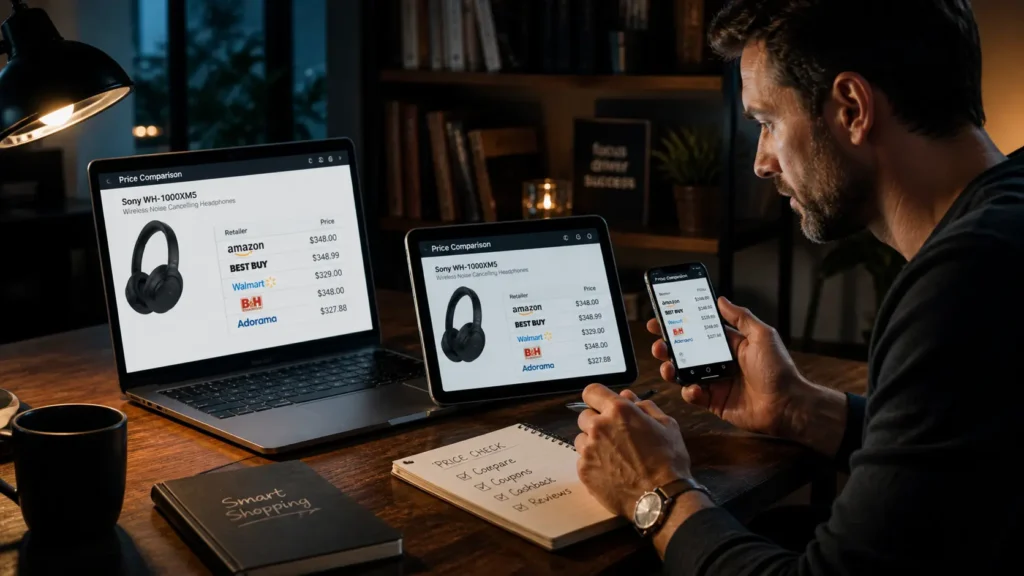
Check the same product across devices desktop, mobile, incognito window. Price differences, when they exist, become visible this way.
Compare across platforms before purchasing anything over a significant amount. Amazon’s price is not always the lowest it is just the most conveniently presented.
Disable your browsing history or use a VPN for sensitive purchases limiting the behavioral data Amazon’s algorithm can read reduces its ability to price against your known patterns.
The Bigger Picture
Dynamic pricing is not illegal. It is not even hidden Amazon acknowledges prices change frequently. But the sophistication of the system, combined with an interface designed to obscure it, creates a marketplace where the average consumer is operating with a fundamental information disadvantage.
You bring your budget. Amazon brings two and a half million price changes per day, your full behavioral history, and a team of engineers whose job is to find the exact price you will pay.
That is not a fair negotiation. It is a calculated extraction.
Now you know the system. Use that knowledge before you hit buy.
📖 Read Also: Why Deleting Your Google Account Doesn’t Actually Delete Your Data
How Tech Companies Use Color, Sound, and Timing to Control Your Emotions
© AiwalaNews | Global Tech & Privacy Edition | April 2026
