This article is based on verified data from Harvard Business School research, Zurich Insurance risk assessments, SEC filings, and documented geopolitical analysis. All figures are sourced.
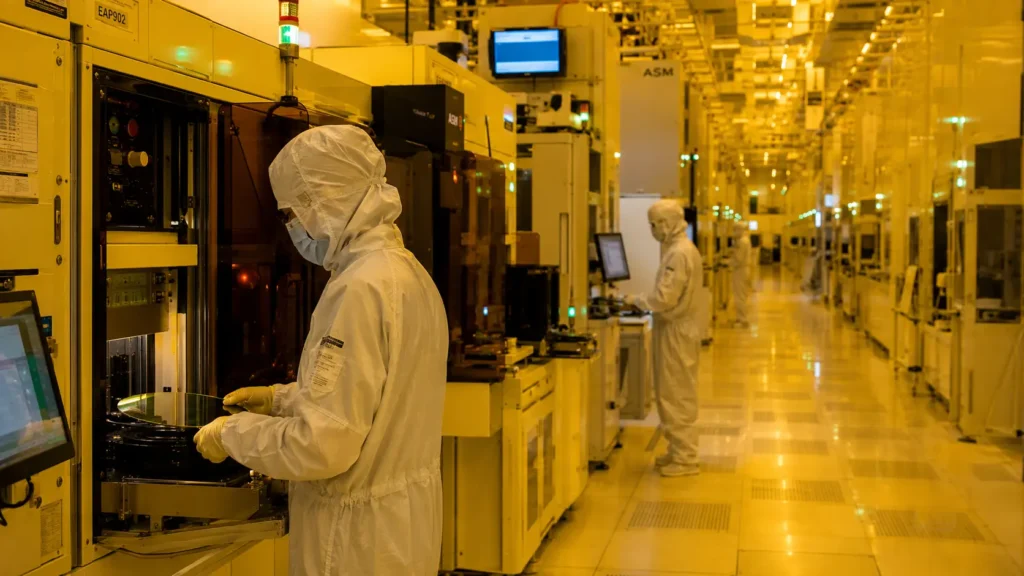
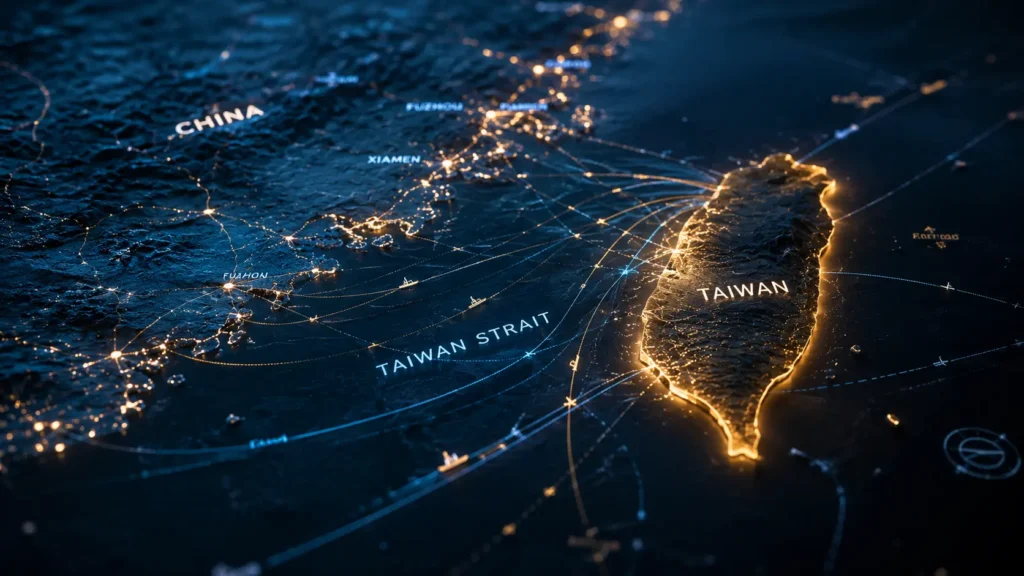
Take your iPhone out of your pocket. Look at it. The chip inside the one running every app, every AI feature, every camera function was almost certainly manufactured in a building on the northwestern coast of Taiwan. A building that sits roughly 100 miles from mainland China.
That proximity is not an accident of history. It is the single most consequential geographic fact in the global technology supply chain. And almost nobody outside of government intelligence circles and semiconductor industry boardrooms thinks about it until something goes wrong.
Here’s what’s actually happening and why it matters to every American who uses a smartphone, drives a car, or works in any industry that touches technology.
The Company Nobody Has Heard Of That Runs Everything
The Taiwan Semiconductor Manufacturing Company TSMC produces around 90% of the world’s most advanced chips, making it an indispensable part of global supply chains.
Every NVIDIA Blackwell GPU. Every Apple A19 processor. Every AMD EPYC server chip. Every advanced AI accelerator from Google, Microsoft, and Amazon. All of them depend on TSMC’s fabs in Hsinchu and Tainan.
TSMC controls roughly 70% of the global semiconductor foundry market, giving it irreplaceable leverage over every AI chip roadmap from Apple to NVIDIA.
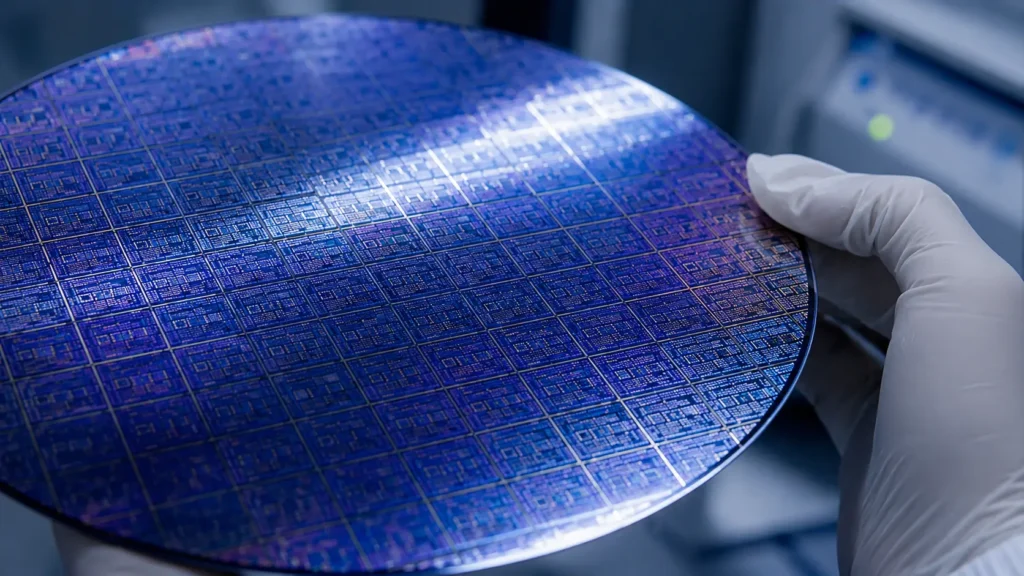
More specifically, the company controls over 90% of sub-5 nanometer capacity the cutting-edge process nodes that power AI, high-performance computing, and the latest smartphone processors.
To understand what this means, consider what happens to the global technology industry if TSMC stops producing chips for 30 days. Not because of war just a major earthquake, a flood, a pandemic, or a prolonged power outage. Every AI data center expansion halts. Every new iPhone model delays by a year. Every car manufacturer that needs advanced processors for its vehicles stops production. The global economy loses trillions.
That scenario isn’t theoretical. It’s the risk assessment that keeps defense strategists, tech executives, and insurance underwriters up at night.
How Taiwan Got Here
This concentration didn’t happen by accident. It was built over four decades through a combination of government strategy, engineering excellence, and a business model that nobody else attempted at scale.
TSMC pioneered the “pure-play foundry” model in 1987 a company that manufactures chips designed by others, owning no chip designs itself. This model attracted every major chipmaker: Apple, NVIDIA, AMD, Qualcomm, Google. They design. TSMC builds. The relationship became mutually reinforcing TSMC’s scale funded R&D that kept it ahead of every competitor, which attracted more customers, which funded more R&D.
Taiwan accounted for 92% of the world’s most advanced logic chip capacity and produced 70% of smartphone chipsets globally. Taiwan’s total semiconductor output reached $165 billion in 2024, a 22% increase year-on-year.
In Q1 2026, TSMC reported revenue of $35.9 billion a 40.6% year-over-year increase with a net profit margin of 50.5%. Advanced technologies at 7-nanometer and below accounted for 74% of total wafer revenue.
These aren’t just impressive business numbers. They are measurements of how deeply the global technology industry has embedded itself into a single supplier.
The Geopolitical Problem Nobody Wants to Name Directly
Taiwan’s government mandates that TSMC conduct cutting-edge work only in Taiwan. As a result, geopolitical risks involving Taiwan will continue to be critical to the supply chain for the foreseeable future.
Beijing considers Taiwan a breakaway province that must eventually be reunified by force if necessary. This long-standing tension has become even more critical due to Taiwan’s dominance in semiconductor manufacturing.
The semiconductor war between China and Taiwan has entered its most dangerous phase. With Beijing accelerating its push for indigenous chip independence and TSMC controlling the advanced chip supply, the geopolitical chess match has profound implications for AI, smartphones, automotive, and defense industries worldwide.
The US government has responded with the CHIPS Act and export controls. The CHIPS Act has deployed $52 billion in grants and loans to TSMC Arizona, Intel Ohio, Samsung Texas, and Micron New York. TSMC has committed $165 billion to its Arizona expansion, with the second fab producing 3-nanometer chips beginning in late 2026. Apple has agreed to purchase Arizona-made chips for select product lines starting in 2027.
But the reshoring effort has a timeline problem. The reshoring effort is real but will take a decade to meaningfully reduce dependence on Taiwan.
Even with a projected 203% increase in US fab capacity by 2032, Taiwan remains the critical node for the most advanced chip production.
Why This Can’t Be Fixed Quickly
Building a semiconductor fab isn’t like building a factory. A leading-edge fab requires equipment so specialized that only one Dutch company ASML makes the extreme ultraviolet lithography machines needed to produce the most advanced chips. ASML extreme ultraviolet lithography machines remain prohibited for export to China illustrating just how strategically controlled the entire supply chain has become.
The engineering knowledge required to run these facilities at TSMC’s yield rates took decades to develop. You cannot replicate it by building a building and hiring engineers. The tacit knowledge embedded in TSMC’s workforce and processes is part of the competitive moat and part of the concentration risk.
Any interruption to exports from Taiwan could affect a wide range of US and global technology hardware and services. The risk is less about short-term price moves and more about concentration in one geography for the most advanced chip manufacturing.
What Happens Next
The honest answer is that the world is in a race between two timelines: how long it takes to meaningfully diversify semiconductor production away from Taiwan, versus how long the geopolitical stability of the Taiwan Strait holds.
The private sector needs to take the lead in increasing the resilience of the semiconductor supply chain, as governments lack the necessary information. While there are currently no significant problems with the supply chain, it remains highly vulnerable to shocks such as natural disaster or conflict.
Every AI model trained today, every smartphone shipped, every electric vehicle produced runs on chips that passed through one small island’s manufacturing infrastructure. The world built its most critical technology dependency on a single point of failure and it is only now beginning to reckon with what that actually means.
© AiwalaNews | Global Tech & Privacy Edition | May 2026
Read Also:
- 🔗 The US vs China AI Race Is Almost a Tie — And That Should Scare Everyone
- 🔗 How Uber Knows You’ll Accept a Higher Price Before It Shows It to You
