You walk into a department store. Out of habit, you switched off Wi-Fi before leaving home a small privacy ritual, a sense that you have made yourself untraceable for the next hour.
You have not.
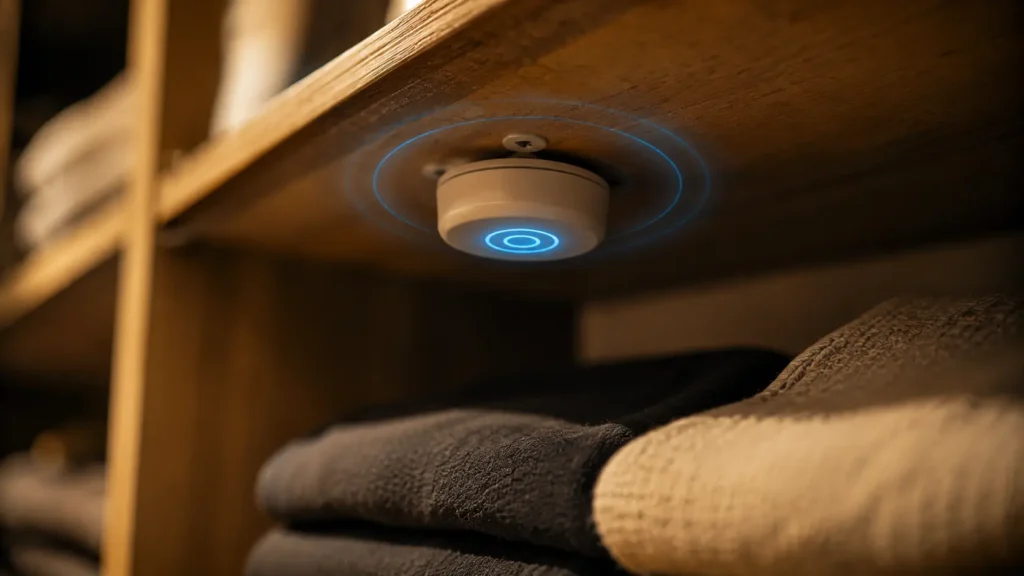
Hidden in the ceiling tiles, mounted near the entrance, tucked behind the fitting room mirror small plastic devices the size of a coin are quietly transmitting a signal your phone is built to listen for. They do not need Wi-Fi. They were never using it. They use Bluetooth and if you have the store’s app installed and Bluetooth switched on, your exact aisle, your dwell time, and your path through the building are being logged in real time.
What a Retail Beacon Actually Is
The technology is called a BLE beacon Bluetooth Low Energy and it is deliberately unglamorous engineering.
Beacons run on Bluetooth Low Energy, a power-efficient variant of traditional Bluetooth designed for short bursts of data transmission perfect for tiny devices that need to run for months or years on a coin cell battery. You can stick them on a wall or a shelf and forget about them. Because they’re low power and inexpensive, retailers can place beacons across entrances, aisles, fitting rooms, and pickup counters and BLE works at short range, so the retailer knows where shoppers are in the store, not just “inside,” but “near the jackets” or “approaching pickup.”
Beacons transmit a small Bluetooth identifier every few milliseconds. The customer needs to have pre-installed the store’s mobile app to pick up the signal and send location-specific information to the store’s server such as the products or department the customer has just passed by.
This is the critical mechanism: the beacon does not detect you directly. It broadcasts an identifier. Your phone specifically, the store’s app running in the background hears that identifier and reports your proximity back to the retailer’s server. The beacon is dumb. The app is doing the surveillance.
The Scale This Has Reached
What began as a novelty in Apple Stores in 2013 has become a multi-billion-dollar industry segment.
The global beacon technology market was valued at $1.14 billion in 2020 and was expected to grow at a 59.8% compound annual growth rate from 2021 to 2028. As of 2025, the global beacon market is projected to grow from $22.7 billion to $718.6 billion by 2033.
Major retailers including Macy’s, Target, Walmart, Walgreens, and Kroger have all implemented beacon technology to enhance the in-store experience and deliver personalised offers, navigation, and mobile payments. Levi’s Stadium alone deployed nearly 17,000 Bluetooth beacons so fans could find their seats and order concessions generating a $1.25 million increase in concession revenue within seven months.
What the Data Actually Reveals
The granularity captured goes well beyond “this customer visited our store.”
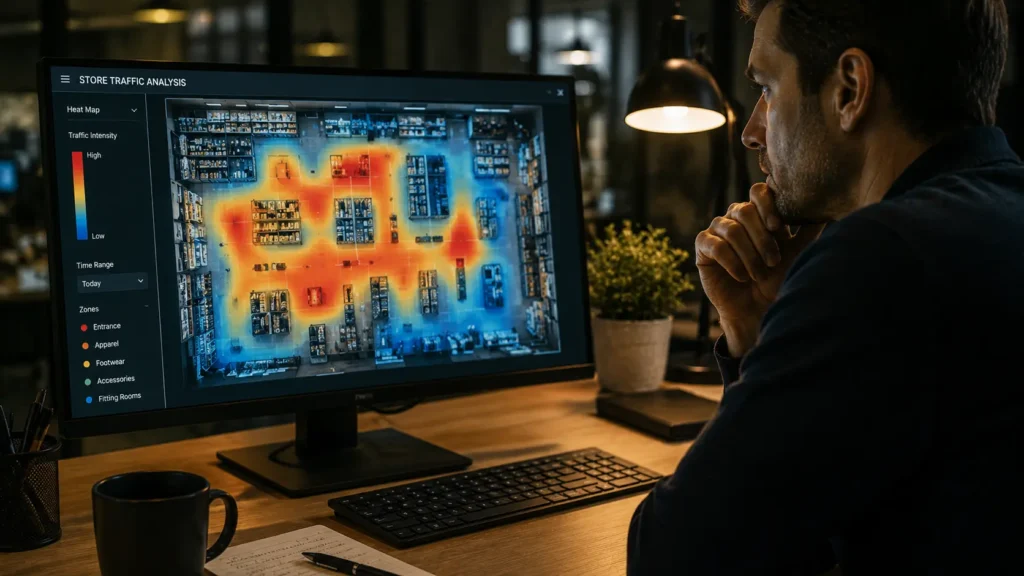
Beacons can gather data about store areas with the most and least foot traffic, levels of shopper engagement with various categories or products, and details about first-time and repeat customers. A retail intelligence study published in March 2025 demonstrated the precision directly: the system anonymously logs customers’ locations and the duration of their browsing at each sales shelf, with researchers able to analyse client movement heatmaps to discern high-traffic zones.
Retailers use this for specific tactics: setting up discount alerts to fire after a customer has spent 20 minutes in-store, notifying shoppers if a product they added to their online cart is available in person, and improving store layout based on observed movement patterns.
The famous example surfaced years ago and remains the clearest illustration of the technology’s intent: a shopper considers buying yogurt, decides against it and minutes later receives a coupon, because the beacon recorded that they had lingered for two minutes in front of a specific yogurt brand.
Why “Wi-Fi Off” Doesn’t Help And What Does
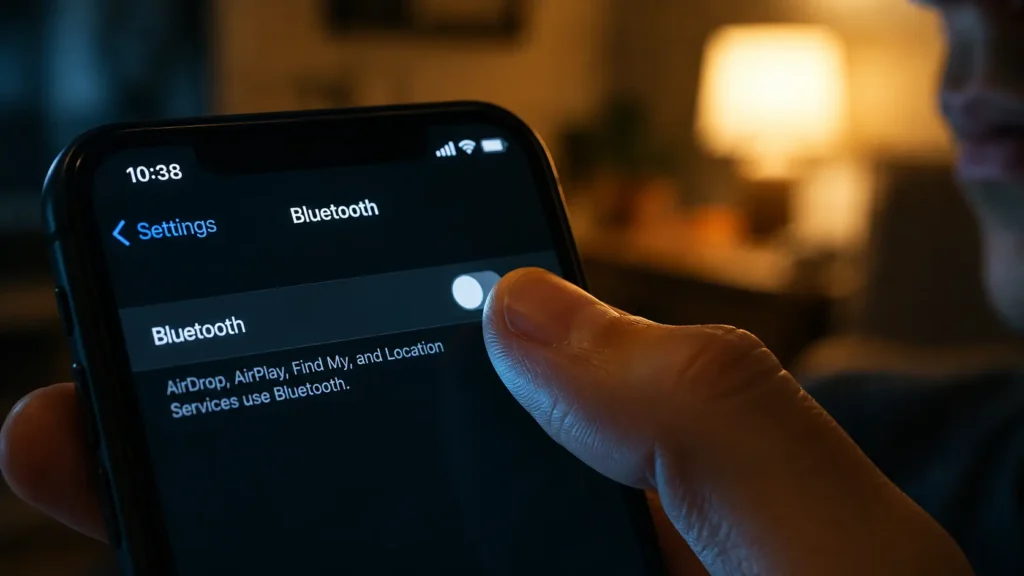
This is the detail most privacy-conscious shoppers get wrong. Switching off Wi-Fi blocks router-based location tracking a genuinely different technology. Beacons send Bluetooth low energy signals to nearby smartphones using an entirely separate radio. Bluetooth and Wi-Fi are independent systems on your phone, controlled by separate toggles, using different protocols. Turning one off does nothing to the other.
The actual requirements for beacon tracking to work are specific, and removing any one of them stops it cold. It’s important to note that beacons are not intended to track the location of individual users but rather to provide contextual experiences to users who opt-in to receive them and users can disable Bluetooth and opt out of location-based services if they choose. Consumers must download and install the store’s mobile app, have their smartphone with Bluetooth on when visiting the store, and agree to receive push notifications.
In principle, the system requires consent at three separate points: app installation, Bluetooth permission, and location permission. In practice, most users grant all three during onboarding without registering what they agreed to and few realise that closing the app does not necessarily stop background Bluetooth scanning, depending on the permissions granted at install.
The Part Retailers Don’t Advertise
A more uncomfortable layer was exposed by developers who inspected what these “free” beacon SDKs actually transmit. One developer who worked with beacon wayfinding providers described hooking up the SDK to network analysis tools and finding it sending substantial data back some to the retailer’s own systems, but a significant portion routed back to the third-party beacon provider itself, even when the retailer and mall had only requested a basic wayfinding feature.
Popular weather and news apps can also contain beacon-tracking code that allows retailers to track a far wider audience than just their own app’s users meaning your exposure to beacon tracking is not limited to apps you specifically associate with shopping.
What You Can Actually Do
Turn off Bluetooth specifically when entering stores not just Wi-Fi. This is the single setting that matters for beacon tracking.
Review app permissions for any retail app installed on your phone. Check specifically for Bluetooth and location access, and revoke what is not essential.
Delete unused retail apps. If you do not actively use a store’s loyalty programme, the app may still be quietly maintaining beacon-listening permissions in the background.
Check less obvious apps too weather and news apps have been documented carrying embedded beacon SDKs unrelated to their core function.
The beacon in the ceiling was never listening for your Wi-Fi. It was always listening for your Bluetooth and the only switch that matters is the one most people never think to flip.
📌 Read Also:
- The Shadow Profile Facebook Has on You — Even If You’ve Never Had an Account
- The AI Watching Your Mouse Cursor Right Now to Predict What You’ll Buy
© AiwalaNews | Global Tech & Privacy Edition | April 2026
