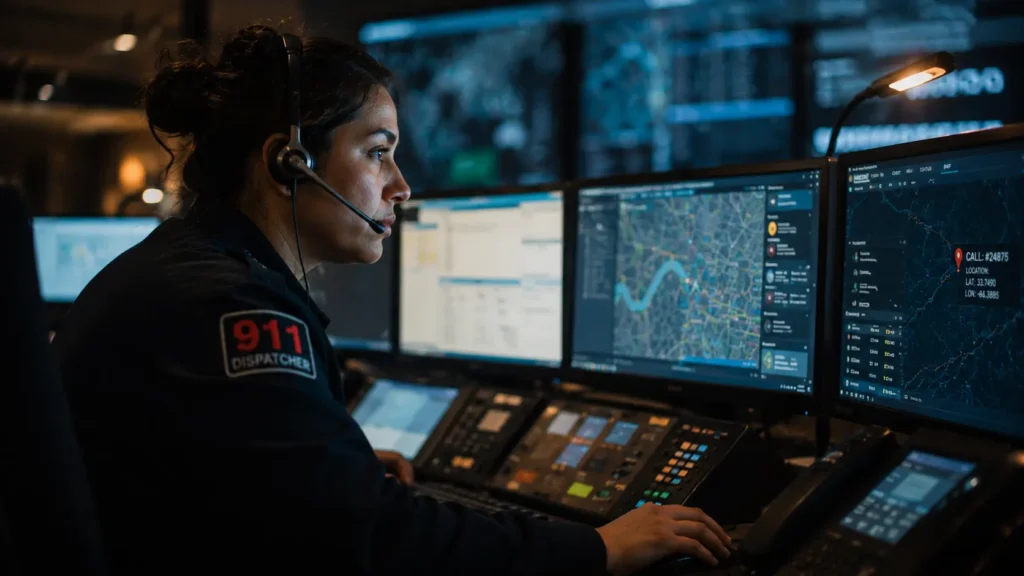
A dispatcher knew you’d just passed a blue water tower before you said a word about it. Your phone told them, and the way it did involves more technology than most callers ever realize.
A retired 911 dispatcher I once spoke with, someone who spent nineteen years answering emergency calls in a mid sized county, told me something that stuck with me for a long time. “People think we’re psychic,” she said, laughing. “We’re not. Your phone is just talking to us louder than you are.” That single line captures almost everything worth knowing about how emergency location tracking actually works.
You dial 911 from a highway you’ve never driven before, panic in your voice, and within moments a dispatcher is asking about the exit near the blue water tower you just passed. You never mentioned a water tower. How did they know?
The short answer is that your phone told them, often before you finished your first sentence. The longer answer involves a mix of technologies working together, GPS, cell tower triangulation, Wi-Fi positioning, and increasingly, indoor location data, all built to solve a problem that used to be a genuine blind spot for emergency services.
The Old Problem With Mobile Calls
When 911 was first designed, it assumed calls came from landlines tied to a fixed address. A call from a home phone automatically displayed the caller’s registered address on the dispatcher’s screen. This worked well for decades, but it fell apart the moment mobile phones became the primary way people call for help. A cell phone isn’t tied to any address. It can be anywhere, and by the 2000s, the majority of 911 calls were coming from mobile devices with no fixed location attached to them at all.
This gap forced regulators and carriers to build an entirely new system for locating a caller in real time.
GPS Is the First Layer, But Not the Only One
Most smartphones carry GPS chips capable of pinpointing location within a few meters when there’s a clear view of the sky. When you call 911, your phone’s location services activate automatically, even if you normally keep them switched off, and that GPS data gets sent to the dispatch center along with your call.
But GPS has weaknesses. It struggles indoors, in dense urban canyons surrounded by tall buildings, and inside covered parking structures, places where a satellite signal has trouble reaching the device. This is exactly the kind of situation where relying on GPS alone would leave dispatchers guessing, so the system leans on backup methods that don’t need a clear sky view at all.
Cell Tower Triangulation Fills The Gaps
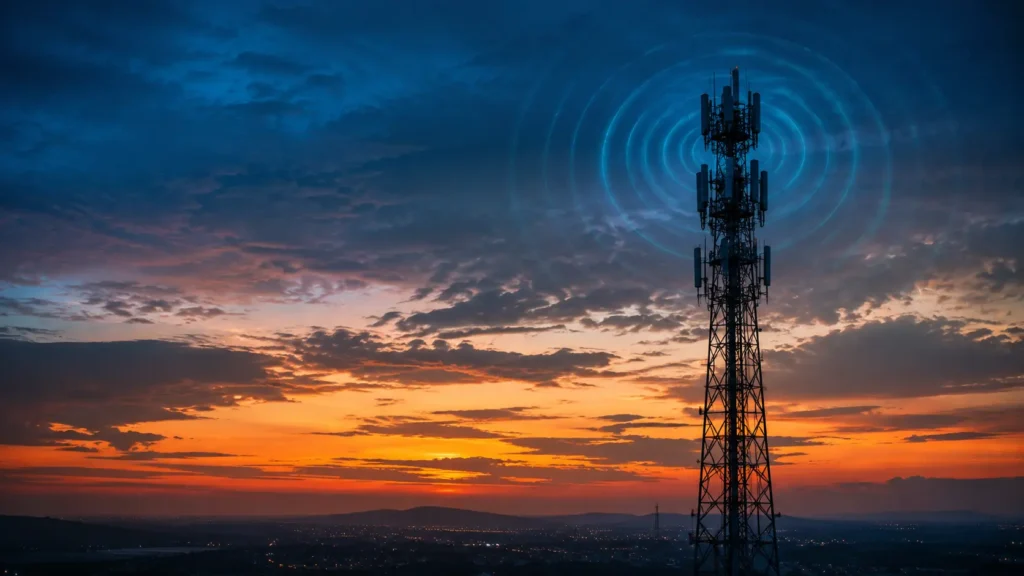
Every time your phone is on, it stays in constant contact with nearby cell towers, even when you’re not making a call. When you dial 911, the system measures signal strength and timing between your phone and multiple nearby towers to estimate your position through a method called triangulation. It’s less precise than GPS, often accurate to within a few hundred meters rather than a few meters, but it works in places GPS simply cannot reach, including many indoor environments.
This is usually why a dispatcher’s earliest estimate of your location might be a general area, somewhere near this intersection, before a sharper GPS fix comes through moments later.
A Real World Example
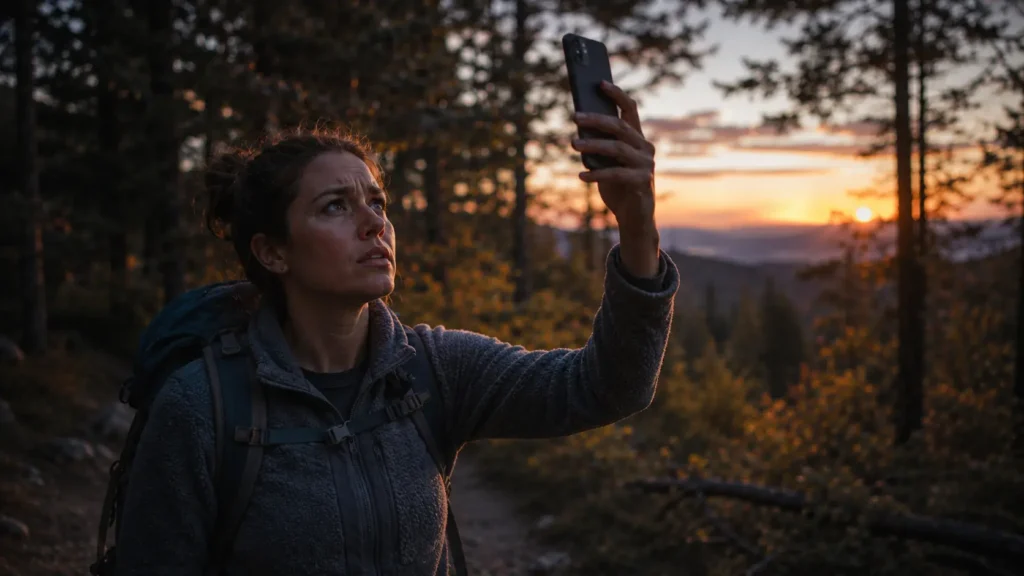
The retired dispatcher described a call involving a hiker lost in a forested area with no cell signal bars showing on her own phone. The 911 center still received a rough location fix from a distant tower nearly eleven kilometers away, based purely on faint signal timing. It wasn’t precise enough to send rescuers directly to her, but it narrowed a search area that would otherwise have spanned dozens of square kilometers down to a manageable radius. That single triangulated ping, she said, was the difference between a search lasting hours instead of days.
Wi-Fi And Bluetooth Add Precision Indoors
In dense cities, phones are also constantly detecting nearby Wi-Fi networks and Bluetooth beacons, even ones you’ve never connected to. Companies maintain enormous databases mapping the physical location of millions of Wi-Fi access points based on their unique identifiers. When your phone detects several networks nearby, the 911 system can cross-reference which floor of which building those networks belong to, which is a major part of how emergency responders can sometimes pinpoint not just a building, but which specific floor a caller is on.
This layer became especially important as regulators pushed for better indoor location accuracy, since GPS essentially stops working reliably once you’re several floors up inside a large structure.
Why The First Location Update Sometimes Feels Off
A common source of confusion during 911 calls is that the very first location a dispatcher sees can be a rough estimate based on cell tower data, only to be refined seconds later once GPS locks on. This is why dispatchers are trained to keep asking questions even after a location appears on screen. The data is good, but it behaves like a moving target that sharpens throughout the call, not a single instant snapshot.
What Changed The System Nationwide
For years, this location tracking wasn’t reliably accurate or consistently available across every carrier and phone model. That changed significantly after regulatory pressure in the mid 2010s pushed major carriers to commit to specific accuracy benchmarks for 911 location data, including requirements for vertical location information to identify which floor a caller is on inside multi-story buildings. Carriers built dedicated location technology specifically to meet these requirements, which is a major reason 911 location accuracy today is dramatically better than it was even a decade ago.
The Privacy Tradeoff Built Into The System
None of this location sharing happens by asking your permission in the moment. Emergency location sharing overrides your normal privacy settings by design, precisely because asking someone in a life threatening situation to first tap allow location access would introduce a dangerous delay. The tradeoff is intentional. Your phone shares far more precise location data during a 911 call than it ever would for an app you’ve explicitly granted permission to, because the entire system is built around the assumption that a few seconds during an emergency matter more than default privacy settings.
The Real Takeaway
The dispatcher who somehow already knew you were near a certain landmark wasn’t guessing, and it wasn’t magic. Your phone was quietly triangulating its position against cell towers, checking GPS satellites, and cross-referencing nearby Wi-Fi networks all at once, feeding a location estimate that keeps sharpening for as long as the call continues. It’s one of the few moments where a phone’s extraordinary ability to track your location is working entirely in your favor.
Read also: How Banks Detect a Fraudulent Purchase Seconds After You Make It and How AI Decides Which Advertisement Is Worth Showing You
© AiwalaNews | Global Tech & Privacy Edition | April 2026
