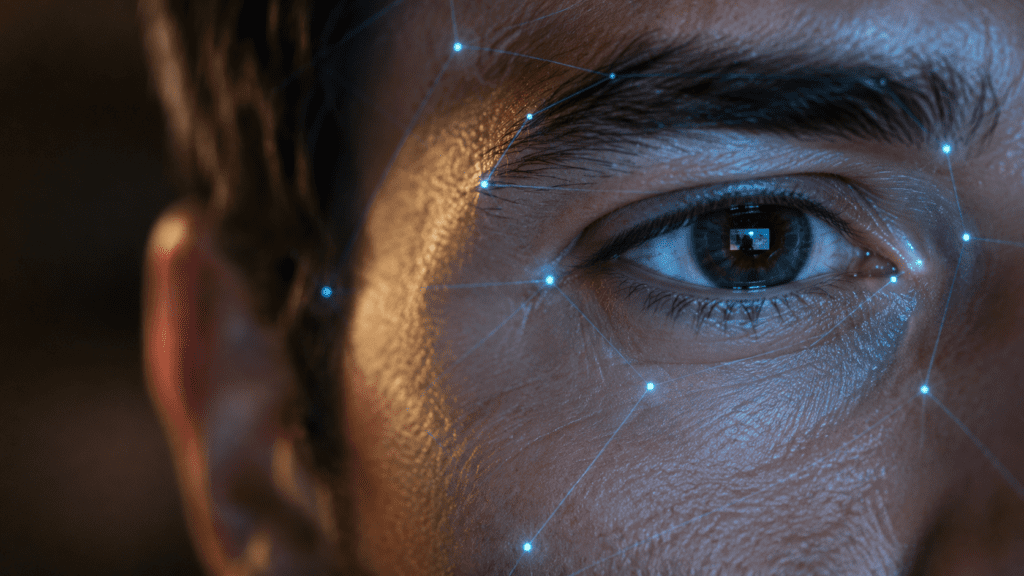
You joined a video job interview from your kitchen table. You thought you were being evaluated on your answers. You were also being evaluated on your micro-expressions — the 0.2-second flicker of anxiety before you answered a hard question, the slight tightening around your eyes when you mentioned a gap in your CV, the involuntary asymmetry in your smile.
The AI had already formed an opinion before you finished your first sentence.
This is not science fiction. Emotion AI also called affective computing is already deployed in hiring platforms, advertising systems, automotive dashboards, and customer service tools. It is running right now, through the cameras billions of people open every day, reading faces with a precision no human interviewer could match. And in most cases, the person being read has no idea.
What Emotion AI Actually Does
Emotional AI also called emotion AI or affective computing enables computers to detect, interpret, and respond to human emotions through advanced data analysis. Modern emotional AI systems combine multiple technologies to understand human feelings: a smile might trigger joy detection, while voice analysis can pick up frustration in tone.
The webcam version works through a process called facial action coding mapping the face into dozens of distinct muscle movement zones called action units. Each unit corresponds to a specific facial muscle: the zygomatic major that pulls the lip corners upward in a genuine smile, the corrugator supercilii that furrows the brow in concentration or distress, the orbicularis oculi that creates crow’s feet in authentic versus performed happiness.
Hume AI, one of the leading platforms in this space, rebuilt the category around “affect states” rather than basic emotions. Its Expression Measurement API returns continuous scores across 48 facial expressions, 28 vocal bursts including laughter, sighs, and gasps, and 27 speech prosody dimensions all streamed in real time.
Forty-eight expressions. Processed simultaneously. From a standard laptop camera. Before you have spoken a single word.

Where It Is Already Being Used
Hiring and Job Interviews
Roughly 88% of companies now use AI for initial candidate screening, according to the World Economic Forum. Job applicants have reported that AI video interviews with companies like HireVue are especially common for high-volume employers including Target, Johnson & Johnson, and JP Morgan.
An October 2024 survey of hundreds of business leaders found that roughly seven in ten companies allow AI tools to reject candidates without any human oversight.
In these systems, your webcam feed is analysed frame by frame throughout the interview. The system scores not just what you say but how your face moves as you say it tracking confidence, enthusiasm, stress indicators, and what the platforms call “emotional authenticity.”
Advertising
Realeyes, used by Mars, Coca-Cola, and Google’s YouTube Ads team, deploys advanced computer vision to quantify audience attention and emotional responses from webcam data, delivering attention and emotion metrics on advertising content. When you watch an ad on certain platforms, your webcam if active may be measuring exactly which frame made you lean forward, and which made your face go neutral.
Automotive
Automotive applications are advancing rapidly. Emotion and attention detection can spot drowsiness, distraction, stress, or irritation triggering safety alerts or adaptive assistance. In 2026, many safety systems include emotional awareness as a standard feature. Your car’s interior camera is already watching your face on certain vehicle models, classifying your emotional state in real time.
The Technical Pipeline How It Reads You
The process happens in three stages, each faster than conscious perception:
Stage 1 – Face detection. The system isolates your face from the video frame within milliseconds, identifying facial landmark points the corners of your eyes, the edges of your lips, the bridge of your nose as a geometric mesh of typically 68 to 468 tracked points depending on the model’s resolution.
Stage 2 – Action unit classification. A deep neural network trained on millions of labelled facial images classifies the current state of each muscle zone, assigning probability scores to each of dozens of possible expressions simultaneously. This happens 15 to 30 times per second, every second you are on camera.
Stage 3 – Emotion inference. The expression classifications are mapped to emotional states using a combination of the discrete model basic emotions like anger, joy, sadness and the dimensional model, which plots your emotional state on continuous axes of valence (positive to negative) and arousal (calm to activated). The AI analyses variations in pitch, speed, and volume alongside facial data to identify feelings like confidence or uncertainty a raised voice with quick speech might indicate excitement, while slower, quieter tones often signal calm or contemplation.
The Serious Problems Nobody in the Industry Wants to Lead With
It Is Less Accurate Than It Sounds
Research continues to highlight serious challenges with automatic facial expression recognition. Emotion AI is not magic and it should not be treated as though it is. The fundamental scientific critique is significant: the system infers internal emotional states from external facial movements but the relationship between the two is far less reliable than the industry implies. A person with a flat affect due to neurodivergence, a cultural background where stoicism is normative, or simply a medical condition affecting facial musculature will be systematically misclassified.
Bias Is Baked In
Job seekers who experienced emotion AI interviews expressed concerns about discriminatory and inaccurate inferences, privacy loss, and psychological harm including concerns that systems encode normative emotional expression expectations, such as that women would smile more.
Research at the 2025 ACM Conference on Fairness, Accountability, and Transparency found that participants who underwent interviews evaluated by emotion AI perceived significantly lower levels of justice than those evaluated by human HR professionals with identity attributes including gender, race, and disability significantly influencing outcomes.
Your Emotional Data Is Being Treated as a Commercial Asset
Emotional AI relies on vast amounts of personal data to infer emotions, using visual data including facial expressions, body language, and eye movements; audio data including tone, pitch, and pace; and physiological data including biometric signals. With emotions being one of the most intimate aspects of a person’s life, people are naturally more worried about the privacy of data revealing their emotions than other kinds of personal data.
Job seekers expressed concerns specifically around emotion AI-generated insights being sold, shared with, or leaked to third parties.
What the Law Currently Says
The European Union has moved decisively. The EU’s AI Act banned emotion AI in workplaces and educational settings with exceptions for medical and safety settings effective August 1, 2024.
The United States has no equivalent federal law. Some states have passed limited biometric data protections Illinois’ BIPA being the most significant but none specifically address real-time emotional inference from video. The gap between what the technology can do and what the law currently prevents is substantial.
What You Can Do Right Now
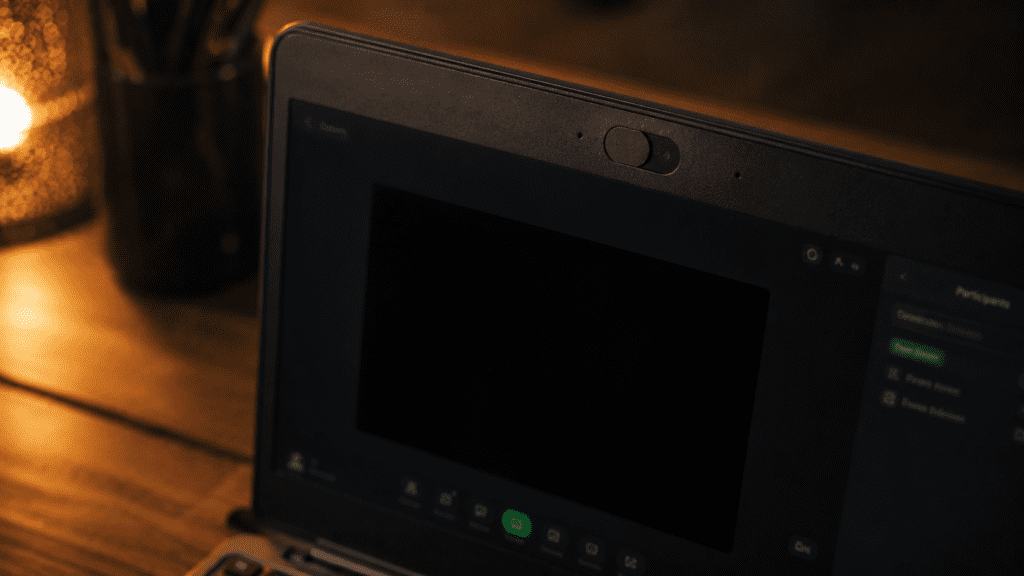
Cover your webcam when it is not required. This remains the simplest, most effective protection against passive emotional data collection.
For video interviews: you have no obligation to use the platform’s webcam analysis features if disclosed. Ask directly whether the interview will be analysed by automated emotional inference tools. In the EU, you have the legal right to refuse. In the US, that right does not yet formally exist but asking the question creates accountability.
The AI reading your face is not making a judgment about who you are. It is making a statistical inference from your muscle movements, trained on data that may not represent you. The score it assigns before you say a word will, in some contexts, follow you further than anything you actually say.
That is worth knowing before you open the camera.
📌 Read Also:
- Why the US Government Just Banned This Chinese App’s Core Technology
- Your ChatGPT Conversation Is Being Used to Train the Next AI — Here’s Exactly How
© AiwalaNews | Global Tech & Privacy Edition | April 2026
