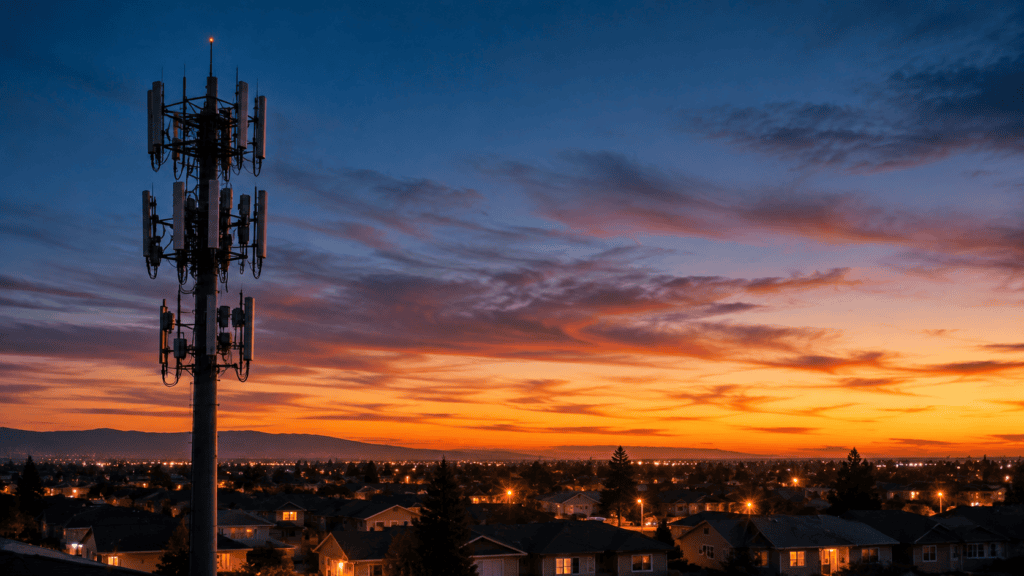
A cousin of mine spent an entire Thanksgiving dinner comparing phone screens with two other family members, all standing in the same kitchen, all supposedly connected to “5G.” One phone showed blazing download speeds. Another barely beat old 4G. The third sat somewhere in between. Same house, same wifi router turned off for the test, same general five feet of space. Three completely different results.
Nobody at that table could explain why. Carriers don’t exactly make it easy to find out either, since the marketing all leans on the same three glowing digits, 5G, as if it means one single thing everywhere you go.
The Part Nobody Tells You: 5G Isn’t One Network
Here’s the piece that rarely makes it into a commercial. 5G isn’t a single technology delivered the same way by every carrier. It’s built from three separate layers of radio spectrum, each with wildly different tradeoffs between speed and reach.
Low band spectrum, sitting below roughly 1 GHz, travels the farthest and punches through walls the best, which makes it the backbone of nationwide coverage maps. The catch is speed. Low band 5G often performs only modestly better than a strong 4G connection, sometimes barely noticeable to the average user.
Mid band spectrum, including the now familiar C band frequencies, sits in the middle and offers what most people actually associate with “real” 5G, a solid jump in speed while still covering entire neighborhoods and suburbs rather than a single city block.
High band, better known as mmWave, is the flashy one. It’s capable of speeds many times faster than 4G, but the signal barely travels past a stadium section or a busy street corner before it falls apart, which is why you mostly encounter it at airports, arenas, and dense downtown cores rather than in your actual living room.
Why the Same Word Means Three Different Things
This is where the branding trick comes in, and it’s less a conspiracy than a marketing decision that quietly shapes what “5G” feels like depending on your carrier.
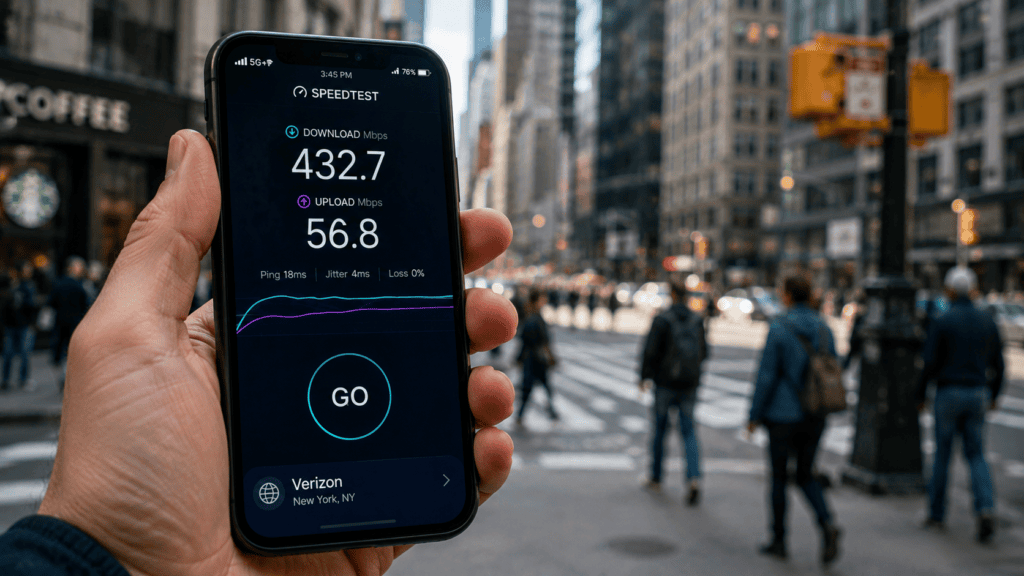
Verizon built its early 5G rollout heavily around mmWave, branded as 5G Ultra Wideband, which explains why some Verizon customers report jaw dropping speeds in a stadium parking lot and near ordinary 4G performance two blocks away in their own neighborhood. Verizon has since leaned harder into C band mid band coverage to fill that gap, alongside a low band layer that still leads in rural reach and highway reliability.
T-Mobile took a different bet years ago, investing heavily in mid band spectrum, branded as 5G Ultra Capacity, spread across more of the country earlier than either competitor. That decision is a big reason T-Mobile has consistently posted the fastest average nationwide 5G speeds in independent testing, even though its low band layer, marketed as 5G Extended Range, functions closer to a coverage safety net than a speed feature.
AT&T sits in between the two strategies, branding its mid and high band layers as 5G+ while using the plain “5G” label for its low band footprint, the same naming pattern Verizon uses. AT&T has been aggressively expanding its C band buildout, and its coverage tends to run particularly strong through the South and Southeast, partly thanks to infrastructure tied to FirstNet, its dedicated network built originally for first responders.
The Icon on Your Phone Is Actually Telling You Something
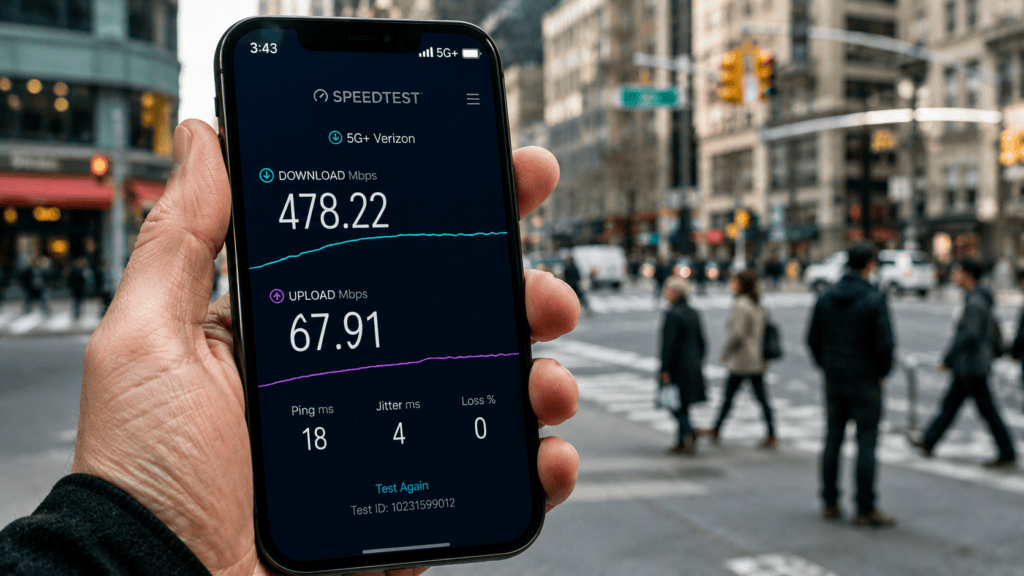
That tiny label next to your signal bars, 5G, 5G UC, 5G UW, or 5G+, isn’t decoration. It’s a direct readout of which spectrum layer you’re currently riding on. Seeing plain “5G” on Verizon or AT&T generally means you’ve landed on the low band layer, reliable but unremarkable. Seeing 5G UC, 5G UW, or 5G+ means you’ve hit mid or high band, and speeds should jump noticeably.
Most phones flip between these layers constantly and silently as you move through your day, docking onto whichever one is strongest at your exact location, which is exactly why the same phone can feel completely different walking from your office to your car.
Why My Cousin’s Kitchen Produced Three Different Results
Put those pieces together and that Thanksgiving mystery stops being a mystery. The phone on T-Mobile likely sat comfortably inside its wide mid band coverage. The phone on Verizon may have been catching a weaker low band signal at that exact spot, well outside any nearby mid or high band tower. AT&T’s result probably depended entirely on how far along its local C band buildout happened to be in that specific zip code that month, since these networks are still expanding block by block, not switched on everywhere at once.
None of the three phones were lying, and none of the three carriers were technically wrong to call it 5G. They were just each showing a different slice of the same three layer system, at a moment when buildout progress varies enormously depending on exactly where you’re standing.
What Actually Helps
If speed matters more than raw coverage, checking which carrier has strongest mid band presence in your specific area, not just their national marketing claims, is worth ten minutes of research before switching or renewing a plan. Coverage map tools from each carrier let you toggle between their different layers, which paints a far more honest picture than the single blanket “5G everywhere” map most people glance at once and trust completely.
The technology genuinely isn’t the same experience twice, even under the identical three letters and one number glowing at the top of your screen. Knowing why turns a confusing kitchen argument into a five minute explanation.
Read also this: The Real Reason US License Plates Are Read by Cameras You Never See | Why Two People See Different Flight Prices for the Same Seat
© AiwalaNews | Global Tech & Privacy Edition | April 2026
