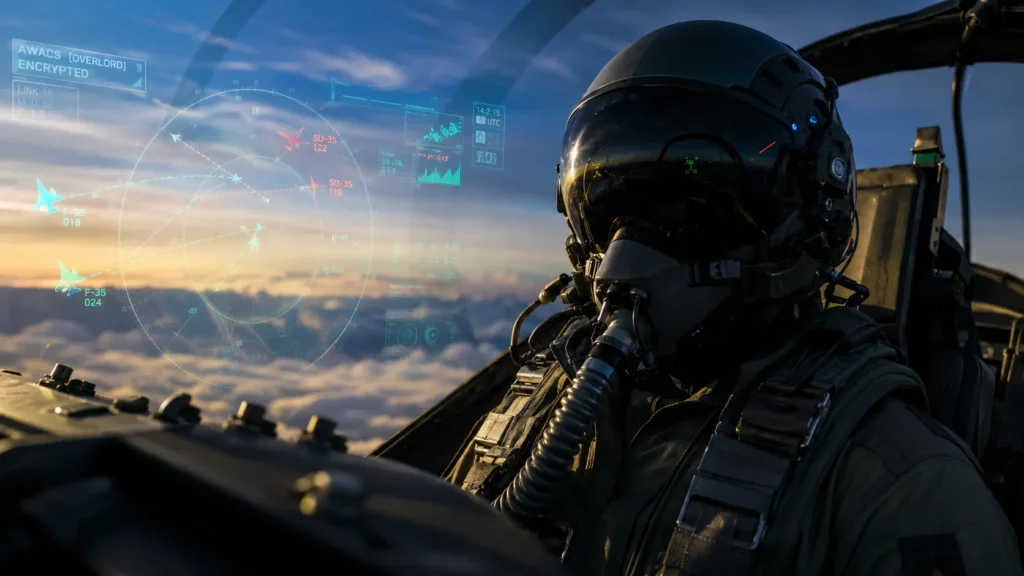
When most people imagine a modern fighter jet, they picture incredible speed, powerful engines, and advanced missiles. While these capabilities are impressive, they are no longer what makes today’s military aircraft truly dangerous.
The biggest advantage often comes from something invisible.
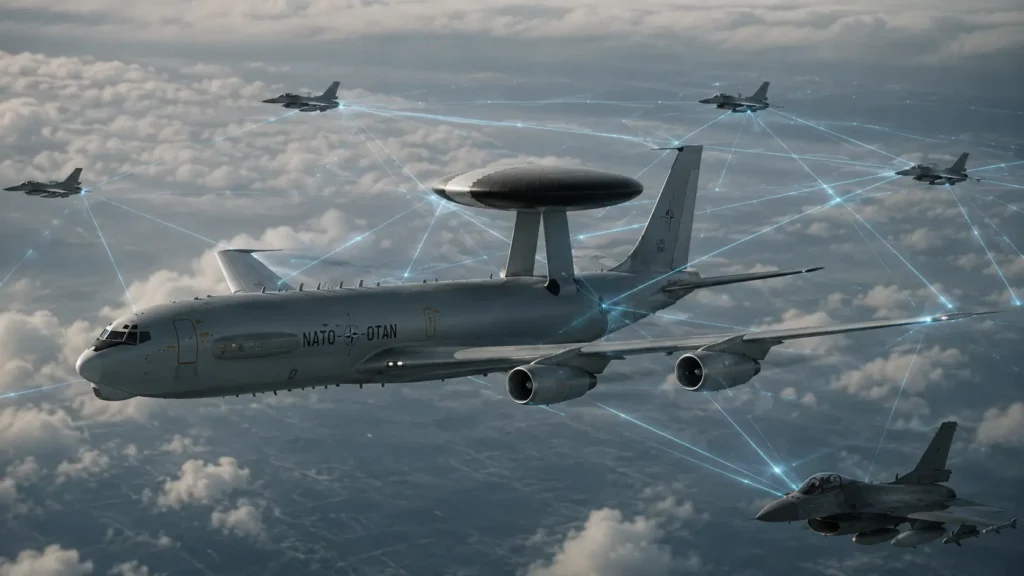
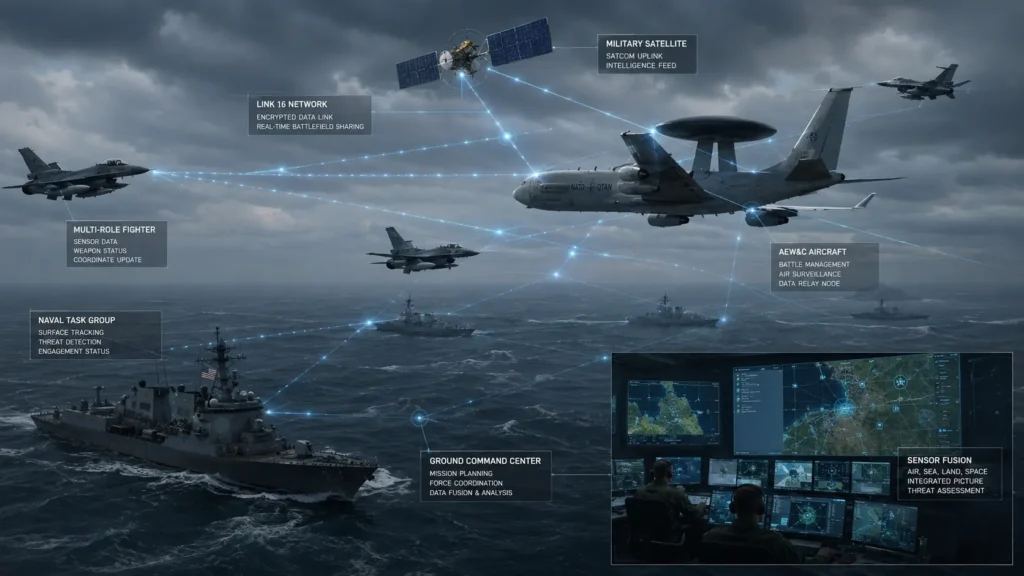
Modern fighter jets can share information instantly with other aircraft, warships, airborne warning systems, and ground commanders through highly secure digital networks. Instead of fighting alone, multiple aircraft operate as a connected team, exchanging radar tracks, sensor data, and mission updates in real time.
Military experts often describe this as network centric warfare, where information can be just as valuable as firepower.
Why Information Wins Modern Air Battles
In past wars, pilots relied mainly on what they could personally see or detect with their own radar.
Today, that approach has changed dramatically.
A fighter aircraft may detect an incoming threat hundreds of kilometers away, but instead of keeping that information to itself, it can securely transmit it to nearby friendly aircraft almost instantly.
This creates a shared battlefield picture that helps every pilot make faster and more informed decisions.
Instead of five aircraft operating independently, they function as one intelligent network.
The Digital Language Between Fighter Jets
To exchange information securely, military aircraft use specialized tactical data links.
One of the best known examples is Link 16, a communications system widely used by the United States and many NATO allies.
Rather than sending ordinary voice messages, Link 16 continuously exchanges digital information such as:
- Aircraft positions
- Enemy locations
- Radar tracks
- Mission assignments
- Fuel status
- Friendly force identification
These updates happen automatically, reducing the need for lengthy radio conversations.
Stealth Aircraft Use Even More Advanced Networks
Aircraft such as the F 35 Lightning II and F 22 Raptor also use secure communication systems designed specifically for stealth operations.
Because traditional radio transmissions can reveal an aircraft’s position, stealth fighters employ highly directional, encrypted data links that reduce the chance of interception.
For example, the F 35 uses the Multifunction Advanced Data Link, commonly known as MADL.
This allows multiple F 35 aircraft to exchange enormous amounts of sensor information while maintaining a low observable profile.
One Jet Can See What Another Cannot
Every fighter carries different sensors.
Some aircraft may have a better radar angle.
Others may detect infrared heat signatures.
Electronic warfare aircraft monitor enemy radar activity.
Airborne warning aircraft provide wide area surveillance.
Through secure data sharing, these separate pieces combine into one complete tactical picture.
A pilot may engage a target that their own radar cannot yet see because another friendly aircraft has already detected it.
This capability greatly expands battlefield awareness.
Artificial Intelligence Helps Organize the Data
Modern combat aircraft receive enormous amounts of information every second.
Without assistance, pilots could quickly become overwhelmed.
That is where Artificial Intelligence and advanced sensor fusion software become essential.
Instead of displaying dozens of separate radar contacts, infrared readings, and electronic signals, onboard computers merge everything into a single easy to understand picture.
This process is known as sensor fusion.
Rather than replacing the pilot, AI helps prioritize the most important threats and recommendations.
Encryption Keeps the Network Secure
Military communications must survive cyberattacks and electronic warfare.
Every transmitted message is protected using advanced encryption and authentication systems.
Many tactical networks also use frequency hopping, where communication rapidly changes frequencies according to encrypted patterns.
This makes interception and jamming significantly more difficult.
Protecting the network is just as important as protecting the aircraft themselves.
The Sky Becomes One Giant Network
Modern fighter aircraft rarely operate alone.
Information flows continuously between:
- Fighter jets
- Airborne early warning aircraft
- Refueling aircraft
- Naval ships
- Missile defense systems
- Ground command centers
- Military satellites
Together they create a highly connected battlefield where every participant contributes information.
This dramatically improves situational awareness across large areas.
Electronic Warfare Is Becoming More Important
As military networks become more sophisticated, adversaries continue developing ways to disrupt them.
Electronic warfare now focuses not only on radar jamming but also on attempting to interfere with communications.
To reduce these risks, modern military networks include:
- Multiple communication paths
- Backup navigation systems
- Secure encryption
- Anti jamming technology
- AI based threat detection
This layered approach helps maintain communications even during intense electronic attacks.
The Future Is Collaborative Combat
Military aviation is moving toward even greater connectivity.
Future operations are expected to include Collaborative Combat Aircraft, where crewed fighter jets coordinate directly with autonomous drones.
Instead of a single aircraft carrying every sensor and weapon, multiple connected platforms will share responsibilities.
Artificial Intelligence will help coordinate these networks, allowing pilots to focus on critical decisions rather than managing dozens of information sources.
The battlefield of the future will be defined not only by speed or stealth, but by how effectively information moves across the network.
The Bottom Line
The world’s most advanced fighter jets are more than fast aircraft. They are flying data centers connected by highly secure digital networks that allow pilots to share radar tracks, sensor information, and battlefield intelligence in real time.
Technologies such as Link 16, MADL, sensor fusion, and Artificial Intelligence have transformed air combat into a battle of information as much as firepower. Most people never see these invisible networks, yet they quietly help determine how modern air missions are planned, coordinated, and executed.
Read Also
➡️ Inside the GPS Backup Systems the U.S. Uses During Jamming
https://aiwalanews.com/inside-the-gps-backup-systems-the-u-s-uses-during-jamming/
➡️ The Invisible Drone That Flies in Your Blind Spot. How U.S. Stealth UAVs Avoid Radar
https://aiwalanews.com/the-invisible-drone-that-flies-in-your-blind-spot-how-us-stealth-uavs-avoid-radar/
© AiwalaNews | Global Tech & Privacy Edition | April 2026
