Your phone rings.
The screen shows a number you have never seen before. You answer, expecting it to be a delivery driver or perhaps a colleague calling from a different phone.
Instead, a recorded voice greets you with an urgent message.
“Your bank account has been suspended.”
Or perhaps someone claims you have won a prize, missed a tax payment, or qualified for a special investment opportunity.
Most people immediately ask the same question.
How did they get my phone number?
The surprising truth is that your number can reach unwanted callers through several completely different paths. Some involve cybercrime. Others begin with everyday online activities that seem perfectly harmless. Understanding those paths is one of the best ways to protect yourself from future scams.
Your Phone Number Has Become A Digital Identity
Twenty years ago, a phone number was simply a way to receive calls.
Today it has become part of your digital identity.
Think about how often you enter it.
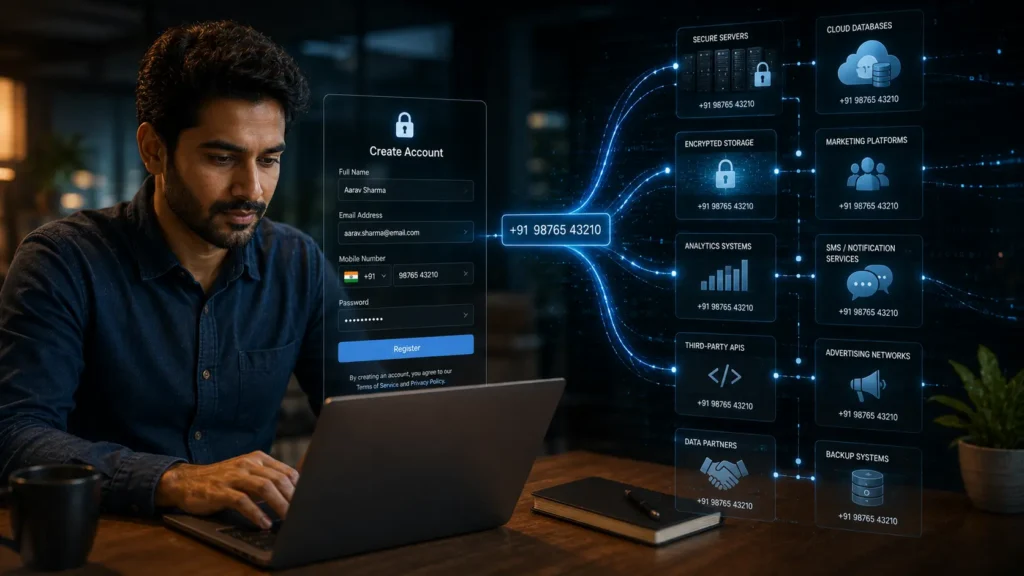
You use it while creating shopping accounts, ordering food, booking flights, signing into banking apps, joining loyalty programs, scheduling medical appointments, or verifying online accounts.
Each time you provide your number, another organization stores it in a database.
Most reputable companies invest heavily in protecting customer information and follow privacy regulations. However, no system is completely immune to cyberattacks or human error.
As your number appears in more places, the chances of it eventually reaching criminals also increase.
A Single Data Breach Can Affect Millions
One of the biggest reasons spam calls continue to grow is the increasing number of data breaches.
Imagine a retailer with millions of customers.
If attackers successfully access its customer database, they may obtain names, email addresses, phone numbers, and other account information.
The stolen information often circulates within criminal communities where scammers purchase or exchange large collections of contact details.
Your phone number does not have to be connected to sensitive financial information to become valuable.
Simply knowing that your number belongs to a real person is often enough for scammers to begin calling.
This is why cybersecurity professionals recommend changing passwords after major breaches and enabling multifactor authentication whenever possible.

Sometimes Nobody Ever Stole Your Number
One of the biggest misconceptions is that every spam caller already has a list of victims.
That is not always true.
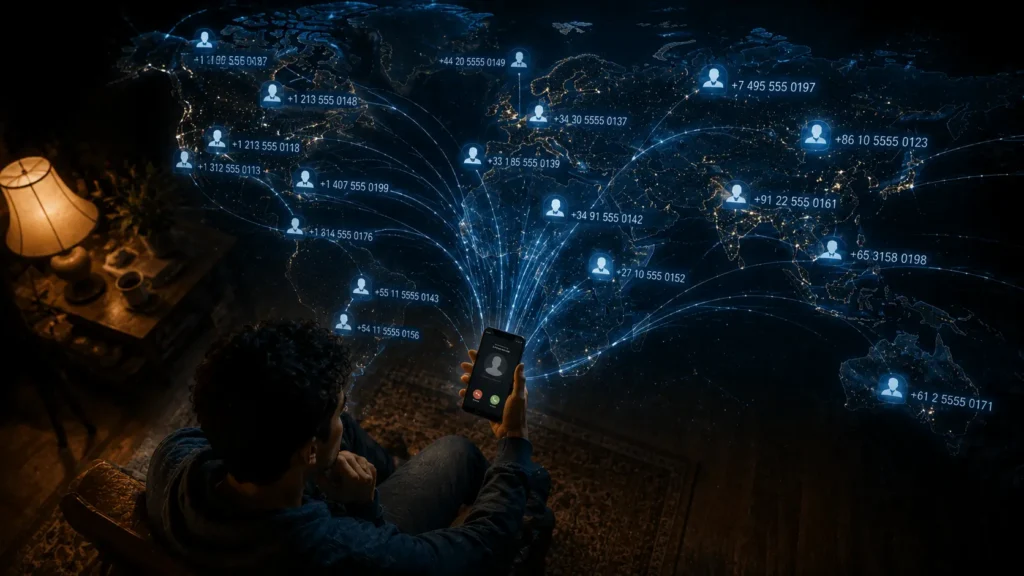
Many robocalling systems simply generate phone numbers automatically.
Because phone numbers follow predictable patterns, powerful computers can dial thousands of possible combinations every hour.
Whenever someone answers, the system marks that number as active.
From that moment onward, the number may receive additional calls from different campaigns.
The computer is not looking for a specific person.
It is searching for anyone who answers.
The Information We Share Without Thinking
A surprising amount of personal information becomes public because people voluntarily publish it.
Consider a homeowner selling furniture online.
They post an advertisement that includes a contact number.
A small business owner lists a mobile number on multiple websites.
Someone enters a giveaway requiring a phone number.
Individually these actions seem harmless.
Together they create numerous opportunities for your number to appear in search engines, public databases, or data collection services.
Even after removing the original post, copies may continue circulating across the internet.
A Real World Example
Imagine Sarah, a freelance graphic designer in Texas.
She creates a website to attract clients and publishes her mobile number so customers can contact her easily.
Over the following months, several online business directories automatically copy her contact information.
Search engines index those pages.
Eventually, automated data collection services gather the same information.
Sarah never shared her number with scammers directly.
Yet her publicly available business contact gradually spreads across multiple databases, making it much easier for unwanted callers to discover it.
This situation is surprisingly common among small business owners, freelancers, and professionals.
Why The Calls Keep Coming
Many people believe ignoring spam calls should make them disappear.
Unfortunately, that is not how many criminal operations work.
Modern robocalling systems operate almost entirely through automation.
Software places enormous volumes of calls every day.
Even if only a tiny percentage of people answer, respond, or share personal information, the campaign remains profitable.
Criminal organizations do not need everyone to fall for the scam.
They only need a very small number of successful conversations.
That economic reality explains why spam calling continues around the world.
Caller ID Is Not Always Telling The Truth
One reason fraudulent calls appear convincing is a technique known as caller ID spoofing.
Instead of displaying the caller’s actual number, internet based calling systems can present an entirely different one.
The screen might display a nearby city, a local business, or even the name of a trusted organization.
This creates the impression that the call is legitimate before you even answer.
Fortunately, mobile carriers and technology companies continue improving systems that help detect suspicious caller identities, making many spoofed calls easier to identify than they were only a few years ago.
How Technology Is Fighting Back
The battle against spam calls has become increasingly sophisticated.
Telecommunication providers now analyze calling patterns to identify suspicious behavior before calls reach customers.
Modern smartphones also compare incoming numbers with large community reporting databases that identify known spam callers.
Artificial intelligence has begun playing an important role as well.
Machine learning systems continuously analyze millions of anonymous calling patterns to recognize unusual behavior that often indicates fraud.
Although scammers constantly adapt their techniques, these technologies have significantly reduced many fraudulent calls.
Simple Habits That Can Protect You
No solution completely eliminates spam calls, but practical habits can reduce your exposure.
Only provide your phone number when it is genuinely necessary.
Review privacy options before submitting online forms.
Avoid publishing personal contact information unless required.
Be cautious when unexpected callers request passwords, banking details, verification codes, or payment information.
Keeping your smartphone updated also ensures you benefit from the latest security improvements developed by device manufacturers.
Small habits often provide meaningful protection over time.
The Bigger Picture
Spam calls are not simply random annoyances.
They represent an enormous global business built on automation, stolen information, social engineering, and psychology.
At the same time, legitimate businesses continue using phone communication responsibly to serve customers, confirm appointments, and provide important account notifications.
The difference usually comes down to transparency, consent, and trust.
Understanding how your number travels through today’s digital ecosystem allows you to recognize suspicious calls with greater confidence.
The next time your phone rings from an unfamiliar number, remember that someone probably did not search specifically for you.
More likely, an automated system simply found another active number in a world where billions of phone calls are placed every single day.
The best defense is not fear.
It is awareness.
Read Also
Read also: https://aiwalanews.com/how-websites-recognize-you-even-without-cookies/
Read also: https://aiwalanews.com/what-happens-inside-googles-data-centers-when-you-search/
© AiwalaNews | Global Tech & Privacy Edition | April 2026
