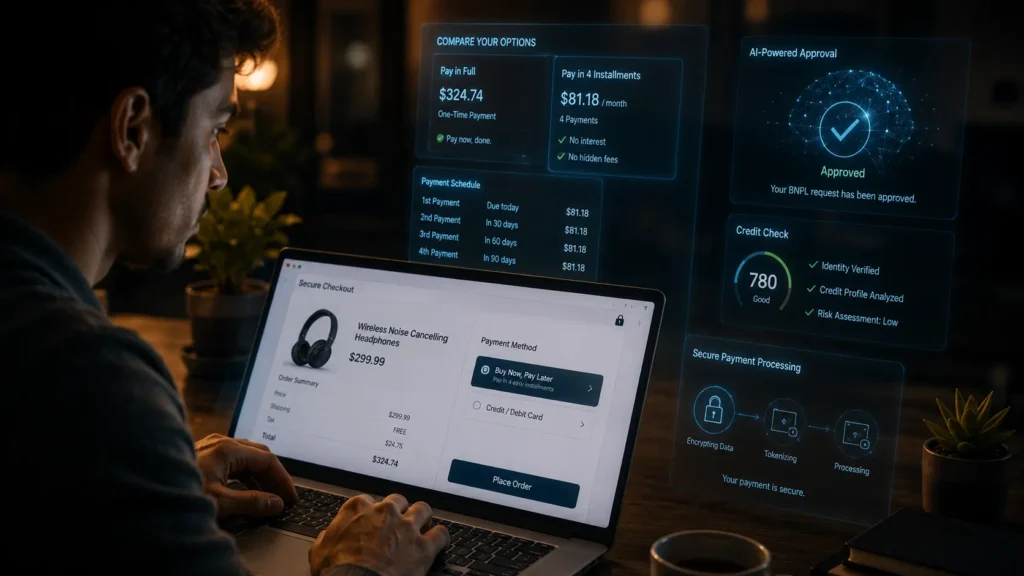
You are shopping online for a new pair of headphones.
At checkout, you notice a familiar option.
Pay only one quarter today. The rest later.
No interest.
No long application.
Approval takes only a few seconds.
It almost feels like free money.
Over the past few years, Buy Now Pay Later services have changed the way millions of people shop. From electronics and clothing to travel and furniture, splitting payments into smaller installments has become incredibly common.
For many people, it is a convenient financial tool.
For others, it quietly becomes a habit that leads to unexpected debt, missed payments, and financial stress.
The service itself is not the problem.
The real challenge often lies in how easily it changes our spending behavior.
Why Buy Now Pay Later Feels So Attractive
Traditional credit cards usually remind people that they are borrowing money.
Buy Now Pay Later feels different.
Instead of focusing on the total price, shoppers immediately see a much smaller payment.
A six hundred dollar purchase suddenly becomes four payments of one hundred fifty dollars.
Psychologically, that feels far more affordable.
Behavioral economists have long observed that people spend more when the immediate financial impact appears smaller.
The product has not become cheaper.
Only the payment has changed.
Convenience Can Change Spending Habits
Imagine Emily, a recent college graduate living in California.
She buys new running shoes using Buy Now Pay Later.
A week later she finances a smartwatch.
Then comes furniture for her apartment.
Later she uses the same payment option for airline tickets.
None of the purchases seem expensive individually.
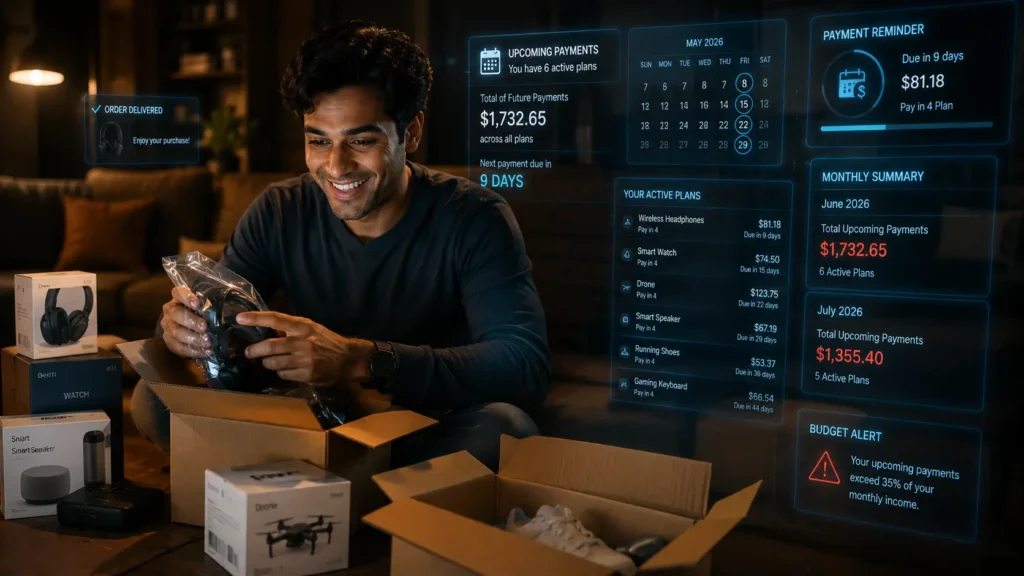
However, every month another installment appears.
Eventually Emily is making payments on five different purchases at the same time.
Her monthly budget begins feeling tighter than expected.
This situation has become increasingly common.
The challenge is rarely one large purchase.
It is several small commitments arriving together.
Late Payments Can Become Expensive
Many Buy Now Pay Later providers advertise interest free installments.
That statement is often true when payments are made on time.
Problems begin when someone misses a payment.
Depending on the provider and local regulations, late fees may apply.
Repeated missed payments could also affect future borrowing opportunities if payment history is reported to credit agencies.
The original purchase may have seemed affordable.
The additional costs arrive later.
Understanding the payment terms before confirming a purchase is always important.
Impulse Shopping Becomes Easier
One of the biggest changes created by Buy Now Pay Later is psychological rather than financial.
Removing the pain of paying immediately often encourages impulse purchases.
Someone browsing online may think,
“It is only forty dollars today.”
What they forget is that several other installment plans are already active.
Retailers understand this behavior.
Offering flexible payment options often increases sales because customers feel more comfortable completing larger purchases.
Convenience benefits both shoppers and businesses.
The key is maintaining awareness of your total financial commitments.
It Is Not Always Bad
Despite the risks, Buy Now Pay Later can be genuinely useful.
Many financially responsible consumers use it to manage cash flow without paying credit card interest.
For example, replacing a broken washing machine before payday may be much easier using scheduled installments.
The difference is planning.
Responsible users know exactly how future payments fit into their monthly budget before making the purchase.
The service becomes a financial tool rather than an excuse to spend more.
How Companies Make Money
Many shoppers wonder how companies earn revenue while offering interest free payments.
The answer surprises many people.
Retailers often pay Buy Now Pay Later providers a fee for each transaction because flexible payment options increase sales.
Some providers also earn money through optional interest bearing financing plans, merchant partnerships, or late payment charges where permitted.
The shopper enjoys flexibility.
The retailer sells more products.
The payment provider earns revenue from the overall ecosystem.
Technology Makes Approval Almost Instant
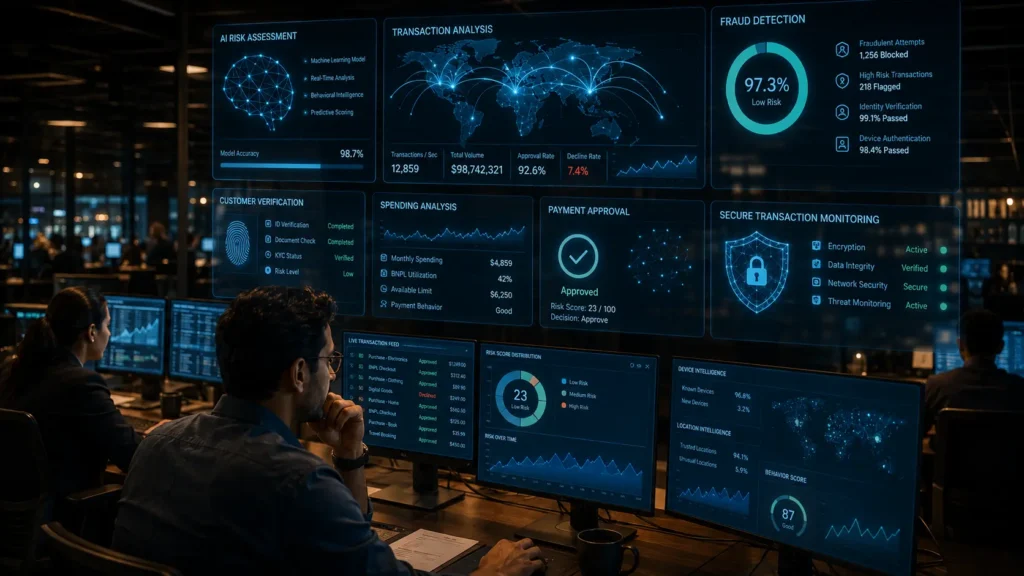
Behind every approval is a sophisticated technology platform.
Instead of reviewing paper applications for days, modern systems analyze information within seconds.
Artificial intelligence, fraud detection tools, payment history, and risk models help determine whether an application should be approved.
Most customers simply see an instant confirmation message.
Behind the scenes, complex financial technology is making that decision almost immediately.
Simple Habits That Keep You In Control
Buy Now Pay Later works best when used carefully.
Before completing a purchase, ask yourself a simple question.
“Would I still buy this if installments were not available?”
Review your active payment plans regularly.
Keep enough money available for future installments.
Avoid opening several payment plans during the same month unless they comfortably fit your budget.
Most importantly, remember that splitting a payment does not reduce the total amount you spend.
The Bigger Picture
Buy Now Pay Later has become one of the fastest growing innovations in modern retail.
It offers flexibility, convenience, and faster access to products that many people genuinely need.
At the same time, its greatest strength can also become its greatest weakness.
Making purchases feel smaller sometimes encourages spending that would never happen if the full price appeared upfront.
The hidden cost is not always interest.
Sometimes it is losing track of how many future payments have quietly accumulated.
Financial freedom does not come from avoiding useful technology.
It comes from understanding exactly how that technology influences the decisions we make every day.
The next time you see the option to split your purchase into smaller payments, pause for a moment.
The easiest payment today could become tomorrow’s forgotten commitment.
Read Also
Read also: https://aiwalanews.com/how-websites-recognize-you-even-without-cookies/
Read also: https://aiwalanews.com/what-happens-inside-googles-data-centers-when-you-search/
© AiwalaNews | Global Tech & Privacy Edition | April 2026
