
My grandfather kept his original Social Security card in an old cigar box, the paper gone soft and yellowed at the edges. What always struck me as a kid wasn’t the number itself, it was a line of small print running across the bottom of the card: not for identification. He’d point at it every time I asked why he still had it, half amused that a number now required for basically every adult transaction in America once carried an explicit warning not to use it that way.
That warning wasn’t a throwaway line. It was the whole point of the number, and understanding why it got ignored explains a surprising amount about why identity theft became such a persistent problem decades later.
What the Number Was Actually Built For
The Social Security number was created in 1936 for one narrow job: letting the federal government track how much each worker earned so it could calculate retirement benefits accurately down the line. That’s it. It wasn’t designed to prove who you were at a bank counter, verify your identity to a hospital, or serve as a universal key that unlocks every institution you deal with. It was an internal bookkeeping tool, closer to an account number than an identity credential.
For nearly a decade, that’s essentially all it did. Then in 1943, a presidential order expanded which federal agencies could use the number for their own recordkeeping, the first real crack in its original narrow purpose. In 1961, Congress authorized the IRS to adopt SSNs as taxpayer identification numbers, a decision that quietly turned a benefits tracking tool into something closer to a financial fingerprint.
The Warning Nobody Heeded
By 1973, the scope creep had become obvious enough that a federal report on privacy, produced by what’s now the Department of Health and Human Services, flagged the exact risk my grandfather’s old card was warning about decades early. That report concluded plainly that turning the SSN into a universal identifier wasn’t a good idea, and that the number was never built to safely serve that function in the first place.
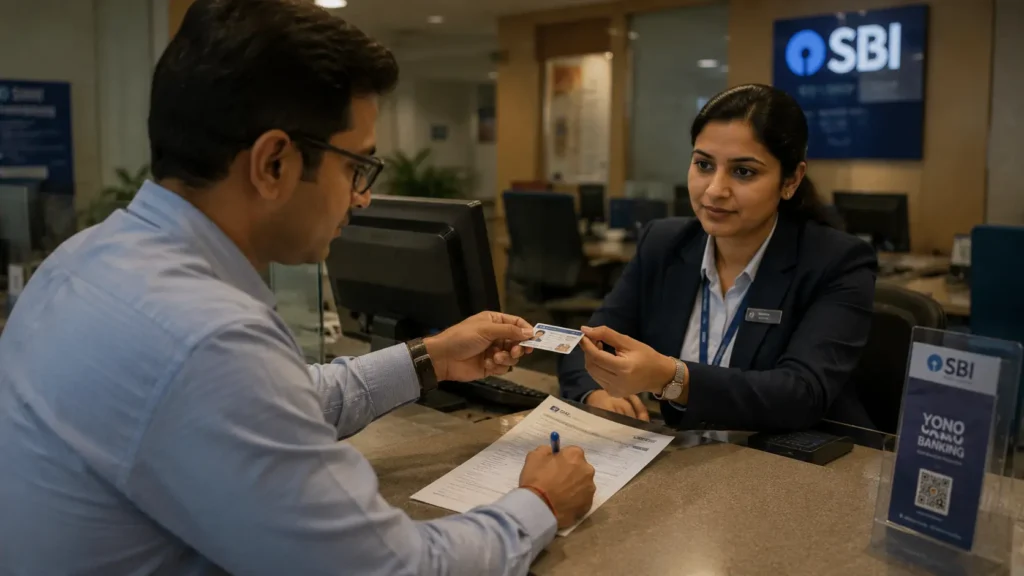
The warning didn’t stop anything. Employers began requiring it for hiring paperwork. Banks began requiring it to open an account. Landlords started asking for it on rental applications. None of these institutions were breaking any law by asking, since private sector use of the number was never specifically restricted the way certain government uses eventually were. It just became the path of least resistance: one number, unique to every person, already collected by nearly every American adult, sitting right there for anyone who wanted an easy way to link records together.
Why “Just One Number” Became a Security Nightmare
Here’s the part that turns an old bureaucratic footnote into a genuine modern problem. A single identifier that unlocks credit, banking, healthcare records, tax filings, and employment history all at once is an extraordinarily convenient thing to protect, until it isn’t. Once someone else has that number alongside your name and birth date, three pieces of information most identity thieves specifically hunt for together, they hold something close to a master key. Fraud investigators sometimes call a stolen SSN a breeder document, because it can be used to generate additional fake identification, a fraudulent driver’s license, a new credit line, a fabricated employment history, each one built on top of the last using the same original stolen number.
The scale of the resulting problem is not small. The FTC logged over 1.1 million identity theft reports in a single recent year, and SSN misuse sits at the center of most of them.
I spoke with a fraud investigator who spent years working consumer protection cases before moving into private sector risk consulting (she asked not to be identified since her current employer restricts media comments). Her framing stuck with me: a password can be changed the moment it leaks. A Social Security number generally can’t, not without a lengthy, difficult process through the SSA. That’s the core design flaw nobody planned for in 1936, a permanent number treated increasingly like a disposable login credential.

What’s Actually Being Done About It
The federal government has slowly moved to walk back some of this dependence. Roughly a decade ago, federal guidance directed agencies to reduce reliance on the SSN as an identification tool wherever an alternative could work instead, part of a broader, still ongoing effort to shrink how often the number gets requested unnecessarily. Some states have passed their own restrictions limiting when businesses can require or display a full SSN on documents, checks, or ID cards. Progress has been slow and uneven, mostly because so much existing infrastructure, tax systems, credit bureaus, employment verification, was built around the number decades ago and would be expensive and complicated to fully replace.
The Bottom Line
That tiny warning printed on my grandfather’s original card wasn’t outdated advice from a more cautious era. It was accurate from the start, and the slow, steady expansion of the number’s use over the following decades is essentially the entire origin story of why identity theft became such a widespread, persistent problem. The number was never meant to prove who you are. It was only ever meant to keep track of what you’d earned, and everything that came after was improvisation layered on top of a system that was never built to hold that much weight.
Read also this: The Real Reason US License Plates Are Read by Cameras You Never See | The Hidden Data Your Shopping Apps Collect Before You Even Log In
© AiwalaNews | Global Tech & Privacy Edition | April 2026
