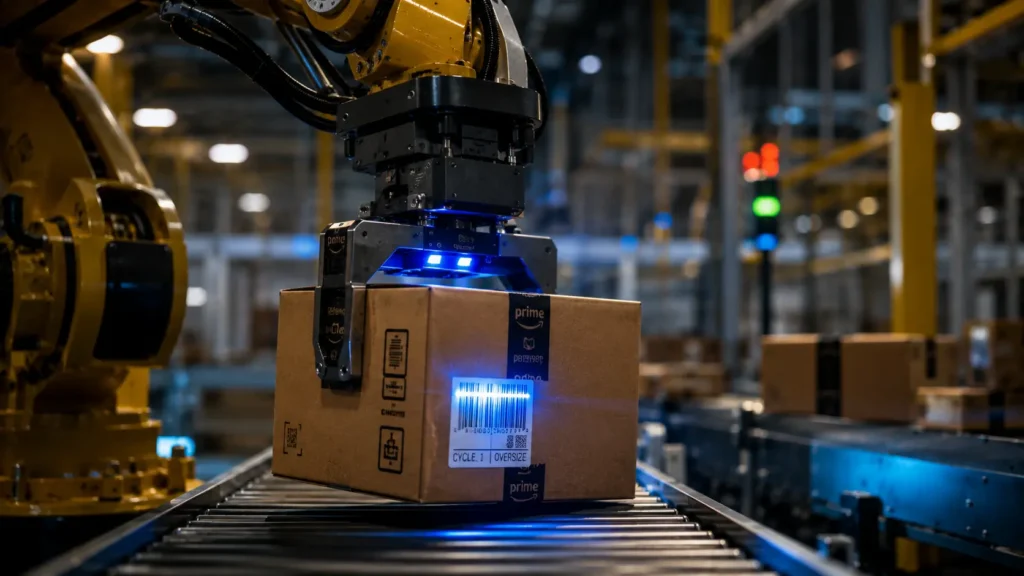
A few years ago I toured a regional shipping hub for an unrelated story, and the thing that stuck with me wasn’t the size of the building, it was the sound. Not chaos. Not shouting. Just a low, constant hum of belts and a rhythmic clicking of scanners, thousands of packages sliding past in near total silence, none of them touched by a human hand for most of the journey. I remember thinking: nobody actually knows this exists, and yet everyone who’s ever ordered anything online has depended on it completely.
That’s the strange thing about sortation centers. They’re some of the busiest, most technically sophisticated buildings in the country, and almost nobody outside the logistics industry has ever heard the term.
The Journey Starts Long Before the Truck
Most people assume a package goes from a warehouse straight to a delivery van. In reality, it usually passes through several distinct facilities, each with a different job. A fulfillment center is where your item gets picked and packed. From there, it typically moves to a sortation center, a facility whose only purpose is sorting packages by zip code before handing them off to the next leg of the trip. Only after that does a package reach a delivery station, the final stop where it gets loaded onto the actual truck headed to your door.
Amazon alone runs more than 80 of these sortation centers, and UPS and FedEx operate similarly massive networks built around the same core idea: minimize how many times a human touches a box between the warehouse and your doorstep.
What Actually Happens the Moment a Package Arrives
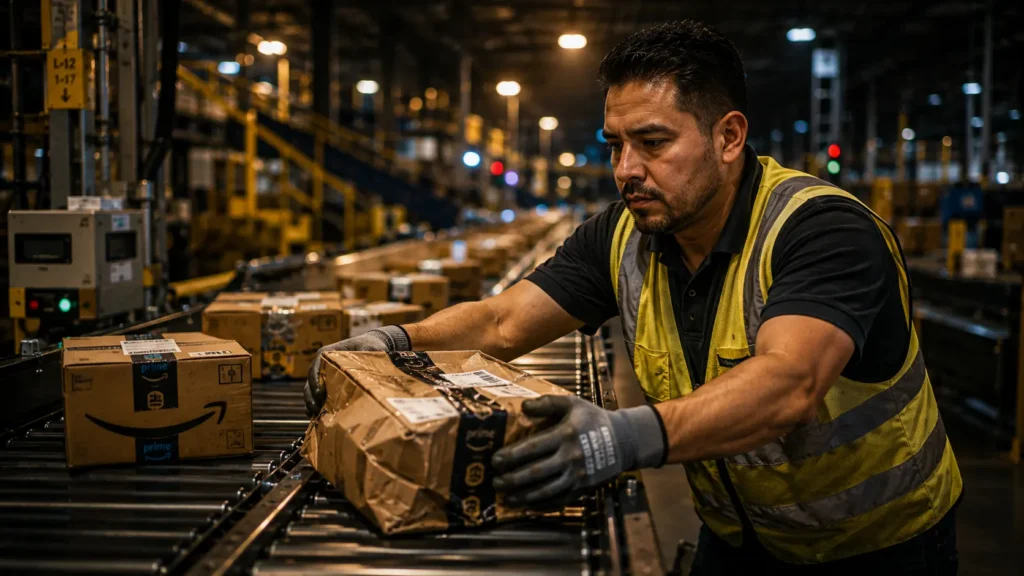
Here’s where the real machinery kicks in. Every package gets scanned the instant it enters the building, and that single barcode scan is what triggers the entire sorting decision. The system already knows the destination zip code, the shipping speed the customer paid for, and often even which specific delivery route the package needs to end up on, all before a person has laid eyes on it.
From there, packages ride a network of conveyor belts that snake through the facility, sometimes for hundreds of feet, guided by sensors that read barcodes at multiple points along the route. At key junctions, the belt physically diverts each package based on what its scanned code says, dropping it into the correct chute among what can be dozens or even hundreds of possible destinations running simultaneously.
The Robots Nobody Sees
This is the part that genuinely surprised me when I started digging into how modern facilities actually work. Some of the newest sortation centers use robotic arms fitted with their own barcode readers, capable of scanning and redirecting up to a thousand packages an hour across a hundred different destination points, all without a person lifting a single box. FedEx has deployed this kind of robotic sorting at major hubs, and the appeal is obvious: fewer misreads, faster processing, and a system that doesn’t slow down at hour ten of a shift the way a tired human might.
Amazon has taken a similar path with a growing fleet of robotics across its network, now numbering over a million units companywide, including systems designed specifically to speed up how quickly packages get sorted and grouped before leaving the building.
The Jobs Machines Still Can’t Do
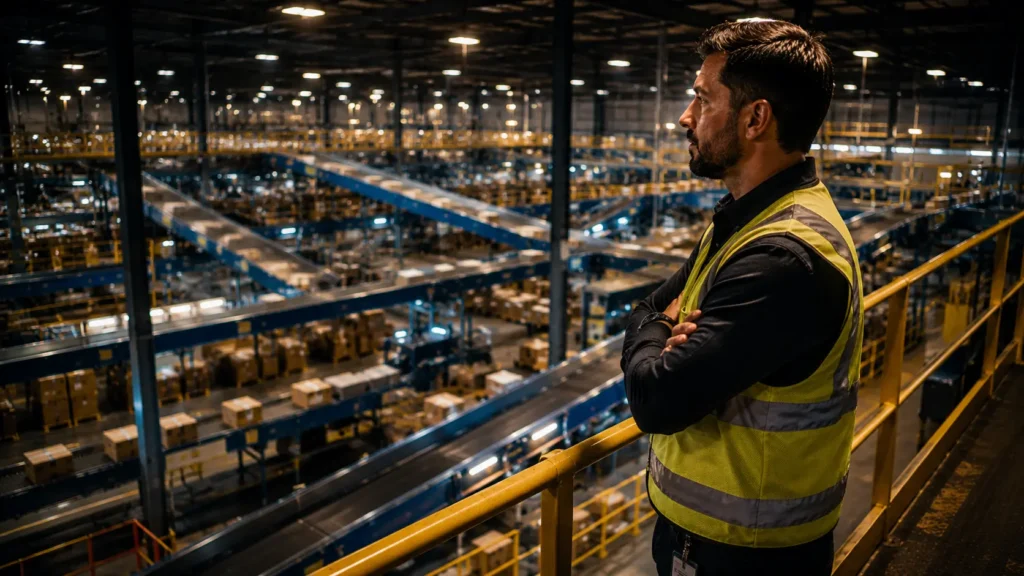
What struck me most on that hub tour wasn’t the automation. It was watching the people stationed at the points where the automation breaks down. Workers colloquially known in the industry as goalies stand near the belts specifically to catch packages that are stuck together, misshapen, or too damaged for a scanner to read cleanly, pulling them off the line before they jam the system. Another team, sometimes called problem solvers, manually diagnoses anything the machine rejected and routes it back in by hand.
I spoke with a logistics operations manager who’s spent close to a decade working inside these facilities (he asked not to be named since his employer restricts public comments on internal operations). His description matched what I saw firsthand: “The machine is fast, but it’s dumb in a specific way. It only knows what the barcode tells it. The second a label is torn or a box is dented in a way that hides the code, you need a person there instantly, or the whole line backs up behind it.”
Why the Zip Code Isn’t the Whole Story Anymore
The routing logic behind all this has gotten noticeably smarter in recent years. Modern sorting systems don’t just look at a destination zip code anymore, they factor in shipping speed, route density, and even real time traffic conditions when deciding which truck a package should end up on. Packages heading toward similar neighborhoods get grouped together automatically, which is part of why a single delivery truck can now carry well over two thousand packages on a single run without the driver ever having to manually sort anything on board.
A System Built to Be Invisible
None of this is designed to be seen. That’s actually the point. A sortation center succeeds precisely when nobody outside the industry ever has to think about it, when a package simply appears at the right door on the right day, and the entire chain of scanners, belts, robotic arms, and goalies behind that outcome stays completely out of view.
Next time a tracking update says arrived at carrier facility, it’s worth picturing what that sentence is quietly hiding: a building the size of several football fields, running around the clock, sorting a volume of packages that would take a small army of humans days to manage by hand, all triggered by a single barcode scan that took less than a second.
Read also this: The Hidden Reason Your Amazon Delivery Truck Knows Your Street Before the Driver Does | Why Two People See Different Flight Prices for the Same Seat
© AiwalaNews | Global Tech & Privacy Edition | April 2026
