The video showed a CEO announcing his company was bankrupt. Within 4 hours, the stock dropped 18%. Investors panicked. News channels picked it up.
It was completely fake!!
No camera. No studio. No actor. Just an AI tool, a reference photo, and someone with bad intentions and a laptop.
This is not a future problem. This is happening right now – in your feed, in your inbox, in breaking news alerts. And the frightening part? AI-generated fake videos have become so advanced that even cybersecurity experts are struggling to tell the difference.
Here’s what you need to know – and exactly how to protect yourself.
Why Deepfakes Are Suddenly So Dangerous!!
A year ago, deepfake videos had obvious tells. Blurry edges around the face. Robotic lip movement. Unnatural blinking. You could spot them if you looked carefully.
That era is over.
Tools like Sora, Runway ML, HeyGen, and Kling AI can now generate photorealistic video of any person – speaking any words, in any setting – in minutes. No technical skill required. Some are free. Most cost less than a Netflix subscription.
The result: deepfake content increased by over 900% between 2023 and 2025. Politicians, celebrities, CEOs, and ordinary people are being faked daily. Fake videos are being used to spread political misinformation, commit financial fraud, destroy reputations, and manipulate public opinion at scale.
And your social media algorithm has no idea how to stop it.
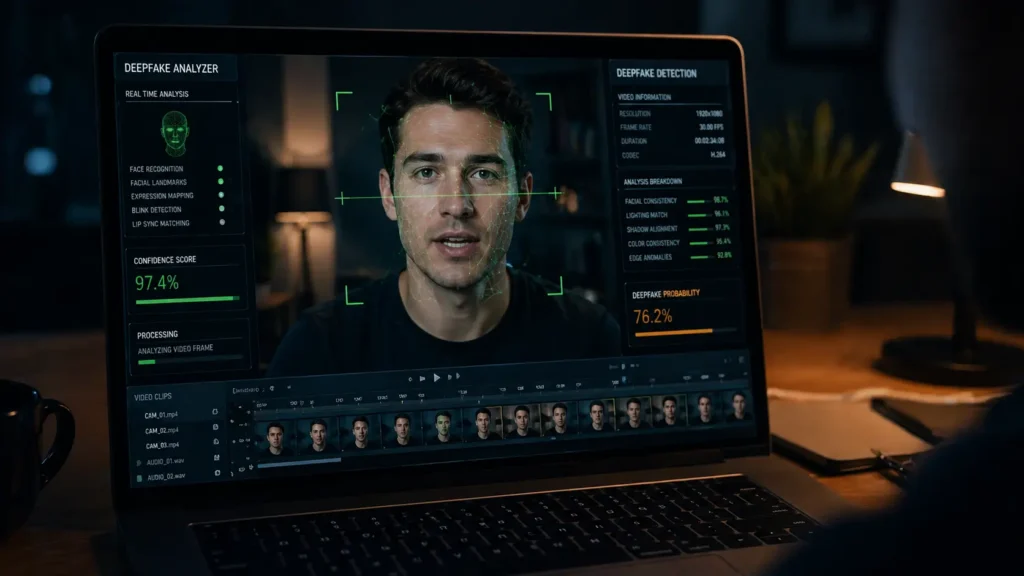
The 7 Signs a Video Might Be Fake
1. The Eyes Don’t Blink Naturally
Human beings blink every 4 to 6 seconds in a natural, irregular pattern. AI-generated faces either blink too rarely, too regularly, or in a mechanical rhythm. Watch the eyes for 20 seconds. If the blinking feels clockwork – trust your instinct.
2. The Skin Looks Too Perfect
Real human skin has texture – pores, fine lines, subtle unevenness. AI-generated faces often have an airbrushed, waxy quality that looks slightly too smooth, especially under lighting changes. If the person’s skin looks like a high-end filter was applied to every single frame, it probably was.
3. Hair and Teeth Are Off
These are two areas where AI still struggles. Individual hair strands often blur or merge into an unnatural mass, especially at the edges of the face. Teeth can look uniformly perfect — almost porcelain — or slightly misaligned in a way that shifts between frames. Look at the hairline closely.
4. The Background Has Glitches
While the face may look convincing, AI often struggles with background consistency. Objects in the background may warp, flicker, or subtly shift between frames. Text in the background is another major tell – AI frequently distorts letters and words into near-readable but incorrect characters.
5. Audio and Lip Movement Are Slightly Off
Even the best deepfakes have a fraction-of-a-second mismatch between lip movement and audio. Slow the video down to 0.5x speed if the platform allows it. Watch the mouth carefully during fast speech or emotional moments – this is where sync breaks down most visibly.
6. Unnatural Head Movement
Real people move their heads in fluid, continuous motion. Deepfake heads sometimes move in slightly jerky, over-corrected patterns — like a puppet on very good strings. Pay particular attention when the subject turns their head to the side or looks down. The face may momentarily blur or distort at extreme angles.
7. The Context Feels Designed to Shock You
This is the most important signal of all. Deepfake videos are almost always engineered to trigger an immediate emotional reaction — outrage, fear, panic, disbelief. If a video makes you want to immediately share it before you’ve had time to think – stop. That feeling is exactly what the creator designed.
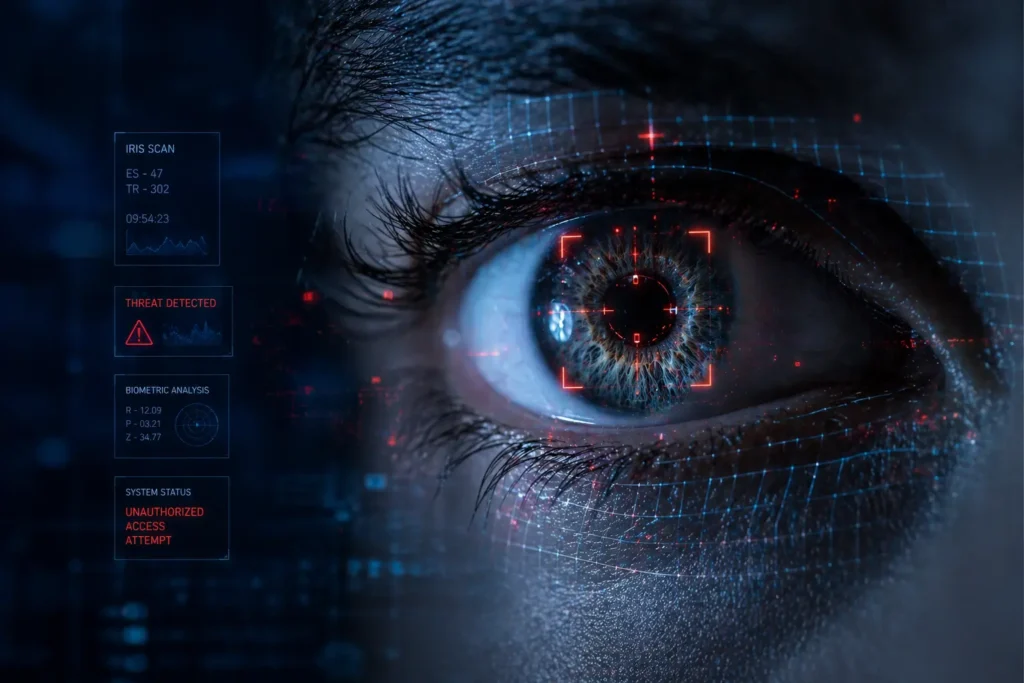
3 Free Tools That Can Help Detect Fake Videos
Microsoft Video Authenticator – Analyzes video frame by frame and provides a confidence score on whether AI manipulation has occurred.
Hive Moderation – A free online tool used by media organizations to detect AI-generated content. Upload a video or image and get an instant analysis.
Invid / WeVerify – Widely used by journalists. Breaks video into frames and runs reverse image searches to check if footage has been reused, manipulated, or taken out of context.
None of these tools are perfect. But running a suspicious video through even one of them takes under 60 seconds – and could save you from sharing something completely fabricated.
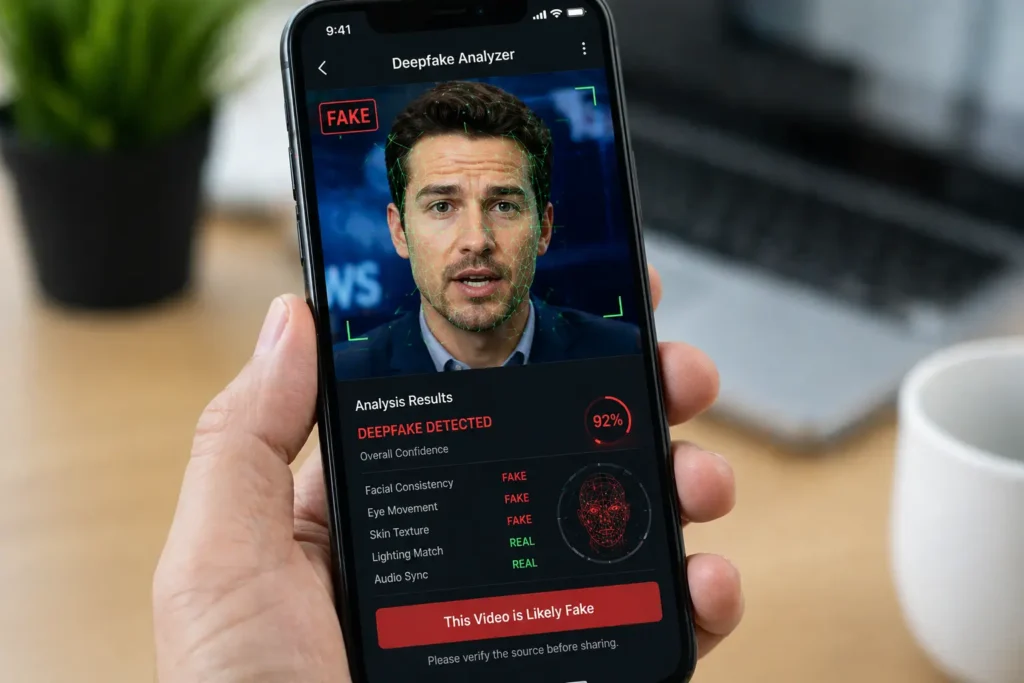
The Platforms Are Failing You
Here is the uncomfortable reality: Facebook, YouTube, TikTok, and X are not catching most deepfakes before they spread. By the time a fake video is flagged and removed, it has often already been viewed millions of times and shared across thousands of accounts.
A 2025 study found that the average deepfake video reaches peak virality within 3 hours of posting – long before any platform moderation catches up. The damage is done before the correction ever appears.
This means the responsibility falls almost entirely on you – the viewer.
The One Rule That Will Protect You
Security researchers and misinformation experts agree on one principle:
If a video makes you feel something strongly – verify it before you share it.
Check the original source. Search the person’s name alongside the claim. Look for the same story on two credible news outlets. Run it through one of the detection tools above.
Strong emotion is the deepfake’s most powerful weapon. The moment you feel outrage, shock, or disbelief – that is the exact moment to slow down, not speed up.
The people creating fake videos are not targeting your intelligence. They are targeting your emotions. And on that front, we are all equally vulnerable.
The Bottom Line
AI-generated fake videos are no longer a fringe technology problem. They are a mainstream threat sitting inside the same apps you open every morning. The tools to create them are cheap, accessible, and improving every week.
You cannot outsource your critical thinking to a platform algorithm. You cannot assume what looks real is real. In 2026, seeing is no longer believing.
But spotting the fakes is still possible – if you know what to look for.
📌 Read Also:
