
It starts the same way for almost everyone. You pick up your phone to check the time. Forty-five minutes later you’re watching a stranger’s vacation highlights, reading arguments in a comment section you don’t care about, and feeling vaguely worse than you did before you picked it up.
Then one day you just stop.
Across America, a quiet but powerful movement is growing. People are deleting apps, disabling notifications, and deliberately shrinking their digital lives not because they’re technophobes, but because they’ve finally done the math on what their phone is actually costing them. The ‘Digital Minimal’ movement has moved from a niche lifestyle blog trend into something that feels, for the first time, genuinely mainstream.
And the numbers back it up.
The Breaking Point America Just Hit
A 2025 Gallup survey found that 61% of Americans reported feeling “overwhelmed” by their digital life. A separate study by the American Psychological Association confirmed that smartphone use is now one of the top three self-reported sources of daily stress for adults under 45 ranking above work pressure and financial anxiety for Gen Z specifically.
The average American unlocks their phone 96 times per day. That’s once every ten minutes during waking hours. Every single unlock is a tiny interruption a small hijacking of attention that, compounded across a day, adds up to hours of fragmented focus and zero deep work.
People aren’t deleting their apps because a wellness influencer told them to. They’re deleting them because they finally noticed how bad they actually feel.
What ‘Digital Minimal’ Actually Means
Digital minimalism is not the same as going off-grid. Nobody is throwing their iPhone into a river.
The movement, popularized by author Cal Newport in his book Digital Minimalism, operates on a simple principle: only keep the digital tools that directly serve your values. Everything else every app you open out of boredom, every notification that interrupts you for no reason, every platform that takes more than it gives gets cut.
In practice, Americans going digital minimal are:
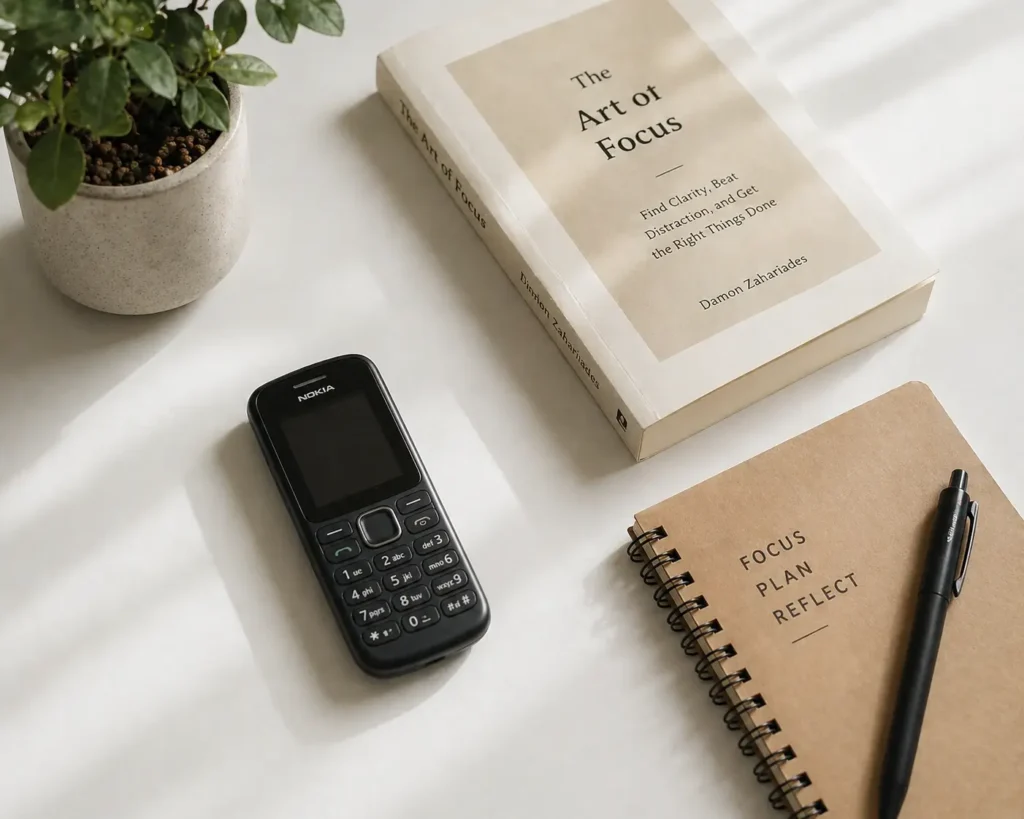
Deleting social media apps from their phones while keeping desktop access only. Turning off every notification except calls and direct messages. Replacing doom-scrolling with physical activities, books, or simply doing nothing. Setting hard screen time limits and actually keeping them. Replacing smartphones with ‘dumbphones’ for periods of the day.
This isn’t restriction for the sake of restriction. It’s a deliberate reclaiming of attention the one resource that every tech company on earth is competing to own.
Why Now? What Changed?
Three things converged at once to push this movement from fringe to mainstream.
The algorithm got too obvious. People started noticing really noticing that their feed was designed to make them angry, envious, or anxious. Not informed. Not entertained. Just activated. Once you see the manipulation clearly, you cannot unsee it.
The mental health data became impossible to ignore. Teen depression, adult anxiety, sleep disruption, shortened attention spans the research linking these to excessive smartphone use has reached a tipping point where even casual users can’t dismiss it anymore. When the surgeon general of the United States issues warnings about social media, something has shifted culturally.
People started talking about it openly. Five years ago, admitting you deleted Instagram felt like admitting you’d failed socially. Today it’s becoming a flex. The cultural permission to opt out has arrived and millions of Americans are taking it.

What People Are Reporting After Going Digital Minimal
The testimonials are remarkably consistent. Within the first week better sleep. Within the first month improved focus, lower anxiety, and a strange but welcome sense of boredom that eventually transforms into creativity.
A teacher in Ohio deleted TikTok, Instagram, and Twitter in January. She describes the first three days as genuinely uncomfortable a restless, reaching feeling every time she instinctively grabbed her phone. By week two, she’d started reading again. By week six, she’d finished four books and started a journal for the first time since college.
A software engineer in Austin deleted all social apps and replaced his smartphone with a basic calls-and-texts phone during evenings and weekends. He reports his productivity at work increased within two weeks. “I didn’t realize how fragmented my thinking had become,” he said. “I thought I was multitasking. I was just constantly distracted.”
These stories are not exceptions. They are the rule among people who make the switch.
The Pushback – And Why It Misses the Point
Critics of digital minimalism argue that social media keeps people connected, informed, and culturally relevant. That deleting apps is a privilege something only people with stable social lives and secure careers can afford to do.
There’s partial truth there. But the Digital Minimal movement isn’t asking anyone to disappear. It’s asking people to be intentional. To choose connection rather than have it served algorithmically, optimized for engagement rather than meaning.
There’s a significant difference between calling a friend and scrolling through their Stories. Only one of those actually connects you.
The Bigger Picture
What’s happening in America right now is not a tech backlash. It’s a collective recalibration. A generation that grew up online is quietly, deliberately, choosing to be less online not out of fear, but out of self-respect.
The apps will still be there. The feeds will still scroll. The notifications will still stack up for anyone who wants them.
But a growing number of Americans have decided that their attention is worth more than they’ve been selling it for.
And they’re taking it back one deleted app at a time.
📌 Read Also:
- AI-Generated Fake Videos Are Getting Impossible to Detect — Here’s How to Spot Them
- 7 Chrome Extensions You Should Delete Right Now for Your Safety
© AiwalaNews | Global Tech & Privacy Edition | April 2026
