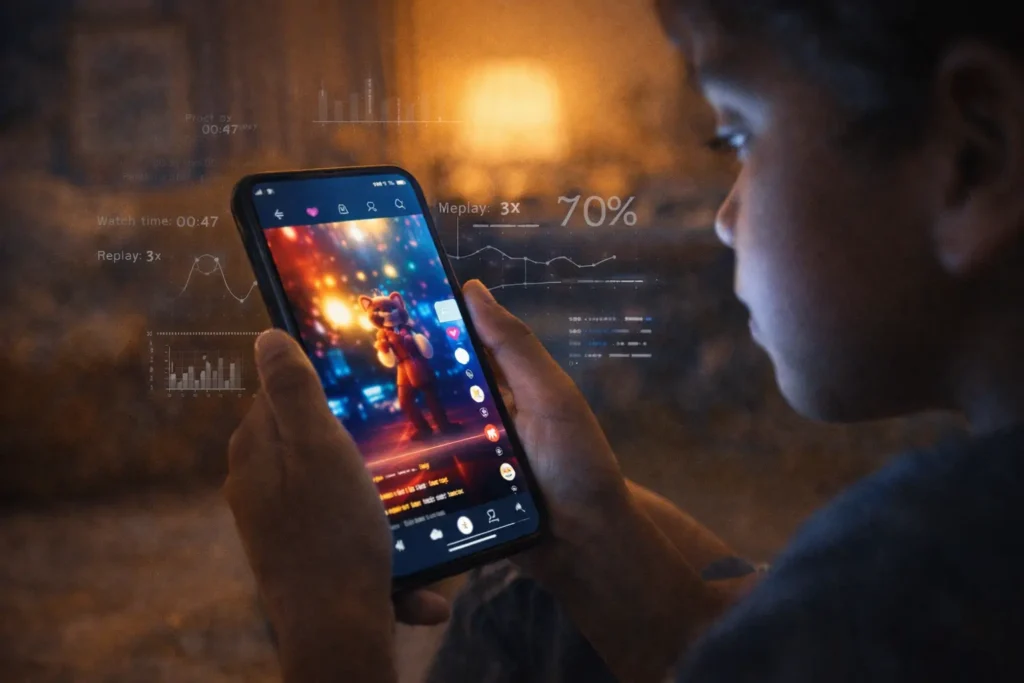
Every night, millions of American children under 13 fall asleep after hours on TikTok, YouTube Kids, or Roblox. Their parents assume these platforms are safe after all, they’re designed for kids. What most parents don’t know is that while their child was watching, playing, and clicking, some of the world’s most sophisticated data collection systems were running silently in the background.
This is not about bad actors in dark rooms. This is legal, largely permitted under current US law, and happening at a scale most adults would find shocking if they saw the numbers.
The Law That Was Supposed to Protect Kids And Why It’s Failing
The Children’s Online Privacy Protection Act, known as COPPA, was signed into law in 1998 when Google didn’t exist and “social media” wasn’t a phrase. It requires websites to obtain verifiable parental consent before collecting personal data from children under 13.
On paper, it sounds protective. In practice, it has become one of the most widely circumvented consumer protection laws in American history.
The core failure is structural. COPPA places the enforcement burden on companies the same companies generating billions from engagement data. The FTC, which oversees COPPA compliance, has a limited budget, limited technical capacity, and a mandate that hasn’t kept pace with algorithmic advertising, behavioral profiling, or real-time data brokering.
The result: platforms have become expert at appearing compliant while collecting aggressively.
TikTok: The Most Invasive Platform Your Child Uses
TikTok’s data collection practices are, by any technical measure, extraordinarily deep and for children, they are uniquely dangerous.
When a child opens TikTok, the app begins logging keystroke patterns, scroll velocity, video replay behavior, and watch-time to the millisecond. Every hesitation before skipping a video, every loop of a sound, every comment started and deleted all of it is captured and fed into a behavioral profile.
In 2023, the FTC and Department of Justice filed a lawsuit against TikTok’s parent company ByteDance, alleging the platform collected children’s data — including face and voice data without parental consent, and failed to honor deletion requests. The settlement resulted in a $5.7 million fine in 2019, and a more significant ongoing investigation that remains active.
What makes TikTok structurally different from other platforms is the For You Page algorithm. It is not driven by who you follow it is driven entirely by behavioral signals. For a child, this means the algorithm maps emotional responsiveness with terrifying precision. It learns what makes a specific 10-year-old anxious, excited, or insecure and then uses that knowledge to serve content that maximizes session time.
That emotional behavioral map is, by definition, a data product. And it leaves the United States. TikTok’s own privacy policy acknowledges data may be stored and processed in China, Singapore, and other locations subject to laws that offer American children zero protection.
YouTube Kids: The “Safe” Platform With a Data Problem
YouTube Kids was launched in 2015 as Google’s answer to parental concern. The branding bright colors, a child-friendly interface, curated content signals safety. The data architecture behind it tells a different story.
In 2019, Google paid $170 million in a COPPA settlement the largest in the law’s history at the time after the FTC found that YouTube had knowingly collected personal data from children on channels explicitly marketed to kids, without parental consent, and used that data to serve targeted advertising.
Google restructured. But the fundamental tension remained: YouTube Kids is built on the same infrastructure as YouTube, including the same tracking SDK, the same advertising systems, and the same data pipeline.
What YouTube Kids collects from children includes device identifiers, IP addresses, watch history, search queries inside the app, and interaction patterns. Even without an account, the app assigns a persistent device-level identifier that builds a behavioral profile over time.
The autoplay mechanism on YouTube Kids is particularly worth examining. It is not neutral. It is an engagement optimization system the same one that adults experience on the main platform calibrated to a child’s shorter attention span and higher emotional reactivity. The longer a child watches, the richer the behavioral data becomes, and the more precisely the algorithm can hold their attention.
Roblox: The Platform That Knows Where Your Child Lives
Roblox occupies a unique and deeply concerning position in children’s digital lives. It is not just a game it is a virtual economy, a social network, and a communication platform used by over 88 million daily active users, the majority of whom are under 13.
Roblox collects device information, IP addresses, chat logs, purchase behavior, and in-game behavioral data. Because children often play Roblox on family tablets or shared devices, the platform’s data frequently captures household behavioral patterns not just the child’s.
The chat system is particularly significant. Despite content moderation filters, Roblox’s chat logs are a rich dataset of children’s social behavior their friendships, conflicts, anxieties, interests, and in many cases, references to their physical location, school, and family life. This data is stored, and its downstream use is governed only by Roblox’s own privacy policy, which reserves broad rights.
In 2023, Roblox faced renewed scrutiny after researchers found that third-party game developers on the platform who build the games children actually play were collecting additional behavioral data under their own terms, with little oversight from Roblox corporate. The platform’s open development model, its greatest creative strength, is simultaneously its greatest data governance weakness.

What Happens to This Data After It Leaves Your Child’s Screen
The answer is more disturbing than most parents expect.
Children’s behavioral data even when anonymized or aggregated is extraordinarily valuable to advertising technology companies, academic research institutions, political consulting firms, and data brokers. A child’s content preferences at age 9 are a remarkably accurate predictor of adult consumer behavior. That predictive value has a market price.
Data brokers legally operating in the United States can purchase, repackage, and resell behavioral datasets that include children’s information, as long as the data does not contain directly identifying fields like a full name or Social Security number. Anonymization, however, is largely theater researchers have repeatedly demonstrated that behavioral datasets can be re-identified with as few as three or four data points.
The deeper issue is permanence. A data profile built on a child’s behavior before age 13 can follow that person for decades informing credit decisions, insurance pricing, employment screening, and political targeting long after the child has grown up and forgotten the platform entirely.
What Parents Can Do – Right Now
The system is broken, but you are not without options.
Request data deletion. Under COPPA, you have the legal right to request that a platform delete all data collected from your child. TikTok, YouTube, and Roblox all have deletion request processes use them, document your request, and follow up if ignored.
Use supervised accounts. Google Family Link, Apple Screen Time, and Amazon Parent Dashboard offer genuine device-level controls not perfect, but meaningfully better than platform self-regulation.
Check app permissions together with your child. Make it a habit. Microphone, camera, and location access on apps used by children should be revoked by default unless actively required.
Contact your US representative. The Children and Teens’ Online Privacy Protection Act (COPPA 2.0) has been introduced in the Senate and would extend protections to teenagers up to 16. It has stalled. Constituent pressure moves legislation.
Your child does not understand what data is, what a behavioral profile means, or what a data broker does with it. They are not supposed to they are children. But the platforms treating their attention as inventory understand it perfectly.
It is time parents did too.
Read also: 🔗 The AI That Reads Your Emotions — and the Companies Already Buying the Data — AIwala News
🔗 How Data Brokers Legally Sell Your Home Address and Daily Routine in the US — AIwala News
© AiwalaNews | Global Tech & Privacy Edition | April 2026
