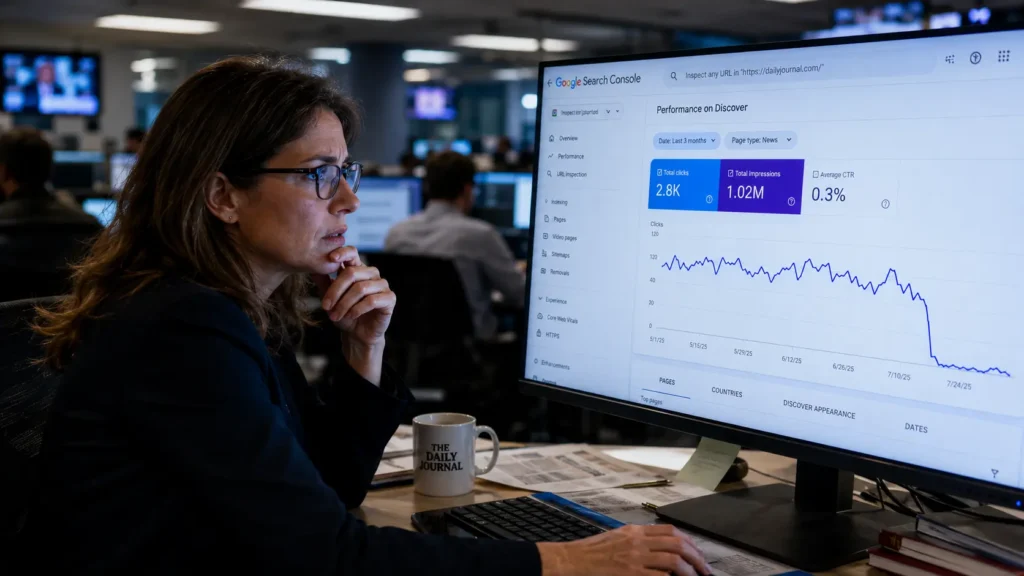
Excerpt: Google just rewrote the rules for its most powerful traffic source. Most publishers don’t know yet here’s what changed and what to do before it costs you.
If your Discover traffic dropped suddenly in February 2026 and you couldn’t explain why, this article has your answer. And if your traffic grew this matters even more, because understanding why is the only way to protect it.
On February 5, 2026, Google released its first-ever standalone Discover core update targeting the algorithmic systems that surface content in the Google Discover feed, a personalized scroll-based content recommendation service used by hundreds of millions of people globally.
This wasn’t a routine tweak. Unlike previous broad core updates that affected Search rankings across the board, this algorithmic change exclusively targeted the Discover feed algorithm while leaving traditional Search rankings untouched. Google officially separated Discover into its own product with its own rules, its own standards, and its own very clear idea of what content deserves to exist inside it.
Some sites saw Discover impressions drop by 40 percent almost overnight. Others picked up traffic they had never seen before. The difference wasn’t luck.
Three Things Google Changed And What Each One Means
Google listed three goals for the update: show users more locally relevant content from websites based in their country, reduce sensational content and clickbait, and surface more in-depth, original, timely content from sites with topic expertise.
Each one hits differently depending on how you’ve been building your content.

1. Geographic Relevance Local Wins Now
Google’s systems are now configured to surface content from websites based in the user’s own country with greater frequency. If a user is in the United States, the update increases the likelihood that content appearing in their Discover feed comes from US-based publishers.
The data confirmed this fast. The five-to-one ratio of local-to-national content in both the New York and California feeds was the most quantifiable evidence that Google’s locally relevant content goal translated into real algorithmic change.
For publishers outside the US: the update is rolling out to English-language users in the United States first, with plans to expand globally to all countries and languages in the coming months. That window is your preparation time. Don’t waste it.
What to do: Make your geographic identity unmistakable mention your location, your editorial team’s region, your coverage focus. Build content around local angles on national stories. Google needs to know where you’re from before it can show you to the right people.
2. The Clickbait Crackdown Headlines Must Earn Their Clicks
This is where most publishers felt the pain.
Publishers who understood Discover’s older engagement-weighted algorithm optimized aggressively for headline engineering without corresponding investment in content depth. The February 2026 update introduces friction into that feedback loop Google is now attempting to evaluate whether the content attached to a headline has demonstrated expertise on the topic being covered.
CTR alone is no longer sufficient. Google’s updated guidance signals a stronger focus on downstream satisfaction signals such as dwell time, content consumption depth, and return-to-feed behavior. If users consistently click a headline but quickly abandon the content, the algorithm now appears more capable of identifying that mismatch between expectation and delivery.
Google’s updated guidelines explicitly prohibit using misleading or exaggerated details in preview content titles, snippets, or images to increase appeal, or withholding crucial information required to understand what the content is about. The new guidelines also warn against sensationalism tactics that manipulate appeal by catering to morbid curiosity, titillation, or outrage.
This does not mean strong headlines stop working. Clear, accurate, specific headlines that tell a reader exactly what they will learn remain effective. The rule is simple: deliver what you promise.
What to do: Audit your top Discover articles. Does the headline match what the article actually delivers? If there’s a gap close it. Rewrite titles that over-promise. Replace shock-framing with clarity-framing.
3. Topical Authority Depth Beats Breadth, Full Stop
Expertise is evaluated by topic, not site-wide based on consistent, high-quality coverage in specific subject areas.
Sites that publish a wide range of topics but with limited depth in any given area are now competing against publishers who have concentrated depth in those areas. Topic breadth without topical depth is no longer a competitive advantage in Discover.
A specialist site with 80 deep articles on cybersecurity will outrank a generalist site with 800 articles on everything every time. Google is betting on publishers who actually know their subject, not publishers who chase every trending topic with a 400 – word surface level take.
What to do: Identify two or three topic areas where you have genuine depth. Build content clusters around them. Stop publishing thin content on topics you cover opportunistically it dilutes your authority signal without adding to it.
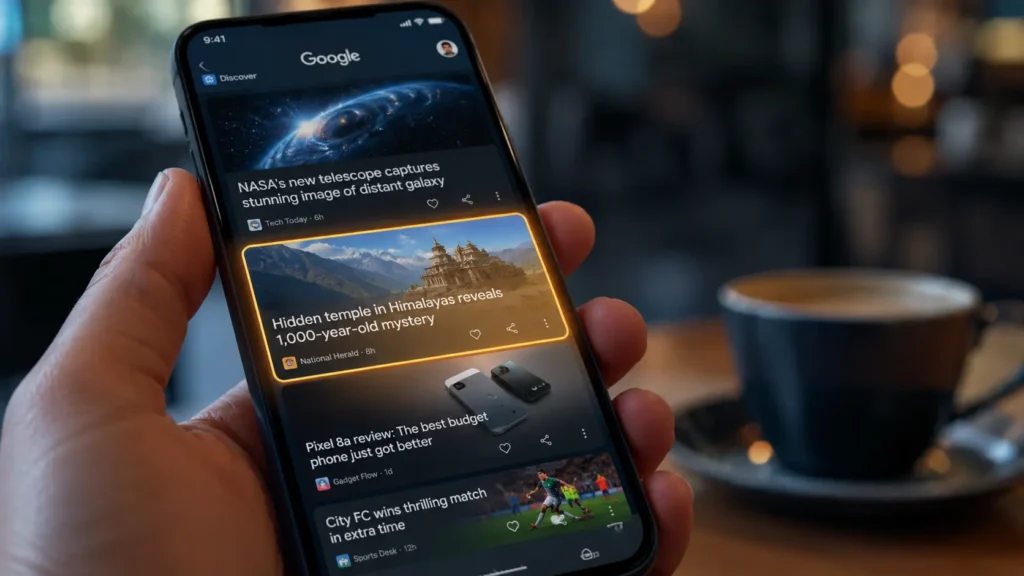
The Numbers: Who Won, Who Lost
Unique domains in the US top 1,000 dropped from 172 to 158 in the post-update window. Topic variety grew while publisher diversity shrank Discover is covering more topics but concentrating top placements among a narrower set of publishers.
That consolidation tells the whole story. Fewer publishers. More traffic concentrated at the top. The gap between winners and losers is widening and the update hasn’t even finished its global rollout yet.
What Publishers Must Do Right Now
Google is rewarding active, engaged publishers and deprioritizing sites that treat their content as a static asset they publish and forget.
The action list is short but every item on it matters:
Check Search Console Discover reports now. Know which articles are driving your Discover traffic and whether they align with the signals this update rewards.
Fix your visuals. Use strong, high-quality images, ideally at least 1,200px wide with large previews enabled. Stock photos signal low investment. Original images signal the opposite.
Publish more frequently but don’t sacrifice depth. Most Discover traffic arrives within the first 48 to 72 hours of publication. Publish timely content when it’s most relevant covering a story on day one outperforms covering it a week later by 5 to 10 times in Discover impressions.
Treat Discover as its own channel. It no longer runs on search rules. What ranks in Google Search and what surfaces in Discover are increasingly different things and publishers who haven’t separated their strategies for each are already behind.
Google has been moving in this direction for years. The February 2026 Discover update just made the destination official. The direction of travel is consistent: toward rewarding content that is locally relevant, genuinely expert, factually framed, and built for users rather than for algorithms. That direction is unlikely to reverse.
The publishers still winning in Discover six months from now won’t be the ones who cracked a code. They’ll be the ones who built something worth surfacing.
© AiwalaNews | Global Tech & Privacy Edition | May 2026
Read Also:
- 🔗 Google AI Overviews Are Changing Search Forever — Here’s What Publishers Must Know
- 🔗 Why Your Google Traffic Dropped in 2026 — And How to Get It Back
