This article is based on Airbnb’s published Smart Pricing documentation, verified dynamic pricing research from Freewyld Foundry managing $180M+ in bookings, and peer-reviewed analysis from Economic Research-Ekonomska Istraživanja. This is for informational purposes not financial advice.
You searched for a weekend in Miami. You found a listing you liked $127 per night. You closed the tab, thought about it, came back two days later.
Now it’s $189.
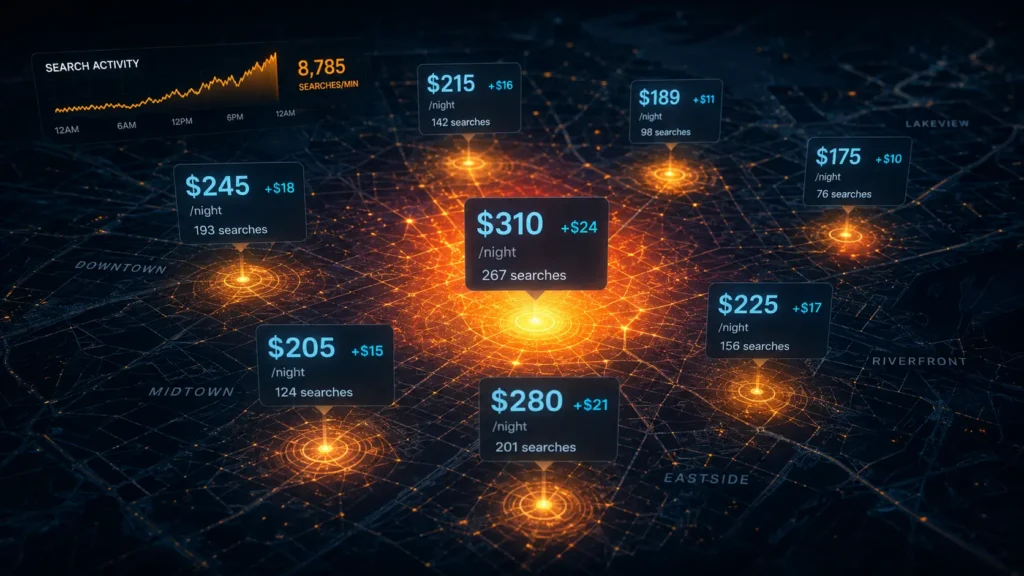
You didn’t do anything differently. The listing didn’t change. But something tracked the demand signal your search created and adjusted the price before you returned.
Welcome to Airbnb’s pricing algorithm. It was running on your search before you finished typing the city name.
What Smart Pricing Actually Is
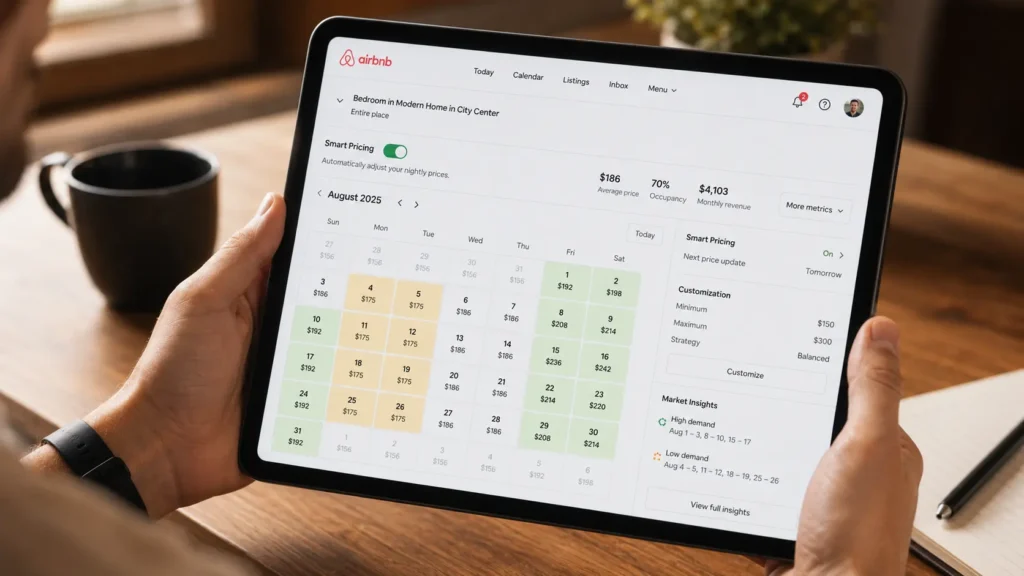
Airbnb Smart Pricing is a built-in dynamic pricing feature that automatically adjusts nightly rates based on demand signals and listing data. The algorithm pulls together hundreds of data points related to the listing and the local market. Key inputs include: listing details property type, location, bedrooms, amenities like a hot tub or ocean view, and average guest rating; search activity how many travelers are searching for dates in the area and how often the listing gets clicked; booking patterns recent booking activity nearby, including how similar listings are pricing and filling up; calendar availability how many open nights exist and how far out they extend.
The tool works on an algorithm that generates price recommendations from metrics related to the property. After analyzing the relevant data, the Airbnb pricing algorithm recommends the optimal price based on its calculations and for hosts who have enabled automatic adjustment, it sets that price without any human input.
The algorithm updates continuously. Most dynamic pricing tools update daily or even multiple times per day pulling in market data, applying pricing algorithms, and pushing updated rates automatically. By the time you return to a listing you bookmarked yesterday, the price may have been recalculated three times.

The Signals It Reads Before You Search
This is the part most guests never consider: the algorithm is running on aggregated demand data from millions of searches not just yours.
Dynamic pricing adjusts nightly rates based on real-time demand, competition, and seasonality. Research shows hosts who actively manage pricing and consider property characteristics tend to charge higher rates and achieve better results.
The demand signals feeding the algorithm include: how many total searches are happening for your destination on your dates right now. How many of those searches resulted in bookings in the last 48 hours. How many similar listings in the area are still available versus already booked. Whether a local event, concert, sports game, or conference is drawing additional demand to the area.
The algorithm focuses particularly on properties with similar characteristics same neighborhood, similar guest capacity, comparable amenities. Using all this data, the tool automatically adjusts price per night in response.
The result: two identical weekends in the same city can price completely differently based on demand signals the guest never sees. A Friday when three conferences are ending downtown prices at 2.4x a Friday when nothing is happening even for the exact same listing.
The Conflict of Interest Nobody Talks About
Here’s the detail Airbnb doesn’t highlight in its marketing materials for hosts.
Airbnb makes money on completed bookings so more bookings means more revenue for Airbnb. That incentive doesn’t perfectly align with the host’s. Smart Pricing will happily drop to the minimum rate if it thinks that’s what it takes to get a booking. Many new hosts set their minimum too low, or don’t set one at all, and end up accepting bookings below their break-even.
While Smart Pricing helps keep occupancy rates high, some hosts find that it sometimes prioritizes occupancy over maximizing revenue.
The algorithm is optimizing for booking probability not host profit. Those are related objectives but not identical ones. During peak demand periods, Smart Pricing consistently underprices relative to what the market would bear because Airbnb’s revenue model benefits from volume, not margin.
Smart Pricing consistently underperforms during periods when a listing has the most pricing power. During peak season summer at the beach, ski season in the mountains demand far outpaces supply, and those situations require pricing judgment the algorithm often misses.
What This Means for Guests
Understanding how the algorithm works changes how you book.
The price you see is not the price the algorithm calculated for your profile specifically Airbnb doesn’t yet personalize prices to individual guest accounts the way Uber personalizes surge prices. The price reflects aggregate demand signals for your dates and destination.
That means timing is genuinely impactful. In January 2026 alone, professionally managed portfolios using human strategy layered on top of dynamic pricing tools outperformed the broader market by 17.2%. The inverse is true for guests searching during low-demand windows produces meaningfully lower prices.
Practical moves that reliably reduce your Airbnb price:
Search on Tuesday or Wednesday for weekend stays. Demand signals peak on Thursday and Friday as weekend travelers finalize plans. The algorithm prices accordingly. Searching earlier catches listings before that demand spike registers.
Book 3 to 6 weeks out for popular destinations. Last-minute availability triggers lower prices for some listings but popular destinations often see prices rise as availability shrinks. The sweet spot is far enough out that urgency hasn’t inflated prices, but close enough that the host’s algorithm is incentivized to fill the calendar.
Search for the same listing in an incognito window. While Airbnb doesn’t personalize prices by user account, repeated searches for identical dates can trigger demand signals that nudge the algorithm upward. Incognito removes browser cookies from the equation.
Compare total price from the beginning. Airbnb’s cleaning fee structure means a listing priced at $89/night with a $200 cleaning fee costs more per night for a two-day stay than a listing at $130/night with a $40 cleaning fee. The algorithm surfaces nightly rate not total cost in initial search results.
The Honest Bottom Line
Most experienced hosts turn Smart Pricing off within 6 months. Once they understand their market, they can beat it manually or use a third-party tool optimized for their revenue instead of Airbnb’s.
The same principle applies to guests. Understanding that Airbnb’s price is a real-time output of an algorithm not a fixed listing rate means you can optimize around it rather than accepting it passively.
The algorithm is always running. The question is whether you’re accounting for it.
Note: Pricing varies by market, season, and listing. All strategies described reflect general patterns individual results vary. This article is for informational purposes only.
© AiwalaNews | Global Tech & Privacy Edition | May 2026
Read Also:
- 🔗 How Uber Knows You’ll Accept a Higher Price Before It Shows It to You
- 🔗 The Real Reason Airlines Oversell Every Flight
