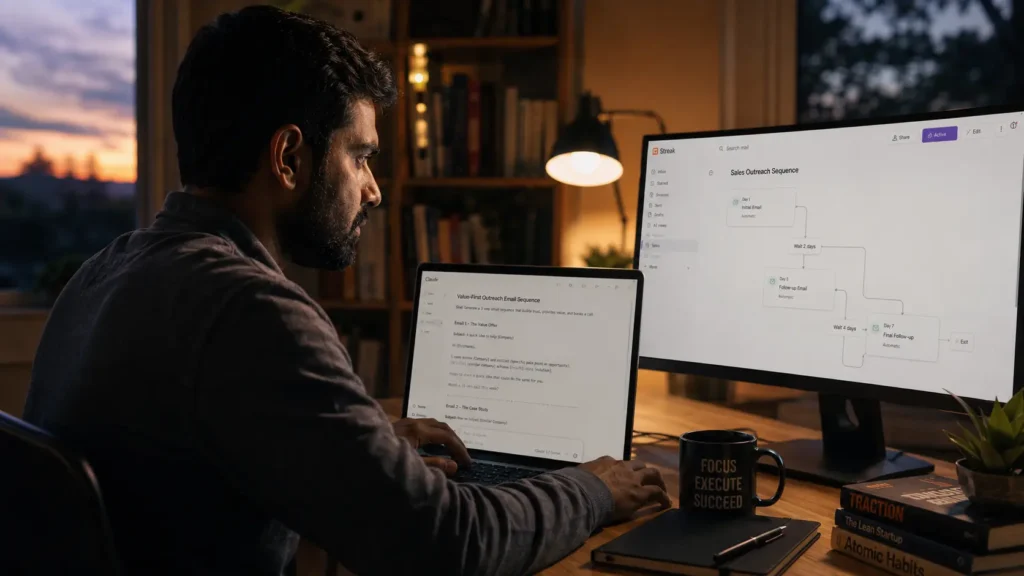
Twelve months ago, I was sitting at my desk after a long workday, scrolling through Reddit threads about passive income, feeling equal parts inspired and skeptical. I had skills writing, a little design, some basic marketing knowledge but no time. Sound familiar?
Then I started experimenting with AI tools. Not in a “robots will take over the world” way, but in a quiet, practical, let’s-see-if-this-actually-works way. Today, that experiment earns me an extra $2,000 every month consistently while I still work my full-time job.
Here’s exactly how I did it.
The Problem: Skills Without Bandwidth
My side hustle idea was simple: freelance content writing for small businesses. Blog posts, email newsletters, social media captions. The demand was there. The clients were there. But writing ten quality articles a week after a 9-hour workday? That was close to impossible until AI-assisted content workflows changed everything.
Step 1: I Stopped Writing From Scratch
The biggest mindset shift was realizing that AI isn’t a replacement for your voice it’s a drafting engine. I started using tools like ChatGPT and Claude to generate first drafts based on detailed briefs I wrote myself.
My process became:
- Write a tight 150-word brief with tone, audience, and key points
- Let the AI generate a 600–800 word draft in under two minutes
- Spend 20–30 minutes editing, adding personal insight, and sharpening the voice
What used to take me 3 hours per article now takes 45 minutes. I went from producing 3 pieces a week to 10 without working extra hours.
Step 2: I Automated Client Communication
One thing nobody warns you about in freelancing: client emails eat your time alive. Follow-ups, revision requests, onboarding questions, invoices it’s a second job inside your side job.
I built a simple AI-powered email system using templates drafted with Claude and scheduled through a free tool called Streak (a Gmail CRM). Every new client gets an automated welcome sequence. Every delivered project triggers a follow-up email asking for feedback and a referral.
This alone saved me 5–6 hours a week. More importantly, my response rate felt personal and professional clients regularly compliment how “on top of things” I seem.
Step 3: I Used AI to Find Better-Paying Clients
Most freelancers undersell themselves because they don’t know what the market pays. I used AI research prompts to analyze job boards, identify industry rates, and write hyper-targeted cold outreach emails.
Instead of sending generic pitches, I asked Claude to help me write personalized proposals based on each prospect’s website, tone, and content gaps. My conversion rate on cold outreach jumped from around 5% to nearly 22% within six weeks.
Better clients. Higher rates. Less time pitching.
Step 4: I Packaged My Services with AI-Generated Assets
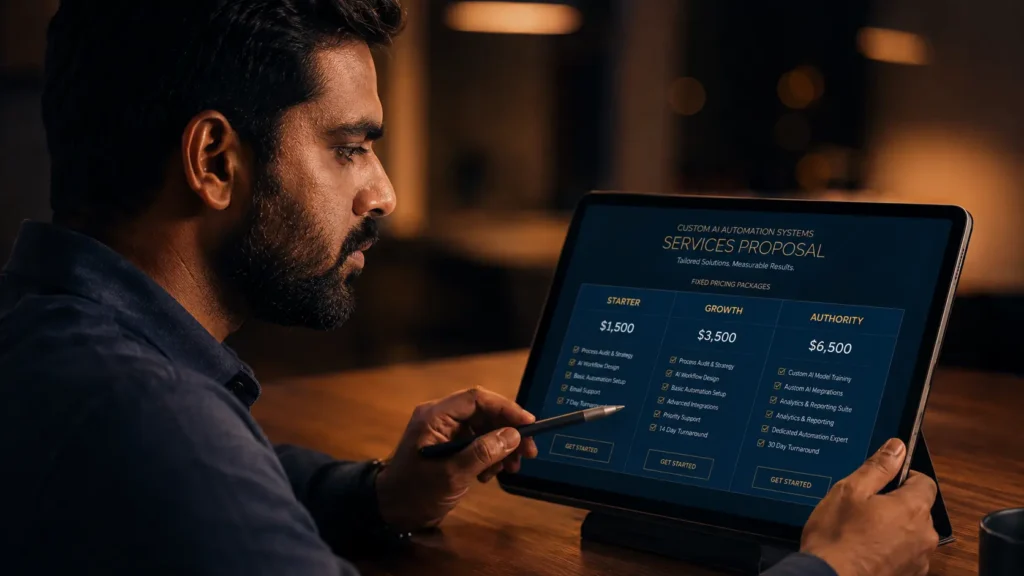
Once I had a workflow, I turned it into a productized service. Instead of custom quotes for every client, I offered three fixed packages Starter, Growth, and Authority — each with clear deliverables and pricing.
I used AI tools like Canva’s AI features and a little help from ChatGPT to create:
- A polished one-page PDF service menu
- A simple case study template
- A testimonial request email sequence
None of this required a designer or a marketing agency. It looked professional, and it positioned me as a serious business owner, not a freelancer scrambling for gigs.
Step 5: I Let AI Handle the Repetitive Stuff
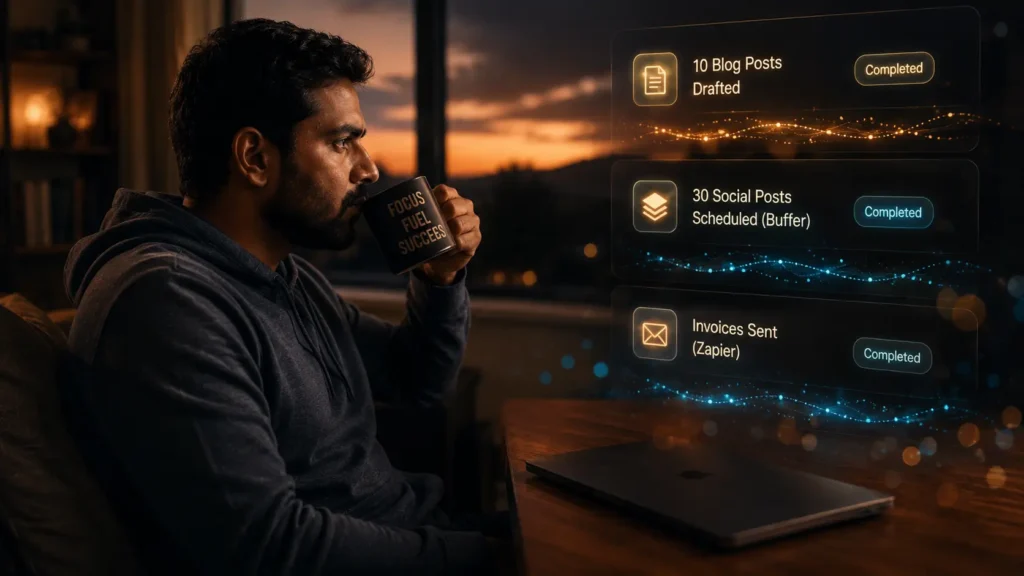
Social media posting. Invoice reminders. Content repurposing. These are the invisible time-thieves of every side hustle. I set up a lightweight automation stack:
- Zapier connected my invoicing tool to my email
- Buffer scheduled repurposed content automatically
- A custom GPT prompt chain turned each blog post into three social captions and one email newsletter teaser
The result: one piece of content became five. My visibility grew. My workload didn’t.
The Real Numbers
Let me be transparent. This didn’t happen overnight, and it’s not truly passive — I work roughly 8–10 hours a week on this:
| Month | Revenue | Hours Worked |
|---|---|---|
| Month 1 | $380 | 18 hrs |
| Month 3 | $950 | 14 hrs |
| Month 6 | $1,600 | 11 hrs |
| Month 10 | $2,100 | 9 hrs |
The AI automation didn’t just save time it created a compounding effect. More output → more clients → better reputation → higher rates.
What I Wish I’d Known Earlier
The tools are not magic. The first month, I over-relied on AI and delivered mediocre work. The pivot was treating AI as a collaborator, not a vending machine. The more specific and strategic your inputs, the more powerful the outputs.
Also: start with one automation at a time. Don’t try to automate everything on week one. I started with drafting, then email, then social. Each layer compounded on the last.
You Don’t Need to Be Technical
I’m not a developer. I don’t code. Everything I built uses no-code or low-code tools that exist right now, most with free tiers. If you have a marketable skill writing, design, video editing, virtual assistance, consulting AI can multiply it.
The question isn’t whether AI will change how side hustles work. It already has. The question is whether you’ll be the one using it or the one wondering how others got so far ahead.
Read Also:
- How AI Tools Are Reshaping Freelance Income in 2026
- Top No-Code Automation Tools Every Side Hustler Should Know
© AiwalaNews | Global Tech & Privacy Edition | April 2026
