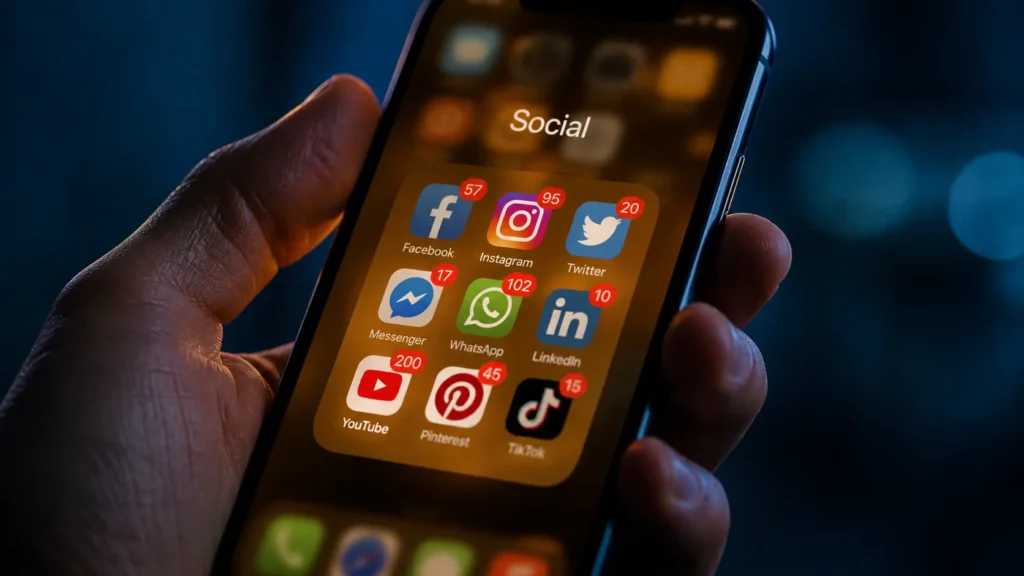
You think you’re in control. You choose when to open an app, what to watch, when to stop scrolling. But behind every tap, swipe, and notification is a carefully engineered system designed by some of the world’s most powerful companies built not to serve you, but to own your attention, your mood, and your behavior.
This is not a theory. It is a billion-dollar science.
The Color That Makes You Stay
Color is not decoration. In the hands of tech companies, it is a psychological weapon.
Red is the most weaponized color in digital design. Every notification badge on your phone Instagram, YouTube, Gmail is red. Not because it looks nice. Because red triggers the same neurological response as danger and urgency. Your brain cannot ignore it. It was never supposed to.
Facebook famously considered changing its notification color to amber or green during internal testing. They kept red because it drove higher engagement. They knew exactly what they were doing.
Snapchat uses streaks and colored fire emojis to manufacture a fear of loss the moment you miss a day, the anxiety kicks in. That emotion is not accidental. It was A/B tested, refined, and deployed specifically because it works.
Even the infinite white backgrounds on most social platforms are intentional clean, clinical spaces that remove visual fatigue, keeping you scrolling longer without realizing how much time has passed.
The Sound Engineered to Hook You
Sound design in apps is a field as precise as pharmaceutical chemistry.
The TikTok notification sound was engineered to feel rewarding a soft, pleasant chime that your brain begins to associate with dopamine release. Over time, that sound alone triggers anticipation before you have even looked at your screen.
Casino designers discovered decades ago that sounds of coins falling, even fake ones, increased the time people spent gambling. Tech companies studied the same psychology and applied it to your phone.
Instagram’s camera shutter sound mimics a professional DSLR camera making you feel like a photographer, not just someone posting a selfie. That feeling of elevated identity keeps you coming back.
YouTube’s autoplay removes silence entirely. Silence creates space for decision-making. Removing it removes your exit point. The next video begins before your brain has issued the instruction to stop watching.
Timing That Targets Your Weakest Moments
The most sophisticated manipulation is not what these platforms show you it is when they show it.
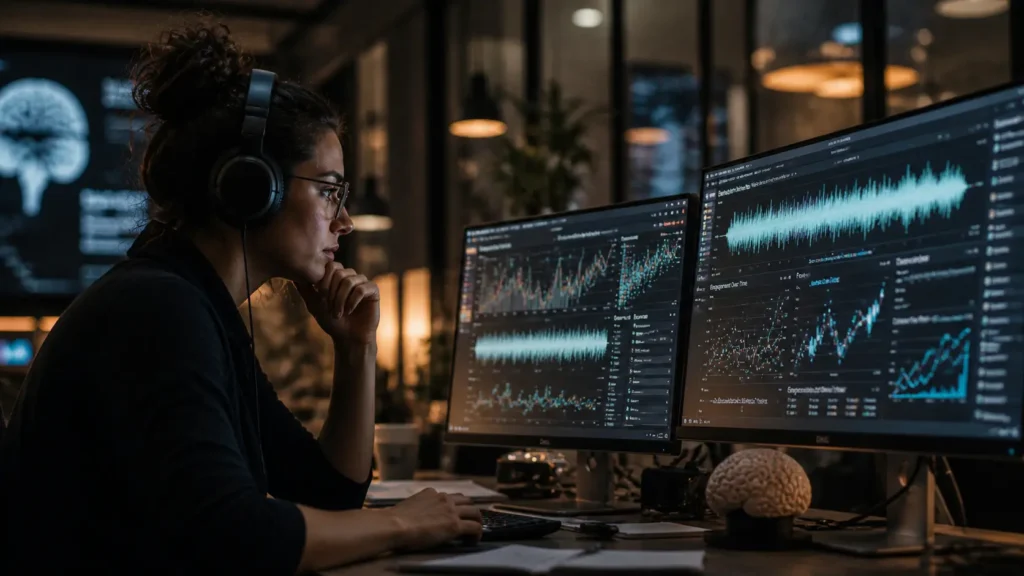
Push notifications are not sent randomly. Machine learning models analyze your personal usage history and identify the exact windows when you are most emotionally vulnerable typically within thirty minutes of waking up, during the early afternoon energy dip, and in the hour before sleep.
These are the moments your critical thinking is lowest and your emotional reactivity is highest.
Twitter and X send engagement notifications “people are talking about this” specifically when trending topics carry emotional charge. Anger, outrage, and fear drive more clicks than joy. The algorithm knows this better than you do.
LinkedIn times job-related notifications to arrive on Sunday evenings precisely when anxiety about the coming week peaks and users are most likely to engage with career content.
This is not customer service. It is emotional targeting at scale.
The Variable Reward Loop
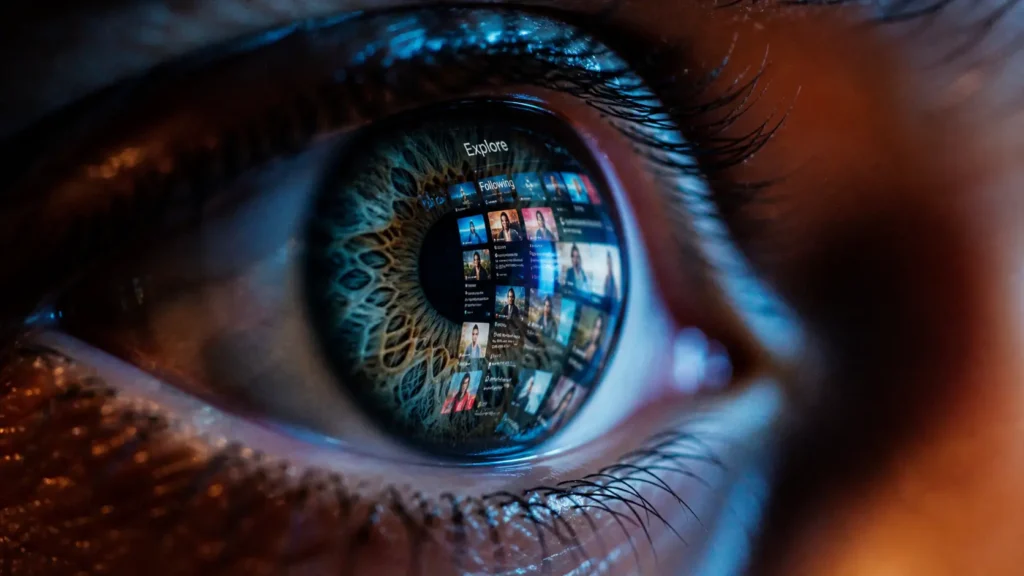
The most powerful mechanism of all is one borrowed directly from slot machines the variable reward loop.
When a reward is unpredictable, the brain releases more dopamine than when it is guaranteed. Pulling down to refresh your feed is functionally identical to pulling a slot machine lever. Sometimes you get something exciting. Sometimes nothing. That unpredictability is what makes it impossible to stop.
Instagram deliberately delays showing likes on new posts not because of technical limitations, but because the anticipation between posting and receiving validation creates a neurological tension that drives users back to the app repeatedly.
Tinder’s matching system controls when you see matches, not purely based on availability, but based on engagement modeling showing you a match at a moment most likely to trigger continued swiping.
These companies have run millions of experiments on real users, measuring emotional responses, session lengths, and return rates to refine these loops to near perfection.
The Moment You Realize You’re the Product
None of this requires your consent. None of it is disclosed in terms and conditions that anyone reads. It operates invisibly, in real time, across billions of people simultaneously.
The teams building these systems include behavioral psychologists, neuroscientists, and former casino designers not because these companies want to entertain you, but because your attention converts directly into advertising revenue.
Every extra minute you spend inside an app is money. Every emotion triggered is a data point. Every notification that pulls you back is a calculated investment with a measured return.
You are not the user. You are the product being optimized.
What You Can Do
Turn off all non-essential push notifications remove the red badges entirely. Your brain will stop being summoned on demand.
Switch your phone to grayscale mode removing color dramatically reduces the emotional pull of apps designed around color psychology.
Set app time limits not because you lack willpower, but because you are competing against systems built by thousands of engineers whose only job is to keep you engaged longer.
Knowing the mechanism is the first defense. These systems work best in the dark. Now you’ve turned the light on.
📖 Read Also: What Actually Happens in the 0.3 Seconds Between You Clicking a Link
Free Apps Are Quietly Costing You More Than Money — Here’s the Full Price
© AiwalaNews | Global Tech & Privacy Edition | April 2026
