You typed a prompt. Seconds later, a photorealistic image appeared. It felt effortless. Instant. Free.
It was none of those things.
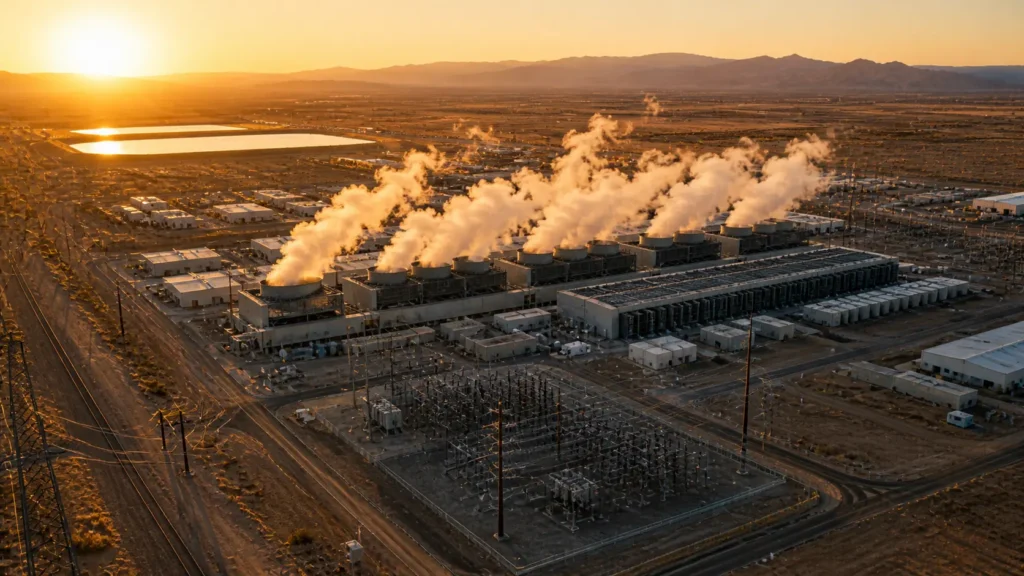
Behind every AI-generated image is a chain of physical infrastructure data centers drawing megawatts of power, cooling systems consuming thousands of gallons of water, and hardware running at temperatures that would destroy unprotected components in minutes. The environmental cost of generative AI is real, measurable, and the industry has been remarkably reluctant to discuss it transparently.
In 2024, global AI computing consumed an estimated 500 terawatt-hours of electricity roughly equivalent to the entire annual energy consumption of Argentina. That number is projected to double by 2026. A significant and growing share is driven by image generation one of the most computationally intensive tasks in consumer AI.
The Electricity Nobody Accounts For
Generating a single AI image using models like Stable Diffusion, Midjourney, or DALL-E requires an inference computation running a trained neural network forward to produce an output.
A 2023 study by researchers at the University of Massachusetts Amherst found that a single image generation request consumes approximately 0.001 to 0.01 kilowatt-hours of electricity depending on model size and complexity. That sounds small until you consider scale.
Midjourney alone processes an estimated 2 to 4 million image requests every single day. At the conservative energy estimate, that is 2,000 kilowatt-hours daily from one platform enough to power the average American home for over 67 days, consumed before noon.
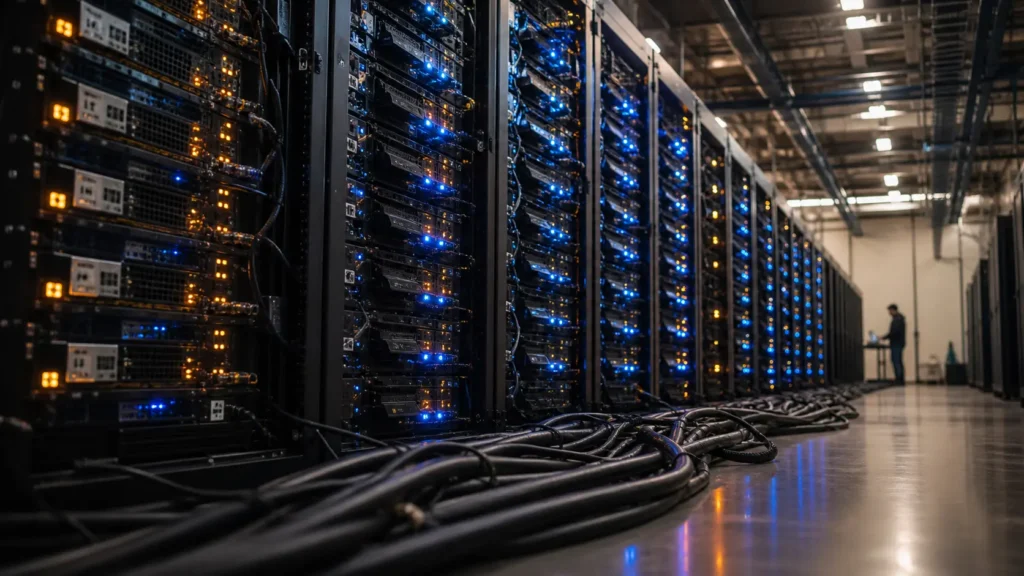
What makes AI image generation particularly intensive is the iterative denoising process inside diffusion models. Rather than a single network pass, generating one image requires 20 to 50 sequential computation steps, each drawing power, each generating heat. A single NVIDIA H100 GPU the current industry standard draws up to 700 watts under full load. Data centers run thousands of these chips simultaneously, 24 hours a day, 365 days a year.
The Water Crisis Hidden Inside Your Prompt
Electricity is only half the environmental equation. The other half is water and this is what the industry discusses least.
Data centers cannot be cooled by fans alone at AI scale. The most efficient large-scale method is evaporative cooling systems that circulate water through heat exchangers, allowing it to evaporate and carry thermal energy away from the hardware.
Microsoft disclosed in its 2023 Environmental Report that its data centers consumed 6.4 billion liters of water that year a 34% increase driven primarily by AI workload growth. Google reported 5.6 billion liters in the same period. Both acknowledged the majority of the increase was directly attributable to AI infrastructure expansion.
Researchers at the University of California, Riverside estimated that generating 20 to 50 AI images consumes approximately one liter of water through data center cooling. For designers, marketers, and creators generating hundreds of images weekly, that translates to tens of liters monthly from a single tool.
The geography compounds the crisis. Many of the largest US AI data centers are located in water-stressed regions Arizona, Nevada, and the Pacific Northwest — where scarcity is already a worsening challenge. A data center drawing millions of liters annually from drought-stressed aquifer systems is not an abstract concern. It is a direct competition with local agriculture and municipal water supplies.
The Carbon Footprint the Industry Doesn’t Advertise
Energy consumption translates to carbon through the carbon intensity of the grid powering each facility the mix of fossil fuels, nuclear, and renewables generating that electricity.
Despite ambitious renewable energy commitments, the reality is more complicated. Purchasing Renewable Energy Certificates on paper is not the same as running data centers on clean power in real time. When a data center draws from a grid that uses natural gas to meet peak demand which most US grids do the marginal electricity consumed by an AI image request is frequently fossil-fuel generated.
Google’s own 2024 Environmental Report acknowledged its greenhouse gas emissions had increased 48% since 2019, attributing the rise directly to AI infrastructure expansion. This from a company with one of the most sophisticated renewable energy programs in the private sector.
The training phase of image generation models carries an even more concentrated cost. Training a single large model is estimated to produce between 284 to 626 tonnes of CO2 equivalent comparable to the lifetime emissions of five average American cars. New model versions are released frequently. Each one carries a fresh training cost.

What the Industry Is and Isn’t Doing
Efficiency improvements are real. NVIDIA’s H100 performs three times the AI computation per watt compared to its predecessor. Liquid cooling systems route coolant directly to chip surfaces, reducing water consumption by up to 95% compared to evaporative systems. Techniques like model distillation and quantization meaningfully reduce inference costs without proportional quality loss.
But efficiency gains are being outpaced by demand growth. This is the Jevons Paradox in action where efficiency improvements drive increased consumption rather than reduced overall resource use. The net environmental impact is growing, not shrinking.
What You Can Do
Be intentional with generation. Refining your prompt before generating rather than iterating through dozens of variations meaningfully reduces your cumulative footprint. Lower-resolution draft outputs consume a fraction of full-resolution generation resources.
Choose platforms with verified renewable commitments. Not all green energy claims are equal. Look for companies publishing real-time carbon intensity data for their data centers rather than annual aggregate certificates.
Support transparency legislation. The most impactful changes require policy. Legislative proposals requiring AI companies to publicly disclose energy, water, and carbon consumption per product similar to nutritional labeling would create genuine market pressure that voluntary commitments have consistently failed to generate.
The AI image you generated today was a small transaction. Multiplied by billions of daily requests across hundreds of platforms running hardware that never sleeps it is one of the fastest-growing sources of industrial resource consumption on earth.
The prompt was free. The planet paid the difference.
Read also: 🔗 The AI That Reads Your Emotions — and the Companies Already Buying the Data — AIwala News
🔗 Why “Free” Apps Are the Most Expensive Thing on Your Phone — AIwala News
© AiwalaNews | Global Tech & Privacy Edition | April 2026
