This article is based on verified cybersecurity research from Flare, Check Point, ESET, and Transaction Network Services, FTC consumer guidance, and documented FIFA ticketing policy as of May 2026. This is for informational purposes only.
The sale opened at 10 AM. By 10:00:03, thousands of tickets were gone.
Not purchased by fans. Purchased by bots automated scripts running on servers, executing thousands of simultaneous checkout requests in the time it takes a human to type their name into a form.
Welcome to the World Cup 2026 ticket black market. It’s more sophisticated than most people realize and it’s already operating at full scale, weeks before the first match kicks off on June 11.
How the Bot Operation Actually Works
Tools and scripts shared on platforms like GitHub automate monitoring and purchasing giving scalpers an unfair advantage over regular fans. These bots can exploit official ticketing systems at speed and scale no human buyer can match.
The technical architecture of a modern ticket bot operation has several layers. The bots run on distributed server networks sometimes hundreds of different IP addresses simultaneously specifically to defeat the rate-limiting and IP-blocking defenses that ticketing platforms deploy. Each bot instance mimics human browser behavior: realistic mouse movements, randomized timing between clicks, genuine-looking session cookies.
Domains are often registered through bots on platforms like GoDaddy, Namecheap, and others. These operations are coordinated through Telegram channels and groups used to distribute tools, share leaked databases, and coordinate purchasing operations. The platform’s anonymity and large audience capabilities make it ideal for both high-tech actors and low-tech scammers.
The result: 4.5 million applications were submitted for early World Cup 2026 purchase windows demand that encourages fraudsters to move fast and operate at scale, confident that desperate fans will pay whatever the secondary market demands.
The AI Upgrade That Changed Everything
The 2026 operation is meaningfully different from previous World Cup scalping because the tools available to fraudsters have upgraded dramatically.
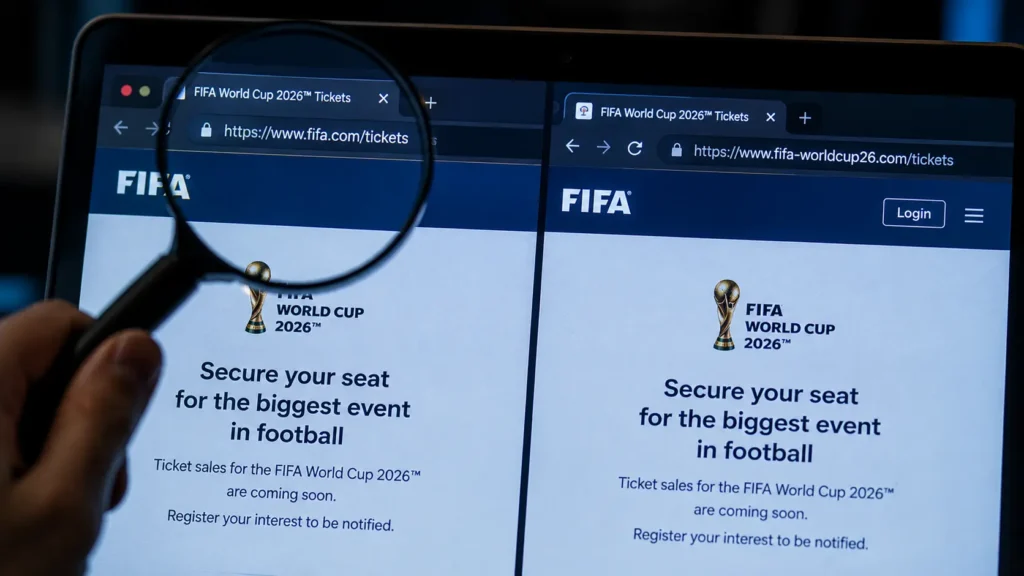
International scammers are using generative AI tools to perfectly clone official World Cup ticketing websites and logos in under five minutes, completely erasing traditional red flags like typos or bad formatting.
That’s the detail that makes 2026 uniquely dangerous. Fake sites used to be detectable by careful fans misspelled URLs, poor design, broken images. Today, a convincing replica of the official FIFA ticketing portal can be built in minutes using publicly available AI tools. The visual difference between the real site and the fake one is, in many cases, zero.
Posing as FIFA or the official World Cup website, imposter sites target people looking for tickets and merchandise, then steer them through fake registration and payment flows that steal their money and personal data.
Fraudsters are targeting fans directly through their mobile devices, using high-pressure text blasts that falsely claim a ticket transaction is about to expire tricking victims into surrendering their banking data under artificial time pressure.
The Secondary Market: What Bots Do After Buying
Buying tickets fast is only half the operation. The second half is resale.
Scammers’ tactics include fake waiting lists and pre-sale offers, cloned ticket confirmations, and counterfeit QR codes. A 36% surge in soccer ticket scams during the current Premier League season saw victims losing an average of $293 with some losing thousands on fake season tickets or VIP packages.
The typical scalping pattern follows a repeatable sequence: the seller is too available, the ticket price is too flexible, proof of purchase arrives too quickly, and the payment method is fast and difficult to reverse usually cryptocurrency, Venmo, or wire transfer.
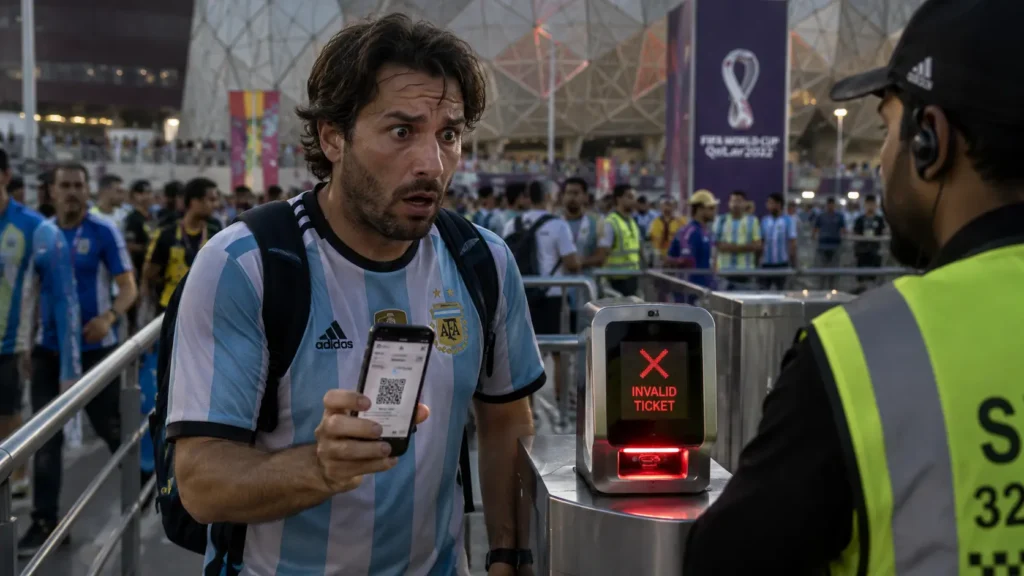
The counterfeit QR code problem is particularly insidious. All official World Cup tickets are strictly digital and managed inside a secure app any offer of a paper ticket, emailed link, or downloadable PDF is an immediate sign of a scam. But convincing fakes circulate widely on WhatsApp, Telegram, and Facebook Marketplace discovered only at the stadium gate when the QR code fails to scan.
How FIFA Is Fighting Back
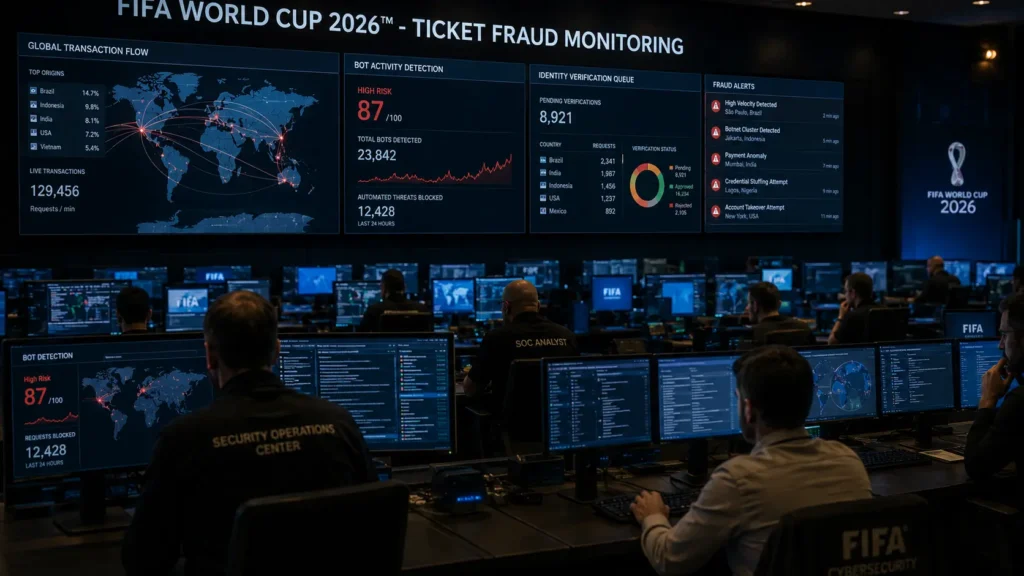
Electronic ticketing technology enables FIFA to track every transaction, verify identities, and collect fees transforming reselling from a threat into a revenue opportunity. FIFA can now regulate reselling in ways that paper tickets never allowed.
FIFA sells primary tickets only through its official portal and has confirmed an official resale platform to help fans transfer or buy tickets lawfully, subject to local regulations. The official resale mechanism is the key defense when transfers happen inside FIFA’s system, the old ticket is invalidated and a new one is issued to the buyer. A scalper selling outside that system sells a ticket that may stop working the moment FIFA detects an unauthorized transfer.
Even strict ID-based systems can see resales outside official channels and even tech-based solutions can’t always fully stop scalping. In 2023, Ticketmaster unsuccessfully tried verified fan presales and name-based digital tickets for Taylor Swift’s Eras Tour, but bots managed to overwhelm the site and the secondary market exploded.
The honest assessment: FIFA’s technology significantly raises the cost and complexity of scalping but doesn’t eliminate it. The arms race between ticket platform security and bot sophistication is ongoing.
What You Must Know Before Buying
The FTC published guidance specifically for World Cup 2026 fans. The core advice: watch for copycat websites and avoid sellers advertising paper tickets or screenshots.
The practical checklist for every fan:
Buy only through fifa.com/tickets. Any other domain selling “official” tickets however convincing it looks is unauthorized at minimum, fraudulent at worst.
Verify the URL character by character. Fake sites include names of host countries and cities to boost search rankings and build credibility “fifatickets-usa2026.com” is not FIFA.
Never pay by wire transfer, cryptocurrency, or Venmo. These payment methods are chosen specifically because they’re irreversible. If a seller insists on fast, difficult-to-reverse payment, walk away immediately.
Ignore urgency messaging. High-pressure text blasts claiming a transaction is expiring are a documented fraud tactic legitimate ticket systems do not work this way.
On third-party platforms, check refund policies. Even on reliable sites like SeatGeek or Ticketmaster resale, check the reseller’s refund policy to verify authenticity guarantees before purchasing.
Document all communication with any seller and take screenshots in case they attempt to delete messages after taking payment.
The bots are faster than you. The fake sites look real. The scammers are organized, funded, and running operations that were planned months ago.
But the defense is simpler than the attack: buy through the official channel, pay with a reversible method, and treat any urgency as a red flag.
The match is worth it. The scam is not.
© AiwalaNews | Global Tech & Privacy Edition | May 2026
Read Also:
- 🔗 How to Watch FIFA World Cup 2026 in 4K for Free
- 🔗 FIFA World Cup 2026: The AI Technology Changing How Every Match Is Played
