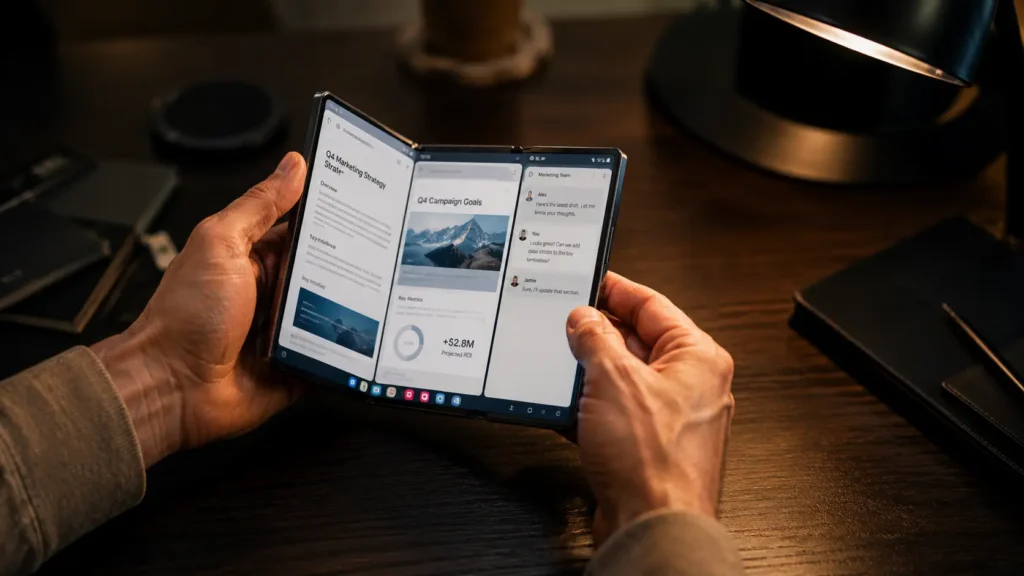
Excerpt: It folds twice, fits in your pocket, and opens into a 10-inch screen. Samsung just built the phone nobody thought was possible then discontinued it.
There’s a certain kind of product that arrives not to sell millions of units, but to tell the world what’s coming next. The kind that makes you stop mid-scroll, look up, and think — wait, they actually did that?
The Samsung Galaxy Z TriFold is that product.
Built on a decade of foldable category innovation, the Galaxy Z TriFold showcases engineering mastery with Samsung’s most advanced foldable technologies. When unfolded twice, it reveals an immersive 10-inch display the largest screen ever put on a Galaxy smartphone that elevates both productivity and cinematic viewing.
And it fits in your pocket. That part still feels slightly impossible.
The Phone That Shouldn’t Exist
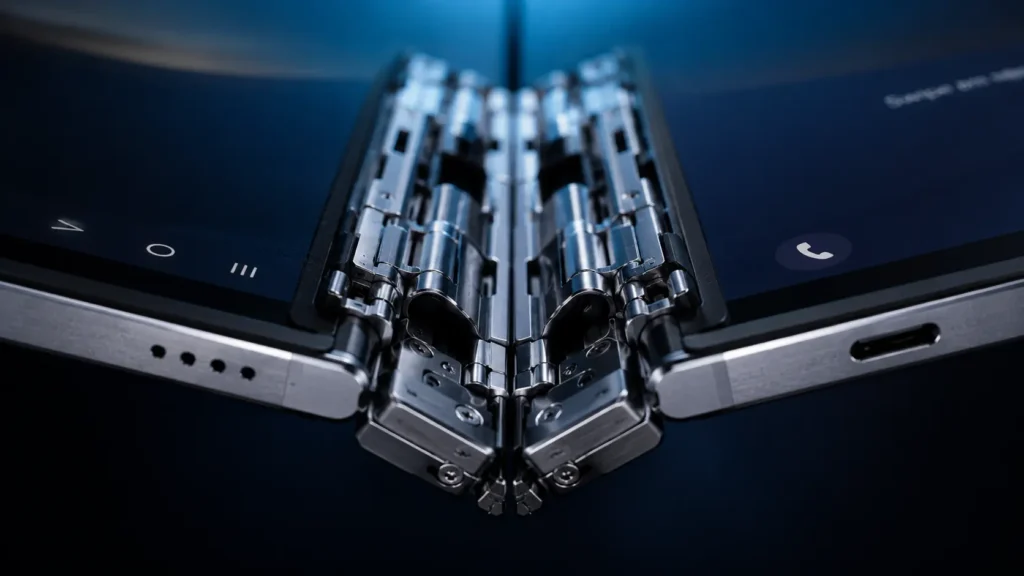
Let’s start with the engineering problem Samsung decided to solve. Building a foldable phone with one hinge is hard. Building one with two hinges while keeping it thin, light, durable, and actually usable is the kind of challenge that fills whiteboards for years.
At just 3.9mm at its thinnest point when fully unfolded, the Galaxy Z TriFold delivers a slim, portable frame powered by the customized Snapdragon 8 Elite Mobile Platform, a 200MP camera, and the biggest battery Samsung has ever put in a foldable phone.
The main screen measures 10 inches corner to corner and can be used in landscape or turned vertically for an aspect ratio similar to A4 documents. The 6.5-inch cover screen features a wide aspect ratio, creating a comfortable typing and scrolling experience as familiar as a standard smartphone.
The inward-folding design isn’t just an aesthetic choice it’s structural. The innovative dual-hinge mechanism enables the thin design, and the inward fold ensures that no part of the main screen is exposed when fully closed protecting the display without needing a cover panel over it.
The Battery Problem Solved Differently
One of the quiet engineering achievements here is something most people won’t think to ask about: how do you fit a meaningful battery into three separate panels?
The answer is Samsung’s 5,600 mAh three-cell battery system, distributed across each of the three panels for balanced power delivery and all-day endurance. Combined with 45W super-fast charging a first for any Samsung foldable the Z TriFold lets users stream, create, and work without constantly hunting for an outlet.
The result: up to 17 hours of video playback time, boosted by the advanced processor and embedded mDNIe technology for power efficiency. For a device with a screen this large, that number is genuinely impressive.
What It’s Like to Actually Use
Specs tell one story. The experience of the Z TriFold tells another.
A 6.5-inch cover display handles everyday tasks answering texts, scrolling, emails. When fully unfolded, the display expands to approximately 10 inches, nearly the size of a small tablet. You fold the left panel first, then the right, and the phone will vibrate to alert you if you’re doing it wrong.
That last detail is pure Samsung a small touch that reveals just how much thought went into the user experience of a form factor nobody had shipped before.
On the AI side, Gemini Live understands what users see, say, and do offering real-time guidance through natural conversation. With screen share, Gemini processes information as you scroll, whether you’re shopping, reading an article, or researching anything in real time.
The main screen supports multiple apps open simultaneously, with drag-and-drop and copy-paste functionality across layouts users can rearrange on the fly. In practice, it’s the closest a smartphone has ever come to replacing a laptop for quick, productive work on the move.
The Price Tag And the Sell-Out
Samsung made the Galaxy Z TriFold available in the US on January 30, 2026, starting at $2,899 in a single colorway, Crafted Black, with 512GB of storage.
At $2,899, the Z TriFold sits $900 above the Galaxy Z Fold 7, placing it in an entirely new tier of premium flagship smartphones. For context, that’s more than most laptops. For a phone.
And it sold out immediately. No trade-in discounts. No carrier subsidies to soften the price. Just pure demand.
A day after the US launch, the phone was completely sold out. That says everything about how much pent-up desire existed for something genuinely new in the smartphone space.

Built to Prove a Point Then Discontinued
Here’s the twist in the story and it’s a revealing one.
Samsung officially confirmed in March 2026 that the Galaxy Z TriFold would be discontinued in South Korea and the United States, just three months after launch. A Samsung spokesperson described it as a “technology showcase” rather than a permanent flagship product.
High production costs, thin margins at the $2,899 price point, limited carrier distribution, and a single-color offering all reflected the proof-of-concept positioning.
But don’t mistake discontinuation for failure. Samsung is already developing a second-generation TriFold, with a dramatically thinner design targeting a mid-2027 launch. The Z TriFold 2 targets a folded thickness of approximately 8.9mm, down from the original’s 12.9mm, and the new hinge design has already completed verification.
This is how Samsung has always worked at its best. Ship the impossible first. Learn from it. Then ship the version the world can actually live with.
What This Actually Means for the Future of Phones
The Z TriFold matters not because of what it sells, but because of what it proves. That a phone can be a pocket device, a productivity workspace, and a cinematic screen — all in one object, all without compromise on durability or performance.
TM Roh, Samsung’s CEO, framed it directly: “Galaxy Z TriFold solves one of the mobile industry’s longest-standing challenges delivering the perfect balance between portability, premium performance, and an expansive display.”
The smartphone form factor has been more or less the same rectangle since 2007. The Z TriFold is the most credible argument yet that the rectangle’s reign is ending.
What comes after it the TriFold 2, the rumored Galaxy Z Slide, the inevitable responses from Apple and Google will define the next decade of mobile technology. But the TriFold got there first. And in this industry, that matters more than anything.
© AiwalaNews | Global Tech & Privacy Edition | May 2026
Read Also:
- 🔗 The Foldable Phone Revolution: Where Samsung, Apple & Huawei Are Headed
- 🔗 Galaxy AI Features Explained: What Gemini Live Actually Does on Your Phone
