
The promise has been made a hundred times fast, affordable, wireless internet for every American home. Cable companies said it. Telecom giants said it. And now two very different technologies are racing to actually deliver it. One comes from space. One comes from towers already standing outside your window. Only one of them is going to win your living room.
Here is the honest, no-hype breakdown.
What Starlink Actually Is And What It Is Not
Starlink is SpaceX’s satellite internet network a constellation of over 6,000 low-earth orbit satellites beaming broadband directly to a small dish mounted on your roof. No cable. No fiber. No dependence on local infrastructure.
The pitch is powerful particularly for the 40 million Americans who live in rural or underserved areas where cable and fiber have never arrived and likely never will. For these users, Starlink is not a luxury. It is the first real broadband option they have ever had.
Current Starlink speeds in the US range from 100 Mbps to 250 Mbps for residential plans fast enough for 4K streaming, video calls, remote work, and everything a modern household needs. Latency has dropped dramatically from early versions, now sitting around 20 to 40 milliseconds for most users competitive with mid-tier cable internet.
The hardware costs $599 upfront for the dish and equipment, with monthly plans starting around $120. That price point is the primary barrier and it is a real one.
What 5G Home Internet Actually Is And What It Is Not
5G home internet is not your phone’s 5G signal repackaged. It is a dedicated fixed wireless service a small receiver placed in your window or on your roof that connects to nearby 5G towers and delivers broadband to your home router.
T-Mobile Home Internet and Verizon 5G Home Internet are the two dominant players in this space. T-Mobile’s service now reaches over 50 million households and starts at $50 per month with no equipment purchase required. Verizon’s ultra-wideband 5G offers speeds exceeding 1 Gbps in select dense urban markets.
The critical limitation is geography. 5G home internet requires proximity to a tower. In dense urban and suburban environments, coverage is strong and expanding. In rural America — where connectivity is most desperately needed 5G infrastructure remains thin, expensive to build, and years away from meaningful coverage.
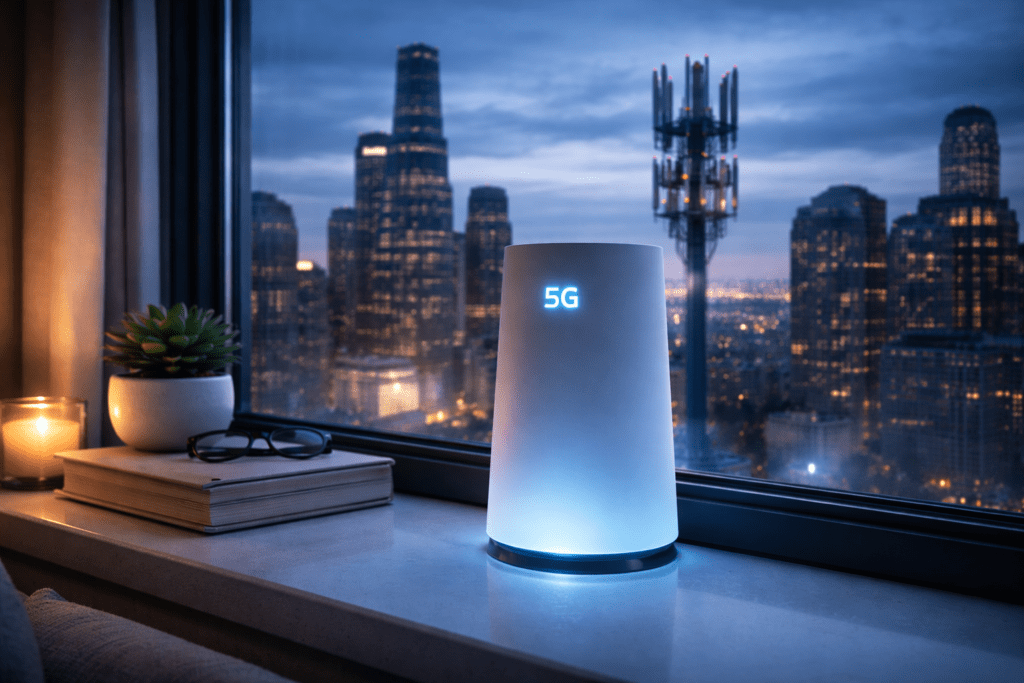
The Head-to-Head: Where Each One Wins
Rural America Starlink wins, and it is not close.
If you live more than thirty miles from a major city, 5G home internet is largely theoretical for you right now. Carriers have concentrated their fixed wireless buildout in suburbs and mid-sized cities where tower density makes the economics work. Rural deployment is happening, but slowly.
Starlink, by design, has no such limitation. The satellite constellation covers virtually the entire continental United States regardless of population density. A farm in Montana and a brownstone in Brooklyn receive the same satellite signal. For rural users, Starlink is not competing with 5G it is competing with nothing, because nothing else exists.
Dense Urban and Suburban Areas 5G wins on price and speed potential.
In cities and well-covered suburbs, T-Mobile and Verizon’s fixed wireless services undercut Starlink significantly on monthly cost sometimes by half. The hardware is provided free or at minimal cost. Installation requires no roof mounting or professional visit.
And in markets where Verizon has deployed its millimeter-wave ultra-wideband 5G, the speed ceiling is simply higher than anything Starlink’s current satellite architecture can match multi-gigabit speeds against Starlink’s 250 Mbps ceiling.
Reliability in Adverse Conditions Mixed.
Starlink’s early reputation for weather-related outages has improved considerably. The dish’s built-in heating element handles snow accumulation, and the newer generation hardware manages rain fade significantly better than the original design.
5G fixed wireless has its own vulnerability tower congestion. In dense urban areas during peak hours, shared tower bandwidth creates slowdowns that Starlink, drawing from a distributed satellite network, does not experience in the same way.
The 2026 Question Will Either One Replace Cable?
This is where the honest answer gets complicated.
Neither technology will fully replace traditional cable or fiber internet for most Americans by 2026. The infrastructure buildout required, the price points involved, and the technical limitations of both systems make a complete displacement of cable implausible within that timeline.
What is happening and what will accelerate significantly by 2026 is meaningful competition for the first time in decades.
Cable companies have operated in effective local monopolies for most of their existence. Starlink and 5G home internet are breaking that monopoly in different markets simultaneously. Comcast and Charter are already feeling pricing pressure in markets where T-Mobile Home Internet has launched and that pressure is translating into retention offers, price reductions, and service improvements that would not have existed two years ago.
By 2026, the realistic picture looks like this:
Rural America increasingly served by Starlink, with meaningful connectivity arriving in communities that had none. Suburban America increasingly choosing between cable, fiber, and 5G fixed wireless based on price and performance. Urban America seeing intensifying competition across all four options cable, fiber, 5G fixed wireless, and Starlink.
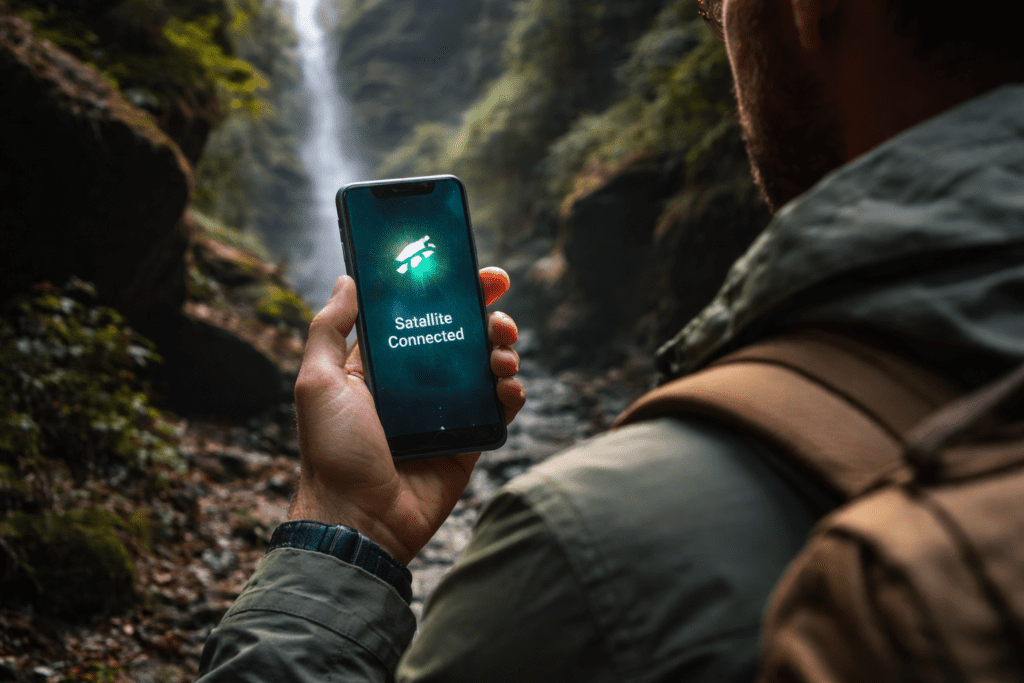
Which One Should You Choose Right Now
If you are rural Starlink. Full stop. The upfront cost is real but the alternative is inferior connectivity indefinitely.
If you are suburban with T-Mobile coverage check T-Mobile Home Internet first. At $50 per month with no equipment cost, the price advantage over both cable and Starlink is significant. Run the trial T-Mobile offers fifteen days to test it risk-free.
If you are urban your best option is almost certainly still fiber if it is available in your building. If not, 5G fixed wireless from T-Mobile or Verizon is the strongest cable alternative at current price points.
Starlink makes most sense when nothing else works. When it competes on even ground with terrestrial options, the monthly cost and hardware investment put it at a disadvantage.
The Real Winner by 2026
The real winner by 2026 is not Starlink or 5G. It is the American consumer for the first time facing a market where internet providers are actually competing for their business instead of simply existing as the only option in the room.
That competition is already driving prices down, speeds up, and forcing incumbents to improve. Whether the disruption comes from space or from a tower down the street matters less than the fact that it is finally, genuinely arriving.
📖 Read Also: The Top 10 Free AI Video Generators That Don’t Require a Credit Card
7 Hidden Apple Intelligence Features Coming to Your iPhone This Month
© AiwalaNews | Global Tech & Privacy Edition | April 2026
