This article is based on documented platform research, publicly available algorithm disclosures, and verified industry analysis from 2026.
Most people assume going viral is lightning in a bottle. A perfect joke, a perfect moment, perfect timing and the internet does the rest. That was mostly true in 2012. In 2026, it’s completely wrong.
Virality in 2026 is a system. A measurable, learnable, repeatable system. Every major platform has published enough information about how their algorithms work and researchers have reverse-engineered enough of the rest that the mechanics are now genuinely understandable. You don’t need a million followers. You don’t need a production team.
You need to understand what the algorithm is actually measuring.
The Biggest Shift Nobody Noticed
The biggest change in 2026 is the total dominance of the interest graph over the old social graph. Unlike the old social graphs that prioritised content from people you followed, modern platforms now function as massive recommendation engines.
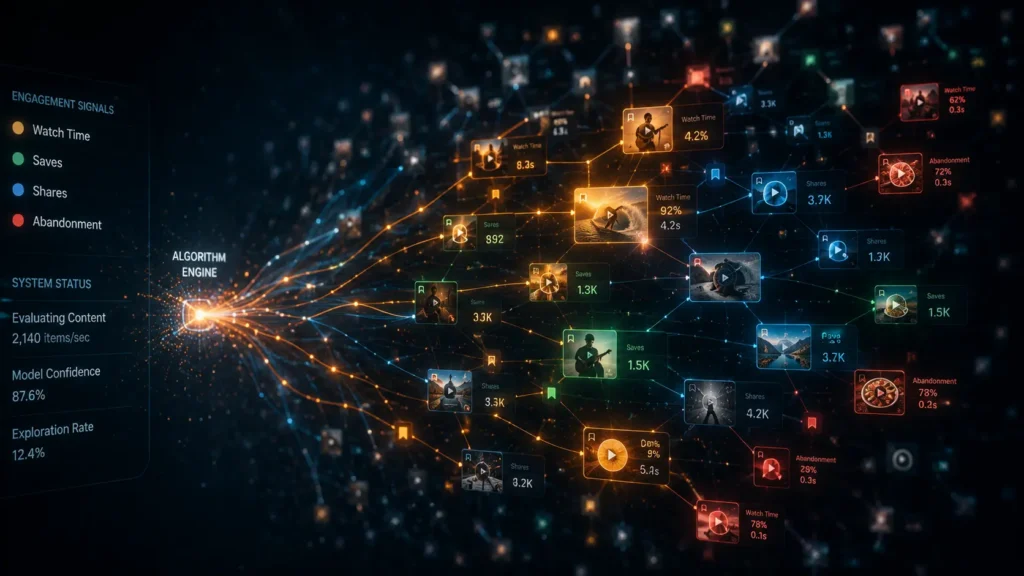
This is the foundational shift everything else builds on. The old model rewarded audience size more followers meant more reach. The new model rewards content relevance. The algorithm tests your post against a small initial audience, measures how they respond, and decides based on that response whether to push it further.
Even accounts with zero followers can achieve viral status if content resonates with initial test audiences.
That’s not a marketing claim. It’s the documented architecture of TikTok, Instagram Reels, and YouTube Shorts all of which serve content from accounts with no established audience to strangers who’ve never heard of you, based purely on predicted interest match.
What the Algorithm Is Actually Measuring
The top factors in most social media algorithms in 2026 are: the amount of engagement a piece of content receives especially within a short time frame and how much users tend to engage with that creator’s content in general.
But “engagement” in 2026 doesn’t mean what it meant five years ago. Likes are the weakest signal. What actually moves content through the system is more specific.
Algorithms in 2026 prioritize engagement quality over engagement volume. A video watched to the end by 200 people can outperform a video liked by 2,000 people but abandoned after 3 seconds. A LinkedIn post with 15 thoughtful comments can outrank one with 300 likes and no discussion. A Reel saved repeatedly signals long-term value, pushing it further into Explore and Recommendations. Algorithms interpret these behaviours as signs of content usefulness not popularity.
The hierarchy of signals, from weakest to strongest, looks roughly like this across most platforms: likes, then comments, then shares, then saves, then full watch-through, then profile visits triggered by the content. The last two completion and profile visits are the signals that tell the algorithm the content was valuable enough to make someone want more.
Comment rate matters too but platform-specifically. LinkedIn factors in discussion quality and sentiment, not just comment volume. A single substantive comment carries more weight than ten emoji replies.

The First Three Seconds Are Everything
The optimal structure for short-form video content follows a precise sequence: hook in 0 to 3 seconds lead with a specific, curiosity-triggering statement. Problem from 3 to 10 seconds explain the common mistake or tension. Solution from 10 to 25 seconds deliver actionable value. Call to action from 25 to 30 seconds.
This isn’t a creative preference. It’s engineering. Every platform measures the percentage of viewers who watch past the 3-second mark and uses that percentage as an early indicator of whether the content deserves wider distribution. Content that loses 80% of viewers in the first three seconds is deprioritized before most of your followers even see it.
Think micro-moments 10 second videos that spark emotion or curiosity. Let AI handle the polish, but keep your storytelling raw and personal.
The most counterintuitive finding from documented research: overly produced content consistently underperforms authentic content on every platform except LinkedIn. Raw, experience-based posts often outperform polished brand announcements. This explains why a shaky phone video of something genuine routinely beats a perfectly lit studio production.
Platform – Specific: What Actually Differs
The underlying logic is shared. The specific signals are not.
TikTok’s algorithm has become even more refined in 2026, using deeper signals, advanced AI, and contextual relevance to serve the right videos to the right people at the right time. The For You Page evaluates various signals to determine which videos to showcase with watch completion and rewatch rate weighted most heavily.
Threads is finally finding its footing in 2026 and focuses on real-time topic discovery rather than followers. Your post doesn’t have to go viral among your followers it can spread if it fits a trending conversation or search cluster.
YouTube no longer rewards misleading thumbnails or exaggerated titles for long. If users click but leave quickly, the algorithm treats it as a negative satisfaction signal and reduces distribution. Channels that build topical authority consistently covering one subject deeply perform better than channels chasing random viral trends.
LinkedIn has undergone significant algorithm changes in 2025 and 2026, with a stronger push toward video content. Known ranking signals include content quality, professional tone, total view count, and spam filtering posting more than once every 12 hours can trip spam flags and limit reach.
What Average People Can Actually Do
The research converges on five things that consistently work regardless of follower count, budget, or platform.
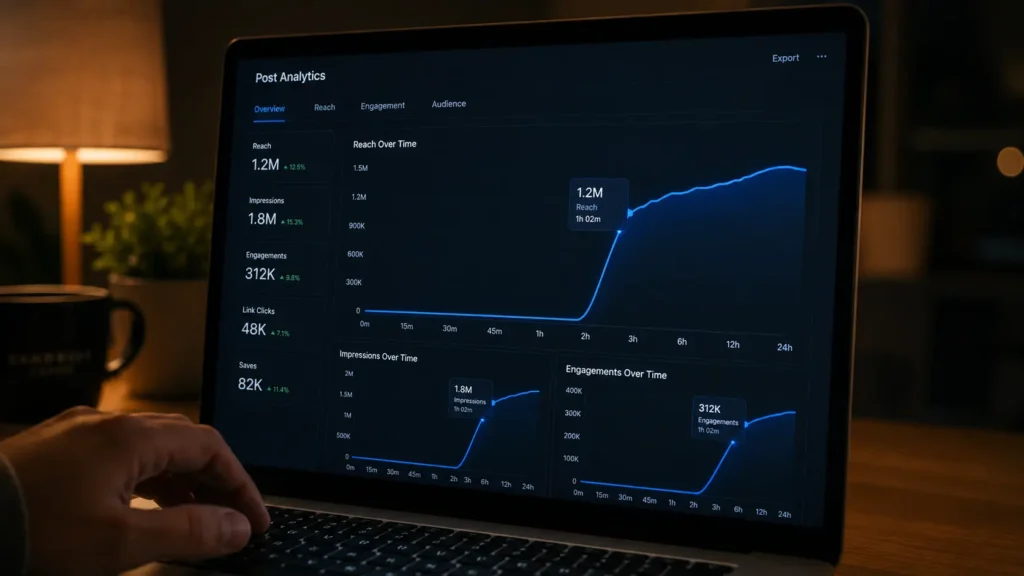
Post in the first hour. Early engagement velocity is the most consistent predictor of algorithmic distribution. Reply to every comment within the first 60 minutes of posting. The amount of engagement received especially within a short time frame is the dominant signal across every major platform in 2026.
Optimize for saves, not likes. Create content people want to return to lists, frameworks, tutorials, references. A save tells the algorithm the content has lasting value.
Build topical depth, not breadth. Success is no longer about chasing mass appeal. It’s about earning relevance repeatedly within a defined audience. A post might explode in one niche and completely disappear in another and that is by design.
Finish strong. Completion rate is a top signal on every video platform. If your ending is weak, viewers leave before it and the algorithm notices.
Stay human. Social media algorithms in 2026 are intelligent systems built to reward authenticity, interactivity, and adaptability. Use AI tools for editing, research, and targeting but keep the storytelling human.
Going viral in 2026 isn’t luck. It’s not even talent, necessarily. It’s understanding that every platform is running a continuous experiment testing your content against small audiences, measuring quality signals, and deciding in real time whether you deserve a bigger stage.
Give the algorithm what it’s measuring. The rest follows.
© AiwalaNews | Global Tech & Privacy Edition | May 2026
Read Also:
- 🔗 Google Discover’s New Algorithm Rewards This Type of Content — Here’s What Publishers Must Do
- 🔗 How Google Decides What Shows Up First — The Algorithm Nobody Fully Understands
