This article is based on publicly available financial data, Department of Transportation records, verified industry research, and documented airline industry practices.
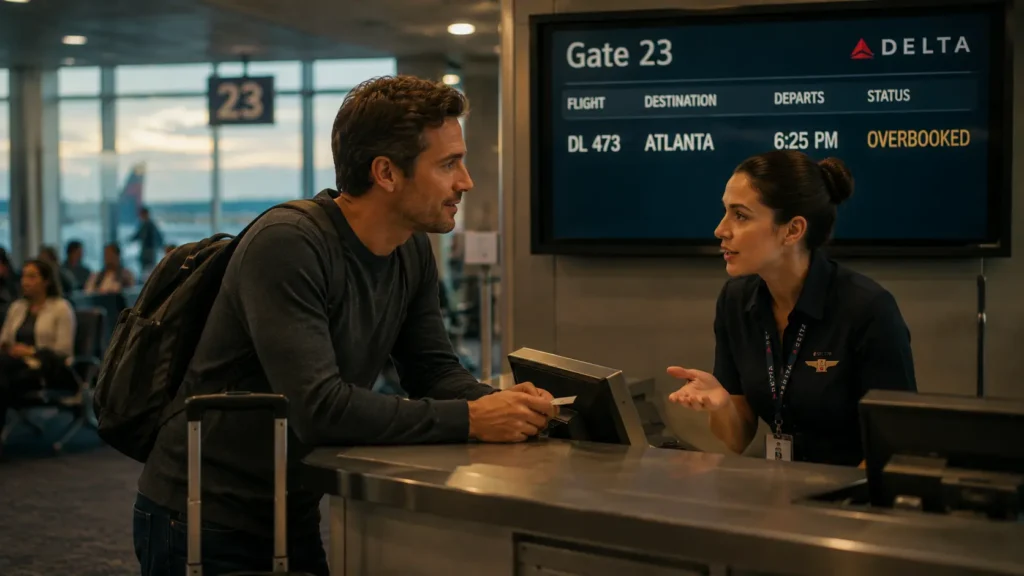
You’ve seen it at the gate. The staff member at the podium, microphone in hand, asking if anyone would be willing to take a later flight in exchange for a voucher. The awkward silence. The quiet calculation happening in every passenger’s head.
That moment isn’t an accident or a scheduling failure. It’s the visible edge of a deliberate, data-driven strategy that every major airline in the world runs on every flight, every day. And once you understand the economics behind it, the surprise isn’t that airlines overbook. The surprise is that they don’t do it more aggressively.
The Perishable Seat Problem
The entire logic of overbooking starts with one uncomfortable economic reality.
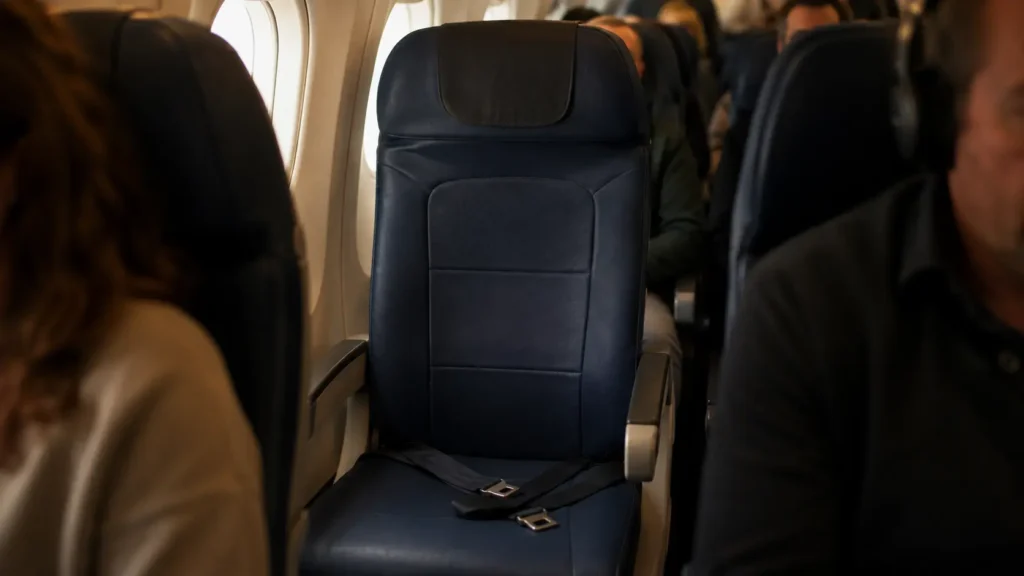
An airplane seat is one of the most perishable commodities in business. Once a flight departs, any unsold seat generates zero revenue and that loss can never be recovered. Unlike a hotel room or concert ticket, which might be resold later, an unused airline seat vanishes the moment the cabin door closes.
A significant portion of an airline’s costs from aircraft leases to crew salaries and airport fees are fixed for each flight regardless of how many passengers show up. Filling every possible seat is one of the few ways carriers can improve yields on routes that are otherwise expensive to operate.
The average net profit margin in commercial aviation is around 2.6 percent. That number is not a typo. The entire airline industry, one of the most complex and capital-intensive businesses on Earth, operates on margins thinner than most small retailers. Every empty seat doesn’t just reduce profit at those margins, it can turn a profitable flight into a loss.
The No-Show Rate: Where the Math Begins
Overbooking is only viable because of one consistent, documented, and statistically predictable phenomenon: passengers who buy tickets and don’t show up.
The average no-show rate ranges from 5 to 15 percent, depending on the season before Christmas, people are less likely to miss their flight than on a random Tuesday in February.
The no-show rate, which helps airlines determine how many extra tickets to sell, is determined by data from past flights connecting the same points. A route between two business hubs on a Monday morning has a different no-show profile than a leisure route on a Friday afternoon. Airlines model each route individually.
For example, if data shows that a flight from New York to Chicago historically has a 7% no-show rate, the airline might sell 107 tickets for a 100-seat aircraft. Statistically, about seven passengers won’t show resulting in a full flight with no disruptions.
That’s the ideal outcome. The flight departs full. Revenue is maximized. Nobody gets bumped. The gamble paid off perfectly.
The AI Running the Numbers
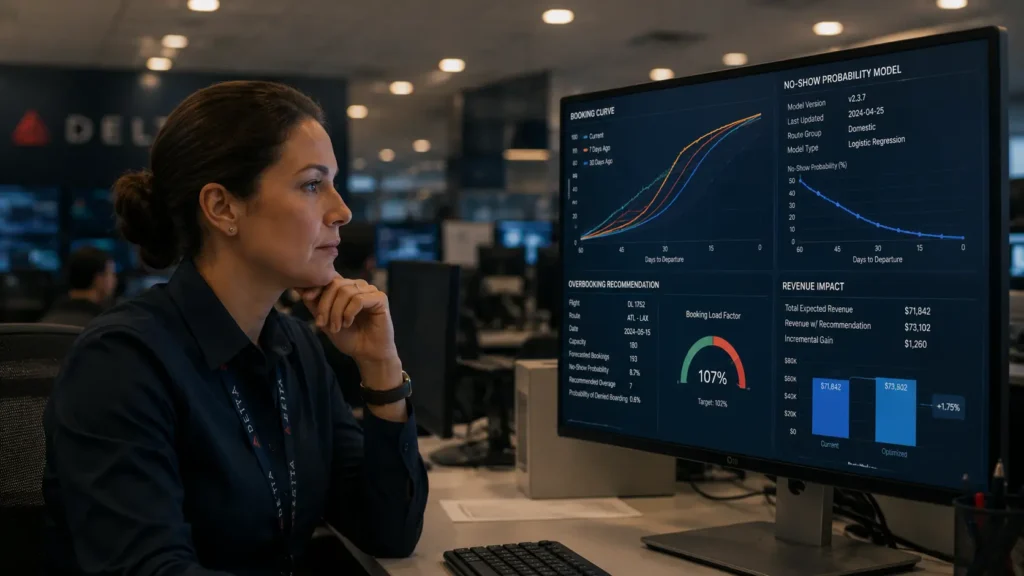
This calculation isn’t done by intuition or experience. It runs on machine learning systems specifically built for the problem.
Airlines have sophisticated revenue management systems that help them determine the optimal number of seats to sell for each flight. There are dedicated teams managing this process within each airline.
Advanced AI and machine learning-based revenue management technologies help predict no-show rates for any given flight. Various ML algorithms are used from random forests and decision trees to gradient boosting and neural networks. Trained models identify specific patterns in data, such as booking trends during various times of year or in different economic conditions.
The inputs to these models go well beyond historical no-show rates. Weather forecasts. Local events. Connection complexity a passenger with a tight connecting flight is more likely to miss the next leg. Ticket type flexible fares attract more no-shows than non-refundable ones. Time of booking last-minute bookings correlate with different show-up rates than tickets purchased weeks in advance.
According to travel industry data, for every 100 seats available, approximately 150 tickets are sold on heavily overbooked routes. That’s an extreme case but it illustrates how aggressive the strategy can become when the data supports it.
When the Math Goes Wrong
The model is accurate most of the time. Not always.
When more passengers show up than the model predicted, the airline faces the situation you’ve watched play out at the gate. The process that follows is legally structured and more carefully managed than most passengers realize.
The Department of Transportation requires airlines to follow strict rules when bumping passengers. The first step is always volunteer solicitation asking for passengers willing to rebook in exchange for compensation. Airlines must offer cash, travel vouchers, or other benefits before moving to involuntary bumping.
Offering compensation isn’t merely an act of goodwill it’s often cheaper than allowing planes to depart with vacant seats. It is far cheaper to give someone money or vouchers than to let flights leave partially empty.
British Airways has revealed that in a single year it oversells approximately 500,000 seats, forcing around 24,000 passengers to be rebooked on other flights. That’s a significant absolute number but as a percentage of total passengers, it represents a small fraction of all journeys.
Between January and March 2022, 7,143 people who held confirmed reservations were involuntarily denied boarding from a flight because of overselling. The instances where the model misfires and someone is involuntarily bumped are real but they represent a tiny fraction of the billions of seat assignments made annually.
What This Means for You as a Passenger
Understanding the system changes how you interact with it practically and financially.
The gate announcement asking for volunteers is worth evaluating seriously. Passengers who volunteer to rebook on a later flight can negotiate compensation cash, upgraded seats on the next flight, hotel accommodation if the delay is overnight, and meal vouchers. The airline needs you more than you need them in that moment.
The passengers most at risk of involuntary bumping are those who check in last. Airlines prioritize passengers for bumping based on check-in time, fare class, and frequent flyer status meaning the last person to check in on an overbooked flight carries the most risk. Checking in the moment it opens, 24 hours before departure, is the single most effective protection.
Passengers on the highest fare classes and with elite frequent flyer status are almost never involuntarily bumped. The system is calibrated around protecting its most valuable customers first.
The Honest Bottom Line
Overbooking isn’t a scam. It isn’t negligence. It’s a rational response to a genuine economic problem the impossibility of selling 100% of perishable inventory to 100% of buyers who actually show up.
“Overbooking is not greed it’s survival. Without it, airlines would either charge much higher fares or go out of business,” according to aviation economist Dr. Susan Chen of MIT’s Center for Transportation & Logistics.
The math works out for airlines the vast majority of the time. When it doesn’t, the regulations exist to protect you but only if you know how to use them.
Note: Passenger rights and compensation rules vary by country and airline. US DOT rules apply to US carriers. EU passengers are protected under EC Regulation 261/2004, which provides stronger protections including mandatory cash compensation.
© AiwalaNews | Global Tech & Privacy Edition | May 2026
Read Also:
- 🔗 How Uber Knows You’ll Accept a Higher Price Before It Shows It to You
- 🔗 The Hidden Economics Behind Every App You Think Is Free
