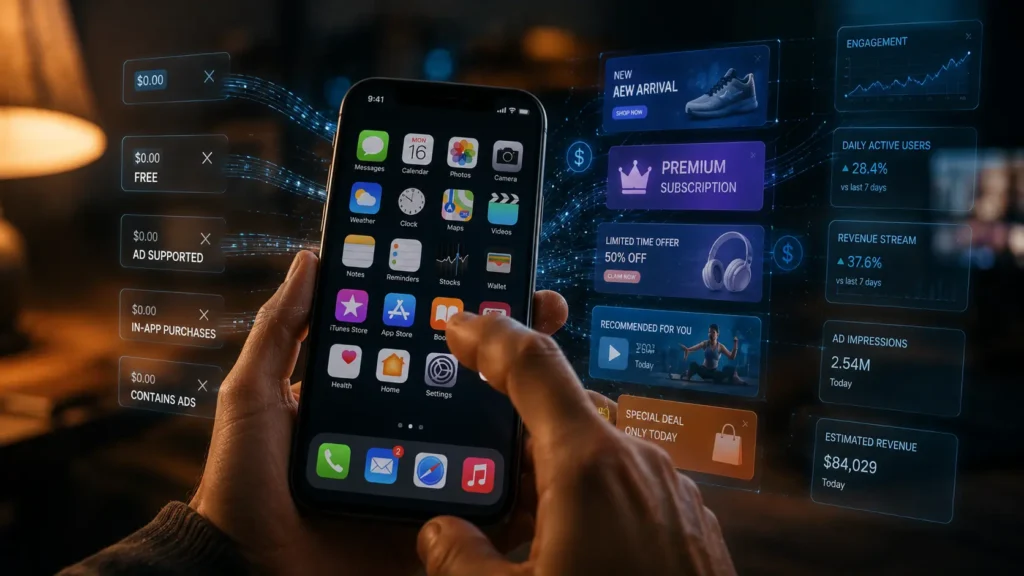
Open your phone and count how many free apps you use every day.
Social media, weather updates, navigation, email, photo editing, games, shopping, fitness tracking, and even flashlight apps often come without an upfront price. It feels like an incredible deal.
But every successful business needs revenue.
So how can companies offer sophisticated apps to hundreds of millions of people without charging a download fee?
The answer is surprisingly simple.
Many free apps are not selling software. They are selling services, advertising opportunities, subscriptions, or valuable insights about user behavior. Understanding this business model helps explain why some apps grow into companies worth billions of dollars.
Free Does Not Mean Without Value
Imagine walking into a shopping mall where parking is completely free.
At first glance, the mall appears to be giving something away.
In reality, free parking encourages more visitors, which increases shopping, restaurant sales, and overall revenue.
Many free apps operate in a similar way.
The application itself attracts users. Once millions of people begin using it regularly, the company creates multiple ways to generate income around that audience.
The download may be free, but the business model extends far beyond the installation button.
Advertising Powers A Large Part Of The Industry
One of the most common revenue sources is digital advertising.
When you open a news app, play a mobile game, or scroll through social media, advertisements often appear between content.
Companies pay app developers to display those advertisements because they hope users will click, install another application, or purchase a product.
Not every advertisement earns the same amount.
Advertisers may pay more when an audience matches specific interests such as technology, travel, finance, or fitness.
This explains why successful apps with millions of active users can generate enormous advertising revenue without charging users directly.
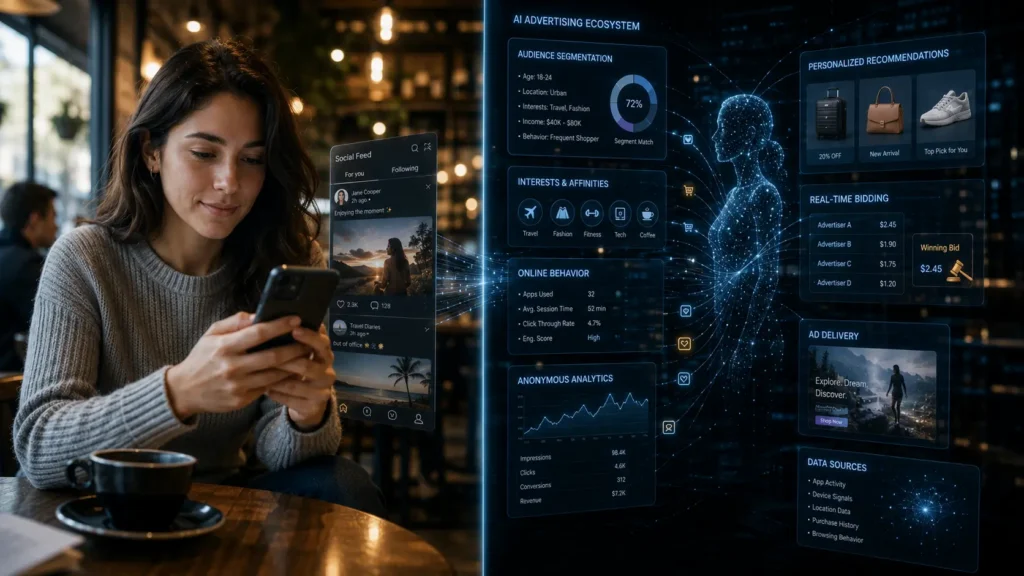
Personalization Makes Advertising More Valuable
Imagine two people opening the same shopping app.
One recently searched for hiking equipment.
The other has been reading about home office furniture.
Showing identical advertisements to both users would be less effective.
Instead, many advertising systems attempt to display products that better match user interests.
This process often relies on information such as app activity, approximate location, device type, language preferences, and previous interactions.
Importantly, responsible companies explain these practices through privacy policies and permission requests. Regulations in many countries also require greater transparency about how personal information is collected and used.
Real World Example
Consider a free weather application.
You open it for thirty seconds each morning.
From your perspective, it simply displays today’s forecast.
Behind the scenes, the business may earn advertising revenue, offer a premium subscription with additional features, license weather technology to other businesses, or provide local business promotions.
The weather forecast remains free because several revenue streams support the service.
Subscriptions Have Changed The Game
Many popular applications now combine free access with premium memberships.
This approach allows anyone to start using the app without financial commitment while offering advanced features for paying subscribers.
Cloud storage, higher quality exports, additional security tools, exclusive content, or advanced editing capabilities often become part of the premium experience.
This model benefits both users and developers.
Casual users receive useful functionality at no cost, while power users help finance continued development.
Screenshot Suggestion
Screenshot: Show the same application before and after upgrading to a premium subscription. Highlight additional features, storage limits, or exclusive tools that become available after payment. This instantly helps readers understand the business model.

Data Helps Improve Products
Data has become one of the most discussed aspects of modern technology.
Many companies analyze anonymous or aggregated usage information to understand which features people use most frequently.
For example, developers may notice that very few users open a particular menu.
Instead of guessing, they can redesign the interface based on real usage patterns.
Analytics also help identify software bugs, improve performance, and reduce crashes.
There is an important distinction between improving products through responsible analytics and collecting unnecessary personal information. Reputable companies increasingly provide privacy controls that allow users greater transparency and choice.
Simple Comparison
| Revenue Source | How It Supports Free Apps |
|---|---|
| Advertising | Displays sponsored content |
| Premium Subscription | Unlocks advanced features |
| In App Purchases | Sells optional digital items |
| Business Services | Licenses technology to companies |
| Analytics | Improves product performance |
Why Investors Love Free Apps
Some of the world’s largest technology companies began with free products.
Why?
Because attracting millions of users first often creates opportunities to introduce additional services later.
Once people trust an application and make it part of their daily routine, they may eventually purchase premium features, cloud storage, productivity tools, or business solutions.
Growth often becomes just as valuable as immediate profit.
This strategy has shaped much of today’s digital economy.
The Real Cost Is Often Your Attention
One lesson becomes clear after examining how free apps operate.
Money is only one form of payment.
Your attention also has value.
Every minute spent inside an application creates opportunities for advertising, subscriptions, recommendations, and continued engagement.
That does not mean free apps are harmful.
Many provide extraordinary value while helping people communicate, learn, navigate, create content, and manage daily life.
The important point is understanding the exchange.
Developers provide useful software.
Users receive convenient digital services.
Companies generate revenue through carefully designed business models that extend well beyond the initial download.
The next time you install a free app, remember that the application itself may be free, but an entire digital economy is quietly working behind the scenes to keep it that way.
Read Also
Read also: https://aiwalanews.com/how-websites-recognize-you-even-without-cookies/
Read also: https://aiwalanews.com/what-happens-inside-googles-data-centers-when-you-search/
© AiwalaNews | Global Tech & Privacy Edition | April 2026
